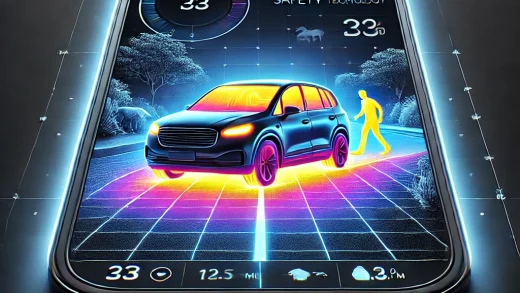
Hybrid vehicles have revolutionized the automotive industry by offering a blend of fuel efficiency, reduced emissions, and enhanced performance. As technology continues to advance, the future of hybrid vehicles holds exciting possibilities for further innovation and improvement. In this blog, we’ll explore the latest developments in hybrid technology in the US, including advancements in powertrain design, battery technology, and connectivity features.

Advancements in Powertrain Design:
Next-Generation Hybrid Systems:
Automakers are continuously refining hybrid powertrain designs to optimize efficiency and performance. Future hybrid vehicles may feature more advanced powertrain configurations, such as plug-in hybrids with larger battery capacities and extended electric-only driving range. Additionally, improvements in regenerative braking systems and energy management algorithms will further enhance the overall efficiency of hybrid drivetrains.
Integrated Electric Motors:
One of the key areas of development in hybrid technology is the integration of electric motors within the powertrain. Future hybrid vehicles may feature compact and lightweight electric motors that are seamlessly integrated into the transmission or wheel hubs. These integrated electric motors can provide instant torque and improved acceleration while minimizing energy loss and maximizing efficiency.
Enhanced Hybrid Transmissions:
Advanced transmission technologies, such as continuously variable transmissions (CVTs) and dual-clutch transmissions (DCTs), are being optimized for hybrid applications to improve power delivery and efficiency. Future hybrid transmissions may feature advanced control algorithms and predictive shift logic to optimize gear ratios and maximize fuel economy.
Innovations in Battery Technology:
Next-Generation Battery Chemistries:
The development of next-generation battery chemistries, such as lithium-sulfur and solid-state batteries, holds promise for improving the energy density, durability, and safety of hybrid vehicle batteries. These advanced battery technologies have the potential to significantly increase electric driving range, reduce charging times, and extend the lifespan of hybrid batteries.
Solid-State Batteries:
Solid-state batteries represent a significant advancement in battery technology, offering higher energy density, faster charging rates, and improved safety compared to traditional lithium-ion batteries. Future hybrid vehicles may utilize solid-state batteries to achieve greater efficiency and performance while reducing reliance on fossil fuels.
Wireless Charging Technology:
Wireless charging technology is another area of development in hybrid vehicles, enabling convenient and efficient charging without the need for physical cables. Future hybrid vehicles may incorporate wireless charging systems that allow drivers to recharge their batteries effortlessly at home or in public charging stations, further enhancing the convenience and accessibility of hybrid driving.
Integration of Connectivity Features:
Smart Grid Integration:
Future hybrid vehicles are expected to integrate seamlessly with smart grid systems, allowing for optimized charging schedules and grid balancing. Smart grid integration enables bi-directional energy flow between hybrid vehicles and the electrical grid, enabling vehicle-to-grid (V2G) capabilities that can help stabilize the grid and reduce energy costs for consumers.
Connected Vehicle Technologies:
Advancements in connected vehicle technologies, such as vehicle-to-vehicle (V2V) and vehicle-to-infrastructure (V2I) communication, will enable future hybrid vehicles to communicate with other vehicles and roadside infrastructure, improving safety, efficiency, and convenience. These connected features can enhance driver assistance systems, traffic management, and navigation services, providing a more integrated and intelligent driving experience.
The future of hybrid technology is brimming with potential, with advancements in powertrain design, battery technology, and connectivity features poised to transform the automotive landscape. By embracing innovative solutions and leveraging emerging technologies, hybrid vehicles will continue to play a pivotal role in achieving sustainable and efficient transportation in the US and beyond. As consumers demand cleaner and more advanced vehicles, automakers will undoubtedly rise to the challenge, driving the evolution of hybrid technology forward.