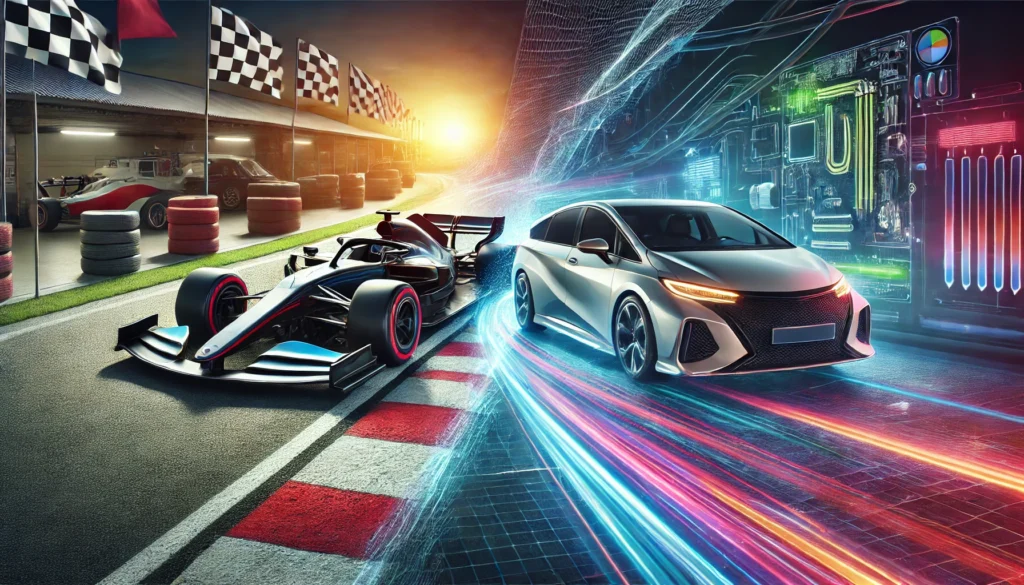
The roar of engines, the precision of engineering, and the relentless pursuit of speed have defined motorsports for decades. While these thrilling races might seem worlds apart from the cars we drive daily, the influence of racing technology on commercial vehicles is profound. Across the US and Europe, automakers leverage innovations born on the racetrack to enhance the safety, performance, and efficiency of consumer vehicles.
Pioneering Performance
Racing has always been a proving ground for cutting-edge technology, pushing the limits of what cars can achieve. Many performance-enhancing features we now take for granted in commercial cars first emerged in motorsports.
Take aerodynamics as an example. In racing, engineers fine-tune every detail of a car’s shape to minimize drag and maximize speed. These principles have since made their way into commercial car designs, improving fuel efficiency and overall stability. Today, sleek sedans and sporty SUVs owe much of their fuel-saving prowess to lessons learned in wind tunnels built for race cars.
Advanced materials are another area where racing has driven progress. Carbon fiber, known for its lightweight yet incredibly strong properties, was once exclusive to Formula 1 and Le Mans prototypes. Now, you can find carbon fiber components in high-performance sports cars and even some premium sedans, reducing weight and improving handling without compromising safety.
Safety Innovations for All
The high-stakes environment of motorsports demands an unwavering commitment to safety, leading to groundbreaking advancements that have saved countless lives on and off the track. Racing technology often pioneers safety features long before they become standard in commercial vehicles.
Anti-lock braking systems (ABS), for instance, were first developed for race cars to prevent skidding during hard braking. Today, ABS is a standard feature in nearly all commercial vehicles, providing drivers with greater control in emergency situations. Similarly, traction control systems, which improve grip on slippery surfaces, were initially designed for racing but are now common in everyday cars, particularly in regions prone to icy or wet roads.
Crash testing in motorsports has also had a lasting impact. The rigorous testing of race cars has influenced the development of crumple zones and advanced structural designs that absorb impact energy in collisions. The result is safer vehicles for families, commuters, and drivers around the world.
From Hybrid Racers to Eco-Friendly Road Cars
Sustainability is a growing priority in both racing and consumer markets, and hybrid and electric vehicle (EV) technology is one of the clearest examples of this crossover. Racing series like Formula E and the hybrid-focused Le Mans prototypes have been instrumental in advancing battery technology, energy recovery systems, and efficient powertrains.
Regenerative braking, a feature now common in EVs and hybrids, was first perfected on the racetrack. This technology captures energy lost during braking and reuses it, extending battery life and improving efficiency. These advancements are shaping the future of mobility, helping to make EVs more practical and appealing to everyday drivers.
As automakers in the US and Europe invest heavily in electrification, the influence of racing is more apparent than ever. The rigorous demands of motorsports accelerate innovation, ensuring that commercial EVs benefit from cutting-edge advancements in range, charging speeds, and performance.
Enhancing the Driving Experience
Racing’s emphasis on precision and responsiveness has also transformed the driving experience for consumers. Many features that were once reserved for race cars now make everyday driving more enjoyable and engaging.
Steering and suspension systems, for instance, have been refined through motorsports to provide better feedback and control. Whether you’re navigating tight corners on a scenic route or simply parking in a crowded lot, these systems make modern cars feel more dynamic and responsive.
Driver-assistance technologies have also been influenced by racing. High-tech telemetry systems used in motorsports to monitor performance in real time have inspired features like adaptive cruise control, lane-keeping assist, and even automated driving capabilities. These innovations not only make driving safer but also more convenient and enjoyable.
A Legacy of Innovation
The connection between motorsports and commercial cars is more than a one-way transfer of technology; it’s a cycle of innovation. Automakers use the racetrack to test the limits of their engineering, while the lessons learned feed back into the development of road cars. In turn, the success of commercial vehicles funds further advancements in racing, creating a continuous loop of progress.
In the US and Europe, where both motorsports and automotive markets thrive, this symbiotic relationship drives the industry forward. Racing inspires the passion and creativity needed to tackle challenges, whether it’s improving safety, enhancing performance, or developing sustainable solutions.
Looking Ahead
As the automotive world shifts toward electrification, autonomy, and sustainability, the role of racing technology in shaping the future of commercial vehicles is more important than ever. New racing series focused on electric and hydrogen-powered cars are pushing the boundaries of what’s possible, paving the way for cleaner, smarter, and more efficient vehicles.
For everyday drivers, the impact of racing is felt every time we get behind the wheel. From the safety features that protect us to the performance technologies that make driving a joy, motorsports continues to fuel progress.
So the next time you see a race car speeding down the track, remember: what starts in motorsports doesn’t stay there. It’s shaping the vehicles we drive every day, bringing the thrill of innovation to the roads we travel.