As urban areas grow more crowded, ensuring pedestrian safety has become a top priority for cities and automakers alike. With advanced technologies paving the way, AI-based crowd detection is emerging as a groundbreaking solution to enhance pedestrian safety in bustling cityscapes. By combining real-time data analysis with intelligent decision-making, AI systems are transforming how vehicles and infrastructure respond to the presence of pedestrians, making urban areas safer for everyone.
In 2024, both the United States and Europe are adopting AI-powered crowd detection technologies, but their approaches vary based on unique urban challenges and infrastructure goals. Here’s how this cutting-edge innovation is making a difference across these regions and why it’s shaping the future of pedestrian safety.
What is AI-Based Crowd Detection?
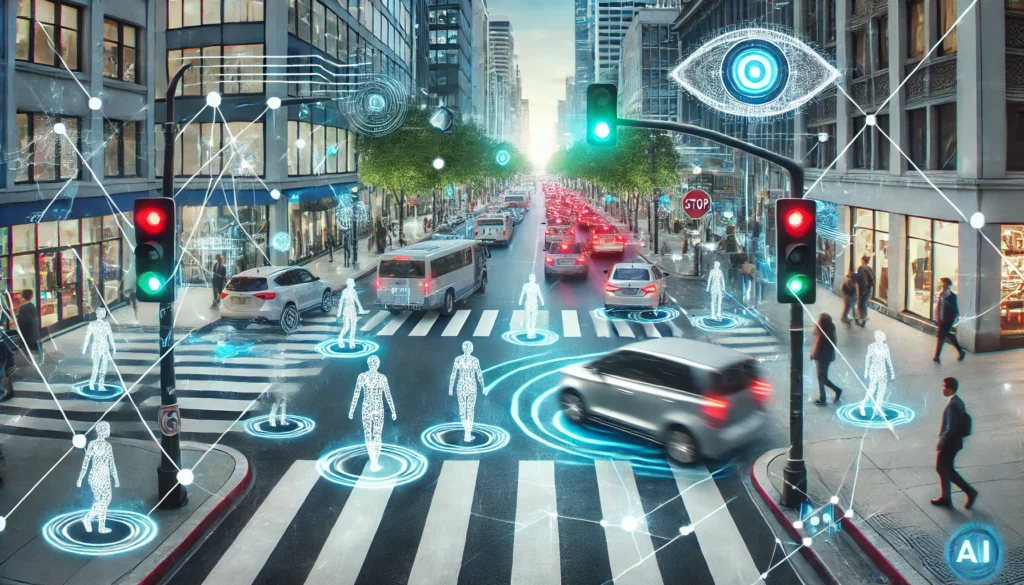
AI-based crowd detection systems use cameras, sensors, and machine learning algorithms to analyze the movement of pedestrians in real time. These systems can identify dense crowds, anticipate movements, and detect individuals entering high-risk areas like crosswalks or intersections. By recognizing patterns and predicting behavior, the technology enables vehicles and smart city infrastructure to respond proactively to ensure safety.
For example, a smart traffic light equipped with AI crowd detection might extend green lights for pedestrians during peak hours or alert drivers to slow down when large groups are near the road. In vehicles, AI systems can enhance advanced driver-assistance features by recognizing and prioritizing pedestrians in crowded urban environments.
This technology isn’t just about spotting people—it’s about understanding context, such as distinguishing between a stationary group waiting at a bus stop and pedestrians actively crossing the street.
The US Approach: Addressing Diverse Urban Challenges
In the United States, AI-based crowd detection is being implemented to address the complexities of urban environments, from dense city centers like New York and Chicago to sprawling suburban areas with growing pedestrian traffic. American automakers and tech companies like Tesla, Waymo, and Nvidia are integrating this technology into autonomous vehicles and advanced driver-assistance systems.
AI crowd detection in the US often focuses on improving pedestrian safety at intersections and school zones, where accidents are more likely to occur. Smart intersections equipped with AI can adjust traffic flow in real time, ensuring that pedestrians have enough time to cross safely. In autonomous vehicles, crowd detection enhances decision-making, allowing cars to navigate crowded areas with precision and caution.
However, the US faces challenges in deploying AI systems uniformly due to its varied infrastructure and decentralized urban planning. Despite this, the combination of strong tech innovation and government initiatives supporting smart city projects is accelerating adoption.
Europe: Prioritizing Smart Cities and Sustainability
Europe’s approach to AI-based crowd detection aligns with its broader goals of creating sustainable, pedestrian-friendly cities. European urban planning often emphasizes compact, walkable layouts, making pedestrian safety a natural focus for technological innovation. Cities like Amsterdam, Paris, and Berlin are integrating AI crowd detection into their transportation networks to create smarter and safer public spaces.
European automakers such as Volvo, BMW, and Audi are incorporating crowd detection systems into their vehicles, often complementing existing safety features like automatic emergency braking and pedestrian alerts. These systems are designed to work seamlessly with smart city infrastructure, creating a cohesive ecosystem where vehicles and urban environments collaborate to protect pedestrians.
In Europe, AI-based crowd detection is also part of the push for sustainability. By optimizing pedestrian crossings and reducing traffic congestion, the technology helps lower emissions and supports the region’s commitment to green mobility.
Why AI-Based Crowd Detection Matters
Pedestrian safety is a global concern. In both the US and Europe, pedestrian fatalities account for a significant percentage of road traffic deaths. AI-based crowd detection offers a proactive solution, addressing risks before accidents occur. For cities, it means fewer collisions and a safer environment for residents and tourists alike. For automakers, it enhances vehicle safety, earning trust and meeting stringent safety standards.
This technology also plays a critical role in supporting autonomous vehicles. Navigating crowded urban areas is one of the biggest challenges for self-driving cars, and AI-powered crowd detection helps bridge the gap between human intuition and machine learning.
Overcoming Challenges
Despite its potential, deploying AI-based crowd detection comes with challenges. In the US, scaling the technology across diverse urban and suburban settings requires significant investment in infrastructure. Privacy concerns also arise, as systems rely on cameras and sensors to monitor public spaces.
In Europe, ensuring interoperability between vehicles and smart city systems is essential for seamless functionality. Coordinating across multiple countries with varying regulations can complicate deployment, but the European Union’s focus on standardization is helping to address this.
A Safer Urban Future
AI-based crowd detection is redefining pedestrian safety in cities around the world. In the US, the focus is on tackling diverse urban challenges and supporting autonomous vehicles. In Europe, the technology integrates with smart city initiatives to create sustainable, people-first urban environments.
As AI systems continue to evolve, the possibilities for enhancing pedestrian safety are limitless. From smarter intersections to self-driving cars that adapt to crowded environments, the future of urban mobility is one where technology and human safety go hand in hand. With AI-powered crowd detection, cities are taking a giant step toward becoming safer, smarter, and more inclusive for everyone.