Travel is evolving, and with it comes a new way to explore destinations: driverless car rentals tailored for tourists. In 2024, autonomous vehicles are not just about getting from point A to B; they are about creating immersive, personalized experiences for travelers. By combining convenience, cutting-edge technology, and local knowledge, these driverless rentals are redefining tourism in both the United States and Europe.
While the concept of autonomous vehicles is growing globally, the way they are being integrated into tourism differs significantly between the US and Europe. Let’s explore how these innovations are transforming the travel experience and what sets each region apart.
What Are Driverless Car Rentals for Tourists?
Driverless car rentals are autonomous vehicles designed to cater specifically to tourists. These vehicles are equipped with advanced navigation systems, AI-driven tour guides, and pre-programmed routes that allow travelers to explore cities, landmarks, and scenic routes without needing a driver.
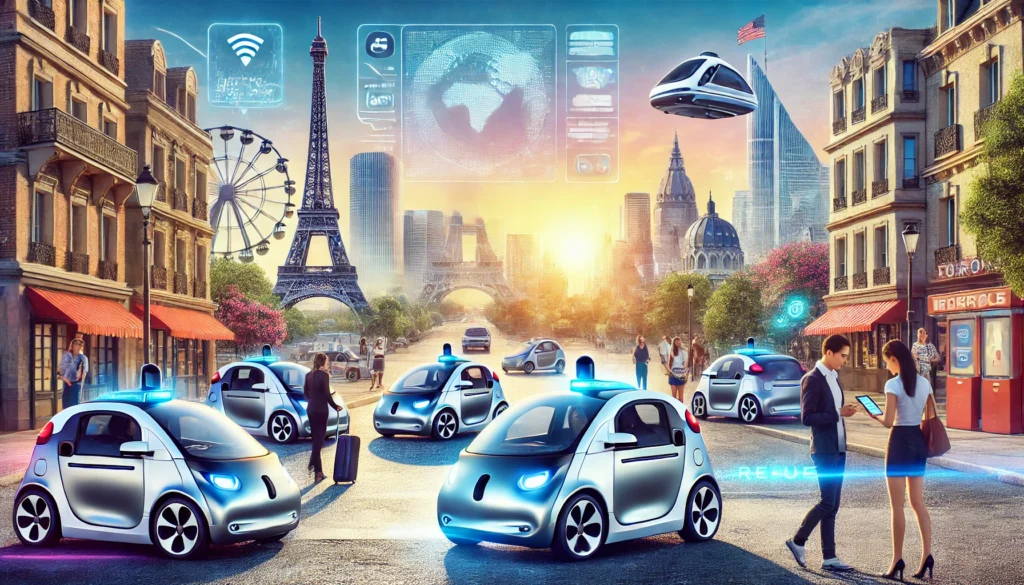
Imagine arriving in a city like Paris or San Francisco, renting a driverless car, and having it guide you through iconic attractions while providing commentary tailored to your interests. From pointing out historical landmarks to suggesting hidden gems, these cars take the hassle out of navigating unfamiliar roads, leaving travelers free to enjoy the experience.
The US: Road Trips and Customization
In the United States, driverless car rentals are gaining popularity for road trips and exploring sprawling destinations. With vast landscapes and an established car rental culture, autonomous vehicles are being tailored to meet the needs of adventure-seeking tourists.
Tourist-friendly cities like Las Vegas, Miami, and Los Angeles are embracing this technology. Visitors can rent driverless cars that come with personalized travel itineraries. For example, a road trip along the Pacific Coast Highway could include stops at scenic viewpoints, restaurants, and attractions, all curated by AI.
The US’s love for customization shines through in these offerings. Travelers can select themes, such as foodie tours, national parks, or cultural experiences. The vehicle’s AI adjusts routes, suggests activities, and even plays curated playlists to enhance the journey. However, challenges like varying state regulations and longer distances between attractions mean that driverless rentals in the US often focus on specific cities or regions for now.
Europe: Urban Exploration and Cultural Depth
In Europe, driverless car rentals are being integrated into urban tourism and short-distance travel. Cities like Paris, Amsterdam, and Barcelona are leading the way, offering tourists a seamless way to explore historic streets and cultural landmarks.
The compact nature of European cities makes them ideal for autonomous vehicles. These cars excel at navigating narrow streets and delivering passengers directly to attractions without the need for parking. Tourists can hop into a driverless car and enjoy a narrated journey through landmarks such as the Eiffel Tower, Sagrada Familia, or the canals of Amsterdam.
Sustainability is a key focus in Europe’s approach. Many driverless rentals are electric, aligning with Europe’s commitment to reducing carbon emissions and promoting eco-friendly travel. Some programs even integrate with public transportation, allowing tourists to switch seamlessly between autonomous vehicles, trains, and buses.
Benefits of Driverless Car Rentals for Tourists
Driverless car rentals offer convenience and freedom that traditional guided tours can’t match. Travelers can set their own schedules, linger at attractions they love, and skip the ones they don’t. With AI-powered tour guides, they receive real-time information and recommendations tailored to their interests.
These vehicles also enhance accessibility. Tourists who may not feel comfortable driving in a foreign country or navigating unfamiliar traffic rules can still explore freely. Additionally, the technology ensures safety by adhering to traffic regulations and avoiding risky driving behaviors.
For families, driverless cars provide a stress-free travel experience. Parents can focus on enjoying the journey with their kids while the car takes care of navigation and parking.
Challenges and the Road Ahead
While the potential of driverless car rentals is exciting, challenges remain. In the US, state-by-state regulatory differences can complicate the implementation of autonomous vehicle networks. In Europe, navigating historic city centers with restrictions on vehicles requires careful planning.
Tourists may also have initial reservations about trusting fully autonomous vehicles. Building confidence through user-friendly interfaces, robust safety features, and transparent communication will be crucial for adoption.
A New Era of Travel
Driverless car rentals are more than a convenience—they’re an opportunity to transform the way people experience new destinations. In the US, they offer a personalized, adventurous way to explore vast landscapes and iconic road trip routes. In Europe, they provide a sophisticated, eco-friendly option for navigating historic cities and cultural landmarks.
As technology advances and autonomous vehicles become more integrated into tourism, these rentals are set to become a staple of modern travel. Whether you’re marveling at the Grand Canyon or gliding through the streets of Florence, driverless cars are here to make every journey unforgettable. Welcome to the future of exploration—where the ride is as remarkable as the destination.