The future of emergency medical services is here, and it’s faster, smarter, and more efficient than ever. Driverless ambulances and emergency vehicles are poised to transform the way first responders reach those in need, offering quicker response times and safer transportation. With advancements in autonomous driving technology, the US is at the forefront of this groundbreaking innovation, aiming to save lives and revolutionize emergency response systems.
As we move through 2024, the adoption of driverless emergency vehicles is accelerating, driven by a need for speed, precision, and reliability in life-saving situations. Let’s explore how this technology is reshaping emergency services in the United States.
What Are Driverless Emergency Vehicles?
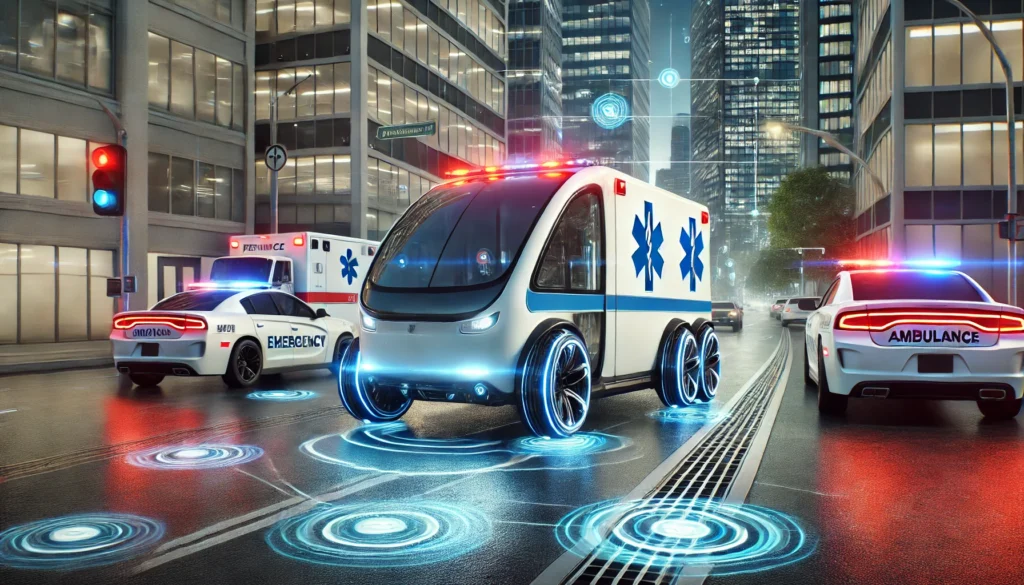
Driverless ambulances and emergency vehicles are equipped with advanced autonomous driving systems that allow them to navigate roads without human intervention. Using a combination of AI, LiDAR, cameras, and real-time GPS, these vehicles can safely and efficiently travel to their destinations, even in the most complex traffic conditions. Unlike traditional ambulances that rely on trained drivers to navigate through congested streets, these autonomous vehicles are programmed to prioritize safety and speed, ensuring critical patients receive care as quickly as possible.
These vehicles are not only about getting from point A to point B faster. Many are designed with onboard medical technology, allowing paramedics or AI-assisted systems to begin treatment immediately, even before arriving at the hospital. This dual functionality is a game-changer for the healthcare and emergency response sectors.
Why the US Needs Driverless Ambulances
The United States faces unique challenges in emergency medical response. Traffic congestion in urban centers, long distances in rural areas, and driver shortages are just a few of the obstacles impacting response times. Traditional ambulances, while effective, are often hindered by these factors, leading to delays that can cost lives.
Driverless ambulances address these challenges head-on. In congested cities like Los Angeles and New York, autonomous vehicles can leverage real-time traffic data to find the fastest routes, avoiding bottlenecks and ensuring they arrive at emergencies quickly. In rural areas, where ambulances may need to travel significant distances, driverless vehicles can operate around the clock without the need for rest breaks, reducing response times and improving access to emergency care.
Enhancing Speed and Safety in Emergency Response
Speed is critical in emergencies, but safety cannot be compromised. Driverless ambulances are programmed to balance both, using cutting-edge technologies to navigate safely through busy streets. With V2X (Vehicle-to-Everything) communication systems, these vehicles can interact with traffic lights, other cars, and even pedestrians to clear a path, ensuring they reach their destination without unnecessary delays.
For example, a driverless ambulance approaching an intersection can communicate with traffic signals to prioritize its route, turning red lights green to allow uninterrupted travel. This capability significantly reduces the chances of collisions and ensures a smooth journey for patients and first responders.
Safety features in these vehicles also extend to passengers. Autonomous systems are designed to provide stable and smooth rides, minimizing the risk of further injury during transportation. Additionally, onboard cameras and sensors continuously monitor the patient’s condition, transmitting real-time data to hospitals so medical teams can prepare for immediate intervention upon arrival.
Overcoming Challenges with Driverless Technology
While the potential of driverless ambulances is immense, the technology comes with challenges. Ensuring reliability in all weather conditions, maintaining robust cybersecurity to protect sensitive data, and gaining public trust in autonomous systems are key hurdles that need to be addressed. However, significant progress is being made in these areas.
Many US cities are already testing driverless emergency vehicles in controlled environments to refine their performance and safety standards. Collaborations between tech companies, automakers, and healthcare providers are accelerating the development and deployment of these vehicles, paving the way for widespread adoption.
A Step Toward Smarter Healthcare
Driverless ambulances are not just about transportation; they represent a broader shift toward smarter healthcare. By integrating AI-powered diagnostics and telemedicine capabilities, these vehicles can provide critical care on the go. For instance, autonomous ambulances equipped with defibrillators and real-time communication tools can guide bystanders in performing life-saving procedures while en route to the scene. This added layer of care ensures that no time is wasted, even before paramedics arrive.
Moreover, driverless technology reduces the burden on healthcare systems by optimizing resource allocation. With fewer human drivers needed, hospitals and emergency services can focus on deploying skilled medical personnel where they’re most needed, improving overall efficiency.
The Road Ahead for US Emergency Services
As 2024 unfolds, driverless ambulances and emergency vehicles are more than a glimpse into the future—they’re becoming a reality. With their ability to navigate faster, safer, and more efficiently than traditional vehicles, they hold the promise of saving countless lives and redefining emergency medical response in the United States.
While the journey to full-scale implementation may take time, the foundation is already in place. The US is embracing this innovation, leading the way in autonomous technology and emergency care. Whether it’s a heart attack in a bustling city or a critical injury in a remote area, driverless ambulances are set to ensure help arrives faster than ever before. This is the future of emergency response, and it’s one we can all look forward to.