Electric vehicles (EVs) are no longer just a niche option for environmentally conscious drivers—they’re becoming a mainstream choice for millions of Americans. As EV adoption accelerates, one of the most significant challenges lies in creating a reliable infrastructure to support long-distance travel. Enter high-speed charging corridors, a transformative initiative aimed at making EV road trips as seamless as filling up a gas tank. In 2025, the development of these corridors is reshaping the future of transportation across the United States.
What Are High-Speed Charging Corridors?
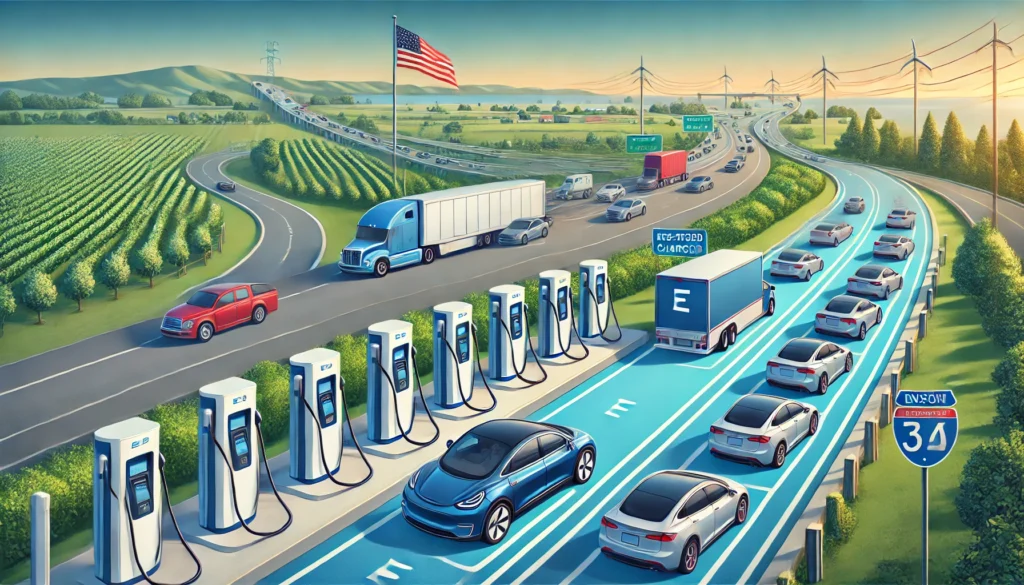
High-speed charging corridors are strategically placed networks of fast-charging stations along major highways and interstates. These stations allow EV drivers to recharge their vehicles quickly and conveniently during long journeys, bridging the gap between cities and rural areas. With the ability to deliver a significant charge in as little as 20–30 minutes, these corridors eliminate the “range anxiety” that has historically been a barrier to EV adoption.
In the U.S., automakers, energy companies, and government initiatives are joining forces to build these corridors. Projects like the National Electric Vehicle Infrastructure (NEVI) program are paving the way, with billions of dollars invested in establishing high-speed chargers across all 50 states.
Expanding EV Access Nationwide
One of the primary goals of high-speed charging corridors is to make EV travel accessible to all Americans, regardless of where they live. Historically, the lack of charging stations in rural and underserved areas has been a significant limitation. By 2025, high-speed charging stations are being deployed in regions previously considered charging deserts, ensuring that even remote areas are part of the EV revolution.
For example, corridors connecting cities like Denver to Salt Lake City or Dallas to Houston are seeing rapid development, with fast-charging stations positioned every 50 miles along key routes. This strategic placement ensures that drivers can confidently embark on cross-country journeys without worrying about finding a charging station.
The Role of High-Speed Chargers in EV Adoption
High-speed charging technology plays a crucial role in making EVs practical for long-distance travel. Unlike standard home chargers, which take several hours to fully charge an EV, high-speed chargers use DC fast-charging technology to replenish batteries much faster. This is especially important for travelers on tight schedules who need to get back on the road quickly.
In addition to speed, these charging corridors promote standardization. By using universally compatible connectors like CCS (Combined Charging System) and CHAdeMO, charging stations cater to a wide range of EV models. Tesla’s recent decision to open its Supercharger network to non-Tesla vehicles further enhances accessibility, making high-speed corridors even more inclusive.
Supporting a Greener Future
High-speed charging corridors are not just about convenience—they’re a vital part of the U.S.’s transition to cleaner energy. By enabling more people to choose EVs over gas-powered vehicles, these corridors contribute to reducing greenhouse gas emissions and improving air quality. The electricity used at many high-speed charging stations increasingly comes from renewable sources like wind and solar, further enhancing their environmental benefits.
As the U.S. moves closer to achieving its goal of net-zero emissions by 2050, high-speed charging corridors are playing a pivotal role. By supporting the widespread adoption of EVs, they are helping to reduce the carbon footprint of transportation, which is currently one of the largest contributors to climate change.
Challenges and Opportunities
While the development of high-speed charging corridors is promising, it’s not without its challenges. Building an extensive network of fast chargers requires significant investment in infrastructure, grid upgrades, and collaboration between public and private sectors. Additionally, ensuring reliable access to these stations during peak travel times remains a priority to avoid long waits for charging.
Despite these hurdles, the opportunities are immense. High-speed charging corridors are not only improving the EV ownership experience but also creating jobs and driving innovation in clean energy technology. They are a testament to the U.S.’s commitment to a sustainable and interconnected transportation future.
Looking Ahead: A Roadmap to 2025 and Beyond
As we move through 2025, high-speed charging corridors are becoming a critical part of the U.S. transportation landscape. With federal funding and industry collaboration driving progress, these networks are making it easier than ever for Americans to embrace EVs. From cross-country road trips to daily commutes, the convenience and reliability of high-speed chargers are empowering drivers to go electric without hesitation.
The future of transportation is electric, and high-speed charging corridors are paving the way. By addressing the needs of today’s EV drivers while preparing for tomorrow’s technological advancements, these corridors represent a giant leap forward for sustainable travel across the United States. Whether you’re traveling coast to coast or just heading to the next state over, the road ahead has never looked brighter—or greener.