Electric scooters are revolutionizing urban mobility in cities around the world, and Europe is at the forefront of this transformation. These compact, eco-friendly vehicles have become an essential part of how people navigate congested city streets, offering an efficient, sustainable, and convenient alternative to traditional transportation. But how do European cities compare to their counterparts in the U.S. when it comes to embracing the e-scooter revolution? Let’s take a closer look at how electric scooters are shaping urban life in Europe and what the U.S. can learn from their example.
The Rise of Electric Scooters in Europe
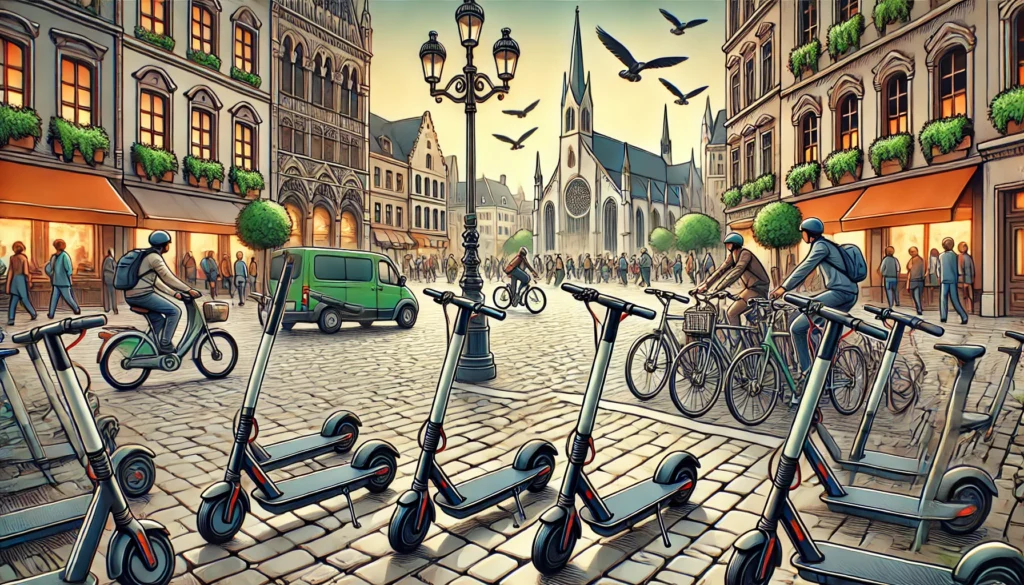
In 2025, electric scooters are more than just a trendy mode of transportation in Europe; they’re a practical solution to many urban challenges. Cities like Paris, Berlin, and Barcelona have embraced shared e-scooter systems as part of their broader efforts to reduce traffic congestion and carbon emissions. These scooters are widely available through apps, allowing residents and tourists alike to rent them on demand and zip through city streets with ease.
Europe’s dense urban areas make e-scooters particularly effective. The compact nature of these cities means that many trips are short, making scooters an ideal choice for covering distances that are too far to walk but too close for a car or public transport. With dedicated bike lanes and a focus on pedestrian-friendly infrastructure, European cities have created an environment where e-scooters thrive.
U.S. Cities: Following the Path, But with Challenges
While electric scooters have also gained popularity in the U.S., the adoption has been slower and more fragmented compared to Europe. Cities like San Francisco, Austin, and Washington, D.C., have implemented scooter-sharing programs, but many others struggle to integrate these vehicles into their urban landscapes.
One key difference is infrastructure. U.S. cities are often more sprawling, making scooters less practical for longer commutes. Additionally, the lack of widespread bike lanes and pedestrian-friendly streets has made it more challenging for scooters to gain traction. Safety concerns, such as interactions with car traffic, remain a significant hurdle.
Despite these challenges, the demand for electric scooters is growing in the U.S., especially in dense urban centers. American cities are increasingly looking to Europe as a model for how to create policies and infrastructure that support micro-mobility solutions like e-scooters.
Sustainability and Climate Goals
Europe’s strong commitment to environmental sustainability is one of the driving forces behind the widespread adoption of electric scooters. Cities are under pressure to meet ambitious climate goals, and reducing car usage is a critical component of these efforts. By encouraging the use of electric scooters, European cities are cutting down on emissions while also reducing noise pollution and traffic congestion.
In the U.S., environmental concerns are also pushing the micro-mobility movement forward. As more cities aim to lower their carbon footprints, e-scooters are being seen as a valuable piece of the puzzle. However, the environmental impact of scooter-sharing programs depends on responsible practices, such as ensuring that scooters are durable and batteries are recycled properly. Both Europe and the U.S. are working on improving these aspects to make the e-scooter revolution truly sustainable.
Public Policy and Regulation
Europe’s success with electric scooters is partly due to its proactive approach to regulation. Many European cities have implemented clear rules for scooter usage, including speed limits, designated parking areas, and no-ride zones. These measures ensure that scooters coexist harmoniously with pedestrians and other vehicles, creating a safer and more organized urban environment.
In contrast, U.S. cities have faced challenges with unregulated scooter programs leading to issues like sidewalk clutter and unsafe riding practices. However, American cities are beginning to adopt stricter regulations, taking inspiration from Europe’s balanced approach. By creating clear guidelines and working closely with scooter-sharing companies, the U.S. is slowly building a framework that supports safer and more widespread e-scooter use.
The Road Ahead
Electric scooters are more than just a convenient way to get around; they represent a shift toward more sustainable and efficient urban mobility. Europe’s embrace of e-scooters highlights the potential of these vehicles to transform city life, making transportation cleaner, quicker, and more accessible. In the U.S., there’s growing recognition of the role scooters can play in solving urban challenges, but progress depends on building the right infrastructure and policies.
As we move through 2025, it’s clear that electric scooters are here to stay. Whether in the cobblestone streets of Europe or the wide avenues of the U.S., these compact vehicles are reshaping how we think about getting from point A to point B. With innovation, collaboration, and a commitment to sustainability, both regions can continue to harness the potential of e-scooters to create smarter, greener cities for the future.