When we talk about fast charging in the US and EU markets, most drivers focus on kilowatts and charging speed. You see numbers like 150 kW, 250 kW, or even 350 kW and expect your EV to fill up in minutes. But what many people don’t realize is that behind those impressive figures lies a silent challenge: heat. Connector temperatures and cable cooling systems quietly decide how fast your car can actually charge.
Fast charging pushes massive amounts of current through cables and connectors. In simple terms, more current means more heat. Even if the charger is rated for ultra-high power, the connector tip and cable can heat up quickly under heavy loads. When temperatures rise beyond safe limits, the system automatically reduces charging power to prevent damage. That’s when drivers experience unexpected slowdowns at supposedly high-speed stations.
This issue is especially relevant in regions like California, Texas, Germany, and Norway, where EV adoption is strong and fast chargers are heavily used. During peak hours or hot summer days, connector thermals become a real bottleneck. So even if the infrastructure looks advanced on paper, the thermal management behind the scenes often determines the real-world experience.
Why Connector Temperatures Matter More Than You Think
Connector thermals are not just a technical detail for engineers; they directly affect charging reliability and user satisfaction. When the metal pins inside a connector heat up, electrical resistance increases. Higher resistance generates even more heat, creating a cycle that forces the charger to reduce output. Drivers may blame the car or the network, but often the root cause is simple thermal limitation.
In the US and EU, modern DC fast chargers follow strict safety standards. If sensors inside the connector detect rising temperatures, the system reacts instantly. Power levels are lowered to keep components within safe operating limits. While this protects the hardware and your vehicle, it also means your 350 kW session might drop to 180 kW or lower without any clear explanation on the screen.
Weather also plays a huge role in this equation. In southern Europe or parts of the American Southwest, ambient temperatures can already be high before charging even starts. Add continuous back-to-back charging sessions at busy highway stations, and the connectors barely get time to cool down. Over time, this leads to inconsistent performance that frustrates even experienced EV owners.
Cable Cooling: The Technology Fighting the Heat
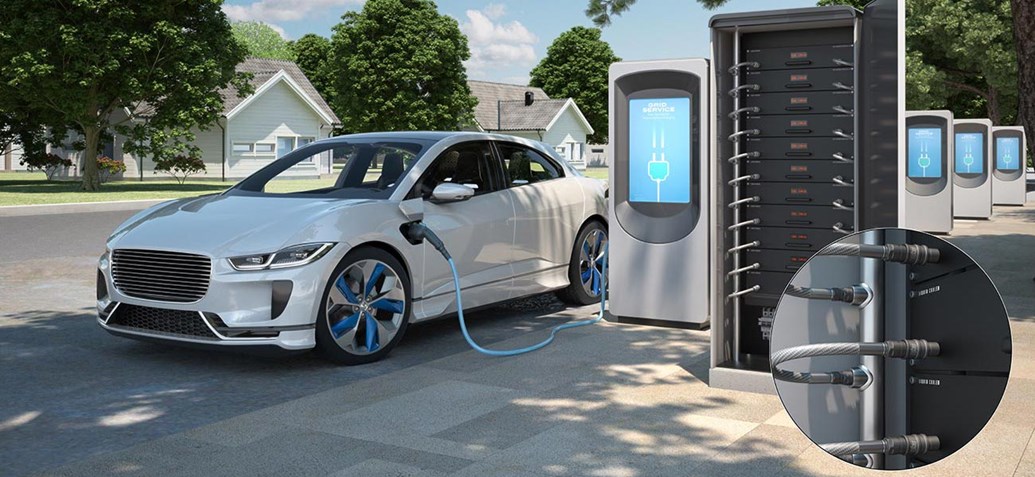
To address these challenges, many high-power charging networks in the US and EU have adopted liquid-cooled cables. Unlike traditional air-cooled systems, liquid cooling circulates a coolant through the cable to remove excess heat efficiently. This allows thinner, lighter cables to handle higher power levels without overheating. For drivers, it means more stable high-speed charging sessions.
Liquid-cooled cables are especially important for 250 kW and 350 kW chargers installed along major highways. Without advanced cooling, these chargers would struggle to maintain peak performance for extended periods. By keeping connector temperatures under control, networks can deliver closer to their advertised speeds. It’s a critical upgrade as EV battery capacities continue to grow.
However, cooling systems also add complexity and cost. Pumps, coolant lines, and sensors must work flawlessly in different climates, from freezing Nordic winters to scorching Mediterranean summers. If maintenance is neglected, performance can suffer. This is why leading charging operators in both markets are investing heavily in smarter monitoring and predictive maintenance tools.
How Software Is Becoming the Real Game Changer
While hardware improvements are essential, software is quickly becoming the hidden hero of fast charging. Advanced charging management systems constantly monitor connector temperature, cable conditions, and power flow in real time. Instead of waiting for overheating to happen, smart algorithms can adjust current gradually to prevent sharp slowdowns.
In the US and EU markets, integration between vehicles and charging networks is improving through better communication protocols. Cars can share battery temperature and charging curves, while chargers provide detailed thermal data. This coordination allows more efficient power delivery without pushing connectors beyond safe limits. The result is a smoother and more predictable charging experience.
Some networks are even using cloud-based analytics to study usage patterns at specific locations. If a station consistently experiences high thermal stress during certain hours, operators can optimize load distribution or upgrade cooling systems proactively. This data-driven approach not only protects infrastructure but also builds driver trust in public fast charging.
What This Means for the Future of Fast Charging
As EV adoption accelerates across the United States and Europe, expectations around charging speed will only rise. Drivers want refueling times that compete with traditional gasoline stops. To meet this demand, the industry must look beyond headline power ratings and address the hidden thermal challenges inside connectors and cables.
Next-generation charging standards are already focusing on higher current capabilities. But without better thermal management and intelligent software control, higher ratings alone won’t guarantee faster sessions. Connector materials, improved cooling designs, and smarter power sharing systems will define the next wave of innovation. The goal is consistent performance, not just impressive marketing numbers.
For EV owners, understanding connector thermals can change how you view public charging. If your session slows down, it may not be a faulty charger or a weak battery. It could simply be physics at work. As networks continue investing in advanced cooling and intelligent software, the gap between advertised speeds and real-world performance will shrink, bringing us closer to truly seamless electric mobility.