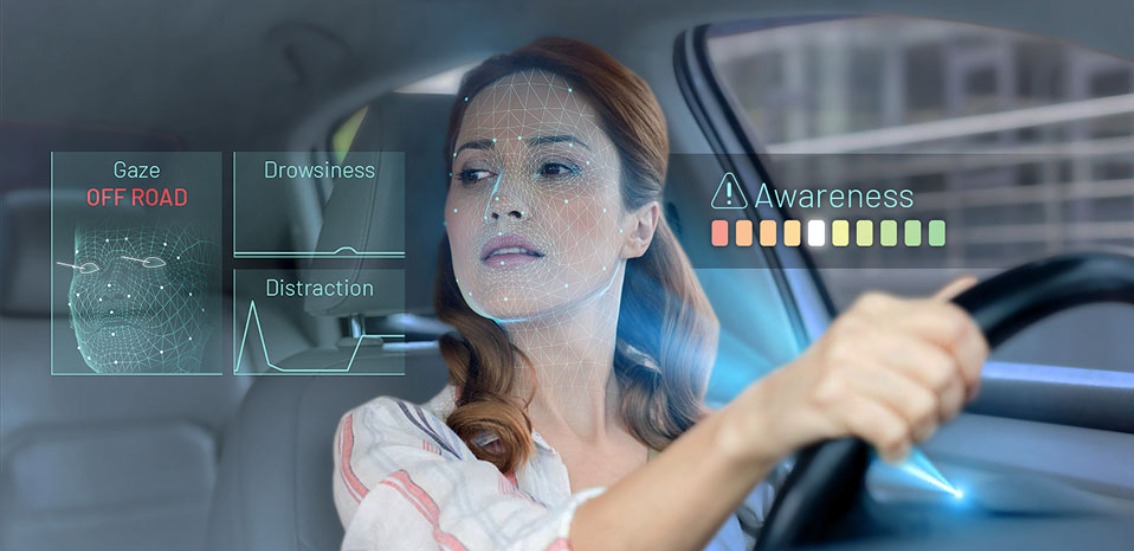
In modern vehicles, cabin sensing is no longer a luxury — it is essential for safety. Cameras, particularly infrared (IR) systems, have long been the backbone of driver monitoring systems (DMS), tracking eye movement, head position, and attention. While cameras provide rich visual data, real-world conditions can challenge their accuracy. Glare, low-light scenarios, occlusions from sunglasses, or reflections can reduce camera effectiveness, leaving gaps in monitoring. To address this, automakers in the U.S. and EU are turning to redundant sensing, combining IR cameras with radar to ensure consistent and reliable detection of driver and occupant activity.
IR cameras excel at capturing facial cues, even in low light. They can monitor eye closure, blink rates, and yawns, providing insight into drowsiness or distraction. These systems are crucial for semi-autonomous vehicles where driver engagement is required for safety. However, IR alone cannot always overcome occlusions, bright sunlight, or uneven cabin lighting. If the driver’s face is partially hidden, or if reflections interfere with detection, camera-only systems may lose reliability. Redundancy with radar helps fill these gaps and provides continuous monitoring.
Cameras are also limited when it comes to sensing the presence and subtle movements of occupants beyond the driver. Monitoring children, passengers, or pets becomes more challenging when visibility is reduced. A single sensor modality may miss critical cues, making safety decisions less robust. Combining IR cameras with radar enhances the system’s ability to track all occupants effectively and respond to emergencies more reliably.
How Radar Complements Cameras
Radar cabin sensing uses radio waves to detect motion, presence, and even vital signs such as breathing. Unlike cameras, radar is largely unaffected by lighting conditions or visual occlusions, providing a stable sensing modality in situations where cameras struggle. Short-range radar, operating around 60 GHz, is particularly effective at detecting fine movements inside the cabin.
Radar’s strength lies in its ability to sense occupants without relying on visible light. It can detect movement through shadows, dark clothing, or even materials that partially block a camera’s view. This makes radar an excellent complement to IR cameras, ensuring that monitoring continues seamlessly regardless of environmental conditions.
Another advantage of radar is its capability to capture micro-movements, such as shifts in posture or breathing patterns. These subtle indicators can be critical for detecting drowsiness or health emergencies. By integrating radar with camera data, systems can validate observations and reduce false positives, making alerts more trustworthy for drivers.
The Role of Sensor Fusion
The integration of IR and radar data relies on sensor fusion algorithms, which combine inputs from multiple sources to create a more complete picture of driver and passenger behavior. This approach ensures that a system can cross-check data from cameras with radar to improve accuracy and reduce uncertainty.
For instance, if an IR camera detects possible drowsiness, the radar can confirm occupant motion patterns to validate the alert. If radar detects normal activity, the system may delay or suppress the warning, reducing unnecessary alerts. This multi-modal approach ensures reliability without compromising safety.
Sensor fusion also allows continuous monitoring under challenging scenarios. Whether the cabin is dimly lit, the driver is wearing sunglasses, or sunlight creates glare, radar and IR together maintain situational awareness. This redundancy is key to building trust in DMS and other cabin monitoring systems.
Applications Beyond Driver Monitoring
Redundant sensing benefits more than just drowsiness detection. It can enhance child presence detection, ensuring that no occupant is left unmonitored when a vehicle is parked or in motion. Radar’s ability to sense subtle motion complements IR cameras in detecting small children, pets, or other objects that may go unnoticed.
Health monitoring is another emerging application. Radar can detect irregular breathing patterns or sudden inactivity, enabling advanced systems to issue alerts in potential medical emergencies. Cameras provide context to these alerts, allowing the vehicle to respond intelligently while minimizing false alarms.
Passenger engagement and comfort can also benefit from redundant sensing. Systems can monitor driver attentiveness while tracking passenger movement for climate control adjustments, safety reminders, or seatbelt notifications. Combining multiple sensing modalities enables a smarter, safer, and more responsive cabin environment.
Real-World Benefits and Market Trends
In the U.S. and EU, regulations and safety programs increasingly demand robust cabin monitoring. Euro NCAP and NHTSA are emphasizing driver attention and occupant monitoring, making redundancy an essential design feature. Vehicles relying on cameras alone may fail to meet emerging standards, while IR + radar systems provide the reliability needed for regulatory compliance.
Automakers are already integrating radar into mid-range and high-end vehicles, and costs are decreasing as technology matures. The combination of IR and radar improves real-world reliability, reduces false alerts, and builds driver trust — all critical for market adoption.
Consumer acceptance is equally important. Drivers are more likely to trust systems that consistently work under real-world conditions. Redundant sensing reduces frustration from false alarms while maintaining safety, resulting in higher satisfaction and confidence in ADAS technologies.
The Road Ahead
Looking forward, cabin sensing will continue evolving with additional modalities, including thermal imaging, ultrasonic sensors, and enhanced AI algorithms. The goal is to provide seamless monitoring that functions reliably in all conditions. IR and radar will remain central to these solutions, offering a resilient foundation for next-generation in-cabin safety.
Vehicles equipped with redundant sensing will deliver smarter warnings, better occupant protection, and higher regulatory compliance. As semi-autonomous and fully autonomous vehicles become more common, robust in-cabin monitoring is no longer optional — it is essential for safe, trustworthy, and intelligent driving experiences.
Redundant IR + radar systems represent a significant step beyond cameras alone, ensuring that safety is maintained even in complex, real-world environments. The combination of technologies sets the standard for the next generation of driver and occupant monitoring, promising safer roads and more confident drivers across the U.S. and Europe.