

Advanced driver‑assistance systems (ADAS) have become essential technologies in modern vehicles across the U.S. and European markets. Features like adaptive cruise control, lane‑keeping assist, and automatic emergency braking rely on a complex network of sensors to function effectively. While these sensors deliver remarkable performance when new, they can slowly lose accuracy over time due to a phenomenon called calibration drift. Understanding this drift and how self‑calibration technologies work is vital for drivers who want safe, reliable performance throughout a vehicle’s life.
In the early days of ADAS adoption, calibration was largely a one‑time procedure. Sensors were aligned at the factory, and that was expected to be enough for several years. However, real‑world driving conditions — from road vibrations to temperature shifts — can gradually impact sensor alignment. As vehicles age, these small changes compound, and the data sensors feed to onboard computers can become less precise. When that happens, ADAS features might not perform as intended, potentially compromising safety and driver confidence.
Fortunately, automotive engineers have developed ways for sensor systems to adjust themselves over time. Self‑calibration is an emerging set of technologies that enables ADAS sensors to detect and correct their own misalignment without requiring frequent shop visits. This blog will walk you through what calibration drift is, why traditional calibration isn’t enough, and how self‑calibration helps keep ADAS accurate — helping you understand why this topic matters for safety, performance, and long‑term vehicle value.
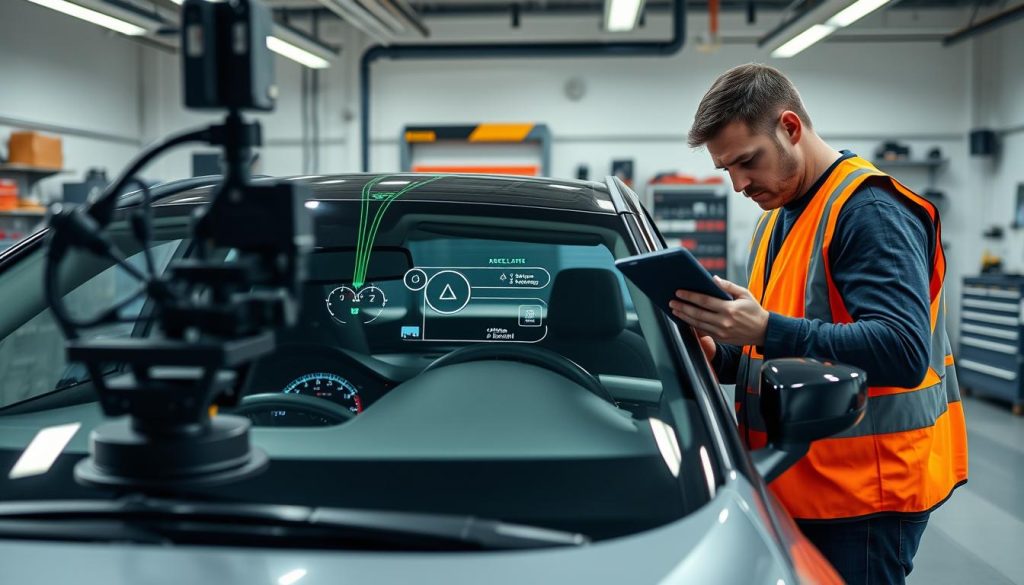
Understanding Calibration Drift and Its Impact
Calibration drift refers to the gradual change in how accurately a sensor measures the world around it. Vehicle sensors like cameras, radar, and lidar are precisely aligned at the factory so they can detect lane lines, nearby vehicles, and obstacles with high accuracy. After thousands of miles on rough roads or even small bumps and knocks, those tiny alignments can shift. Even a fraction of a degree in a camera’s tilt or a radar’s aim can affect how the system interprets its surroundings.
In practical terms, drift can cause ADAS features to behave less reliably. A lane‑keeping system might center the vehicle incorrectly between lines, or adaptive cruise control might misjudge another vehicle’s distance. These errors are usually subtle at first but can become more noticeable over time if left uncorrected. For drivers who depend on these systems for safety and convenience, even small inaccuracies can be frustrating or unsafe. That’s why calibration integrity is a topic that matters not just to engineers, but to every vehicle owner.
Calibration drift is especially important in markets like the U.S. and Europe, where ADAS features are increasingly required or recommended by safety regulators. As ADAS adoption grows, so does public expectation that these systems remain dependable year after year. Understanding how and why calibration drift happens sets the stage for exploring how technology is evolving to manage it more intelligently.
Why Traditional Calibration Isn’t Enough
For most vehicles today, ADAS calibration is handled during specific service events. If a vehicle undergoes body repair after a collision, has its windshield replaced, or experiences other front‑end work, technicians often perform calibration using specialized tools. This process usually takes place in a service bay with targets, alignment rigs, and software interfaces connected to the vehicle’s computers. When done correctly, traditional calibration restores sensor accuracy to manufacturer specifications.
However, these shop‑based calibrations are snapshot moments in time. They only occur when a trigger event happens — like a repair — and are not performed routinely as part of regular maintenance. Between these calibrations, sensors continue to operate, and drift can still occur. That gap means a vehicle might be on the road for months or even years with misaligned sensors, quietly affecting ADAS performance. For many drivers, there’s no obvious signal that something is off until a system behaves unexpectedly.
Another limitation is cost and convenience. Professional calibration requires time, technical expertise, and often a dealership or certified repair facility. For fleet operators managing dozens or hundreds of vehicles, calibration costs and downtime can add up quickly. While traditional calibration will always play a role after major events, relying solely on periodic shop calibrations is increasingly insufficient in a world where sensor complexity and safety expectations continue to rise.
How Self‑Calibration Keeps ADAS Accurate
Self‑calibration is a suite of technologies designed to help sensors adjust themselves over time using real‑world data and intelligent algorithms. Instead of waiting for a technician to realign sensors on a lift, self‑calibrating systems can detect subtle misalignments and correct them autonomously. These systems use data from multiple sensors — such as combining camera vision with radar echoes — to check for inconsistencies and adjust internal models accordingly. In some cases, this process happens continuously as the vehicle is driven.
One of the key advantages of self‑calibration is that it helps maintain accuracy between professional services. For instance, if a front camera slowly tilts after long‑term driving on rough roads, a self‑calibrating system can notice that its measurements don’t align with other sensor inputs and correct for it. This adaptive capability helps preserve ADAS performance without waiting for a scheduled calibration appointment. For everyday drivers, that means safer, more confident use of lane‑keeping, collision avoidance, and other systems over the vehicle’s lifespan.
Automakers and suppliers are actively refining these technologies, especially in software‑defined vehicles that receive over‑the‑air updates. Self‑calibration frameworks use advanced mathematics, redundancy checks, and machine learning to ensure corrections are accurate and reliable. While these systems do not eliminate the need for professional calibration after certain events, they dramatically reduce the window in which drift can degrade performance. In markets like the U.S. and Europe, where safety ratings and consumer expectations are high, self‑calibration represents a major step forward in long‑term sensor performance.
As ADAS becomes more embedded in everyday driving, keeping sensors accurate over years is no longer optional — it’s essential. Calibration drift may be gradual, but its impact can be meaningful for safety and performance. Self‑calibration technologies offer a smarter, more adaptive way to sustain ADAS accuracy without constant shop visits. For drivers and fleet managers alike, understanding and embracing these innovations means enjoying safer, more reliable systems that stand the test of time.


