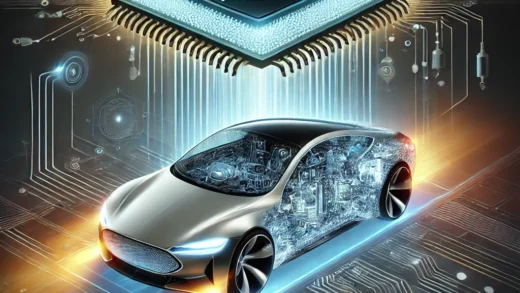
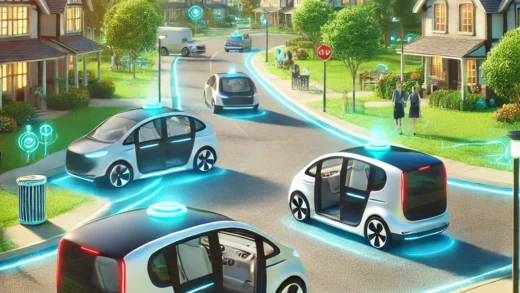
The automotive industry across the US and Europe is undergoing a major shift as vehicles evolve from hardware-centric machines into fully software-defined platforms. This transformation demands a digital backbone capable of handling massive data loads, cloud-native applications, global connectivity and continuous software updates. To meet these demands, European automakers are forming strategic partnerships with hyperscale cloud providers such as AWS, Microsoft Azure and Google Cloud. These collaborations are rapidly becoming one of the most important drivers behind the rise of software-defined vehicles (SDVs).
This article explores why these partnerships matter, what they enable and how they are shaping the future of mobility across both continents.

Why European OEMs are turning to hyperscalers?
Building a software-defined vehicle is far more complex than adding a few connected features. Automakers need high-performance computing, scalable backend systems, real-time analytics, robust cybersecurity, global data storage and the ability to deliver new features remotely. Traditional automotive IT infrastructures are not built for this level of speed or scale.
European OEMs, many of which have deep roots in mechanical engineering, recognize that competing in a digital era requires the capabilities of cloud giants. Hyperscalers bring global cloud networks, advanced AI tools, large-scale data processing, digital-twin simulation environments and powerful development platforms. These assets accelerate vehicle software development, reduce cost and make continuous innovation possible.
For companies that must deliver products across both US and European markets, these partnerships ensure consistent digital service quality, regardless of geography. This gives automakers the reliability and reach they need to support millions of connected vehicles while keeping pace with the competition.
How hyperscaler partnerships support the SDV shift?
Hyperscalers serve as the digital foundation for software-defined vehicles. Their platforms allow automakers to build, test and deploy vehicle software more rapidly and securely. One of the biggest advantages is the migration from physical testing to cloud-native simulation. Virtual environments running on AWS, Azure or GCP can simulate complex driving scenarios, sensor behavior and system interactions long before physical prototypes exist.
These partnerships also enable automakers to handle the enormous data flow generated by modern vehicles. As cars collect information from sensors, cameras, radars and user interactions, hyperscaler cloud systems store, analyze and process that data in real time. This drives new capabilities in advanced driver-assistance systems, predictive maintenance, fleet services, intelligent navigation and personalized in-car experiences.
Connectivity services are another cornerstone. Over-the-air (OTA) updates require secure, reliable and global infrastructures. Hyperscalers provide exactly that. With a robust backend, automakers can deliver frequent software improvements, new features and performance upgrades to customers throughout the vehicle’s life. This marks a significant shift from traditional automotive models, where updates were limited to annual refreshes or dealer visits.
Why the US and European markets drive this trend?
The US and Europe are two of the most advanced regions in connected mobility. Consumers expect their vehicles to behave like digital devices—personalized, constantly updated and seamlessly integrated with their daily lives. At the same time, regulatory environments in both markets place strong demands on data protection, cybersecurity and functional safety.
European OEMs must operate within strict data sovereignty laws while maintaining global connectivity. Hyperscalers help them achieve this through region-specific data centers and compliance-driven solutions. In the US, where digital ecosystems are deeply integrated into consumers’ lives, automakers must match the pace of innovation set by tech companies. Partnerships with hyperscalers help level the playing field.
Together, these forces create a perfect environment for SDV growth. Automakers need the cloud’s power; hyperscalers seek deeper entry into the mobility space. Their collaboration becomes mutually beneficial and strategically essential.
What these partnerships mean for automakers?
For automakers, the shift to hyperscaler-backed SDV platforms signals a profound operational change. Software development becomes more agile, and updates move from multi-year cycles to weekly or monthly releases. Cloud-powered DevOps and continuous integration environments enable faster experimentation and improved quality.
Data becomes a central asset. With hyperscaler analytics and AI tools, OEMs can identify patterns in customer behavior, optimize energy use, predict component failures and enhance driving assistance systems. These insights feed directly into new digital services—subscriptions, personalized upgrades and connected features that generate recurring revenue.
Hyperscaler partnerships also help reduce complexity. Instead of building every layer of the digital stack themselves, OEMs can focus on brand-differentiating software such as user interfaces, mobility services and proprietary driving algorithms. This frees them from creating redundant IT infrastructure and allows them to invest more in core automotive innovation.
Challenges and how automakers are navigating them
Despite the advantages, working with hyperscalers introduces challenges. Data governance is one of the biggest concerns, particularly in Europe. Automakers must strike a balance between leveraging cloud capabilities and retaining control over customer data. Many are designing hybrid cloud strategies where sensitive data remains local while large-scale processing happens in the cloud.
Vendor dependence is another concern. Relying too heavily on one hyperscaler can limit flexibility and bargaining power. To address this, some OEMs are adopting multi-cloud or modular strategies that allow them to switch providers or combine services as needed.
Finally, the transition to cloud-native development requires cultural transformation inside automotive companies. Engineering teams must adopt new tools, workflows and skill sets that mirror the software industry more than traditional manufacturing.
The road ahead for SDV and hyperscaler collaborations
As software continues to reshape mobility, European OEM–hyperscaler partnerships will only grow deeper. The next generation of vehicles will rely even more heavily on cloud-connected architectures for automation, energy management, digital services and immersive in-car experiences. For drivers, this means vehicles that evolve long after purchase through continuous enhancements and personalized upgrades.
For automakers, the collaboration with AWS, Azure and GCP represents a foundational shift—one that helps them remain competitive and resilient in a rapidly changing market. The software-defined vehicle is not just the future; it is quickly becoming the present. Hyperscalers and OEMs working together are the driving force behind that transformation.