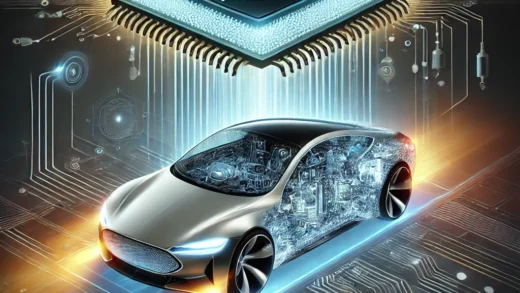
The automotive industry is racing toward electrification, but behind every sleek electric vehicle lies a complex web of supply chains for critical minerals. Lithium, cobalt, nickel, manganese, graphite, and rare earth elements are the hidden drivers of the EV revolution. For U.S. and European automakers, the challenge is no longer just designing the next great electric car—it’s securing the raw materials needed to build reliable batteries at scale. Let’s take a closer look at how these supply chains are evolving, what hurdles remain, and how innovation is helping build resilience for the future.

China’s Dominance and the Push to Diversify
China currently dominates global processing of critical minerals, controlling close to 90% of refining capacity and over 80% of global battery cell production. This dominance gives Chinese firms outsized influence in the supply chain, creating risks for Western automakers that rely on these minerals to meet soaring EV demand.
To reduce dependency, the U.S. and Europe are taking action. Germany and Canada recently announced deeper cooperation to develop midstream processing of lithium, nickel, and rare earths, strengthening North America’s supply base. Meanwhile, France has made building its rare earth ecosystem a national priority, supporting startups and refining capacity under the EU’s Critical Raw Materials Act. These moves mark an important step toward diversifying mineral supply away from China.
Strategic Projects Across the Globe
The European Commission has approved 13 strategic raw material projects outside the bloc, with investments spanning Canada, Ukraine, Brazil, and Zambia. Together, these projects cover lithium, nickel, cobalt, manganese, graphite, and rare earths, supported by more than €5.5 billion in public and private funds. The idea is to create a globally diversified network that strengthens Europe’s resilience against future supply shocks.
In the U.S., policymakers are also stepping up. Companies like MP Materials have secured funding to revive domestic rare earth refining and even build magnet factories, highlighting how EV supply chains are now directly tied to national security.
Innovation as a Mineral Hedge
Battery innovation offers another path to reduce dependence on scarce minerals. Lithium-ion batteries remain the industry standard, but alternative chemistries are gaining traction. Lithium-Iron-Phosphate (LFP) batteries, which eliminate the need for cobalt and nickel, are already being deployed in affordable EV models. Sodium-ion and lithium-sulfur batteries are also being explored, though they remain at experimental stages for mass adoption.
In Europe, Lyten’s attempt to revive Northvolt’s facilities with lithium-sulfur battery production shows how startups are looking for breakthroughs that bypass traditional bottlenecks. While these technologies may take years to scale, their potential to reshape the mineral landscape is significant.
The Recycling Opportunity
Recycling is quickly becoming one of the most promising ways to ease the pressure on mineral supply chains. As EV adoption grows, millions of batteries will eventually reach end-of-life, creating an opportunity to recover valuable minerals. Analysts estimate demand for lithium alone could increase 50-fold by 2040. Without recycling, mining alone cannot keep up.
In the U.S. and Europe, companies like Redwood Materials, Li-Cycle, and Porsche are scaling up recycling facilities that can recover lithium, cobalt, and nickel from used batteries. Studies suggest that incorporating recycled materials could reduce manufacturing costs by over 20% and cut the environmental footprint of EVs substantially. For automakers, recycling is more than a sustainability goal—it is an essential hedge against volatile raw material markets.
Policy Moves to Stabilize Supply
Governments on both sides of the Atlantic are aligning industrial and environmental strategies to secure the battery supply chain. The U.S. is promoting “friend-shoring,” forging trade agreements with allied nations to guarantee access to critical minerals. Europe is strengthening ties with Africa and Latin America to ensure diversified sourcing.
A proposed “Global Minerals Trust” is also being discussed internationally, designed to stabilize prices and ensure fairer access to key minerals. While still in its early stages, such initiatives reflect the recognition that global cooperation is necessary to avoid mineral bottlenecks that could slow down the energy transition.
Challenges That Remain
Despite these efforts, challenges persist. Building new mines can take a decade or more, and local opposition often complicates projects due to environmental concerns. Processing facilities also require major investment and technical expertise, making it difficult for the U.S. and Europe to catch up quickly with China.
There is also the risk of geopolitical shocks. Disruptions in Ukraine or trade disputes with resource-rich African nations could destabilize planned supply chains. For automakers, these risks highlight why hedging through multiple strategies—local production, global partnerships, recycling, and innovation—is essential.
What It Means for Automakers and Investors?
For automakers, securing critical minerals is now as important as designing cars. Without reliable access to lithium, nickel, and cobalt, EV production targets cannot be met. That’s why companies like Tesla, BMW, and Stellantis are signing direct contracts with mining companies, bypassing intermediaries to lock in supply for the long term.
For investors, the message is clear: companies that actively manage their supply chain risks are better positioned for growth. Automakers investing in recycling, building partnerships with mineral producers, and experimenting with alternative chemistries are likely to deliver stronger returns than those relying solely on traditional supply routes.
Final Reflections: Securing the Battery Backbone
The global auto industry is at a crossroads. On one side is the rapid rise in EV demand, driven by climate goals and consumer interest. On the other side are fragile supply chains for critical minerals that could stall this progress if left unaddressed.
For U.S. and European automakers, the path forward is about building resilience—diversifying supply sources, embracing recycling, investing in domestic capacity, and supporting innovation. These strategies not only protect production but also align with sustainability goals, ensuring that the EV transition is as clean as it is ambitious.
Critical minerals may be hidden from view, but they are the backbone of the future automotive industry. Securing them is no longer optional—it is the key to powering the vehicles of tomorrow.