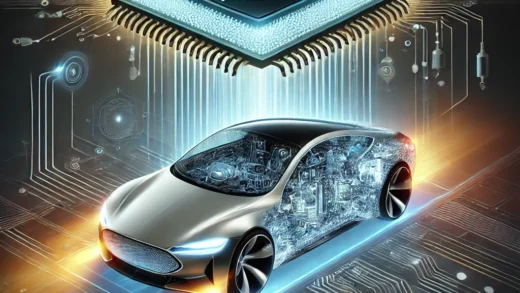
Every electric vehicle tells a story that begins far from the factory floor. Long before an EV rolls off the assembly line in Michigan, Bavaria, or Barcelona, its most vital component—the battery—has already traveled across continents. The journey from raw mineral extraction to a finished, road-ready pack involves a web of mines, refineries, gigafactories, and recycling centers. For U.S. and European automakers, understanding and securing this battery supply chain is no longer optional. It’s the foundation of the EV transition, shaping cost, sustainability, and competitiveness.

Mining the Basics: Where It All Starts
The battery journey begins with critical minerals such as lithium, cobalt, nickel, manganese, and graphite. Lithium is extracted mainly from brine pools in Chile and Argentina or hard-rock mines in Australia. Cobalt, essential for battery stability, is heavily concentrated in the Democratic Republic of the Congo, which supplies about 70% of global output. Nickel and manganese are mined in regions like Indonesia, South Africa, and Canada, while natural graphite is overwhelmingly processed in China.
The reliance on a handful of regions raises risks. Supply disruptions, labor concerns, and environmental impacts loom large. For U.S. and European automakers, that has spurred efforts to diversify sourcing. Recent trade agreements and policies now encourage mining in allied countries to reduce dependence on politically unstable or single-source suppliers. The U.S. Inflation Reduction Act and the EU’s Critical Raw Materials Act, for example, set clear requirements for sourcing from trusted partners.
Refining and Processing: The Midstream Bottleneck
Raw ore is only the first step. To be useful in a battery, minerals must be processed into high-purity forms. Lithium must be converted into lithium carbonate or lithium hydroxide. Nickel needs refining into battery-grade sulfates. Graphite must be purified for use as an anode material.
Here lies one of the biggest choke points: China dominates processing. Over 85% of battery-grade lithium and nearly all natural graphite refining occurs there. Even when minerals are mined in Australia or Africa, they often travel to China before moving downstream. This has created a structural vulnerability for Western supply chains.
To counterbalance this, projects are underway across Europe and the U.S. Germany and Canada recently deepened cooperation on midstream capacity, focusing on nickel, lithium, and rare earth refining. France is building domestic rare earth ecosystems, while the U.S. has backed companies like MP Materials to revive rare earth processing at home. These investments aim to shorten supply routes and build resilience in the face of global tensions.
Gigafactories and Cell Production
Once refined, minerals become cathodes, anodes, electrolytes, and separators—components that come together inside gigafactories. These facilities mass-produce the lithium-ion cells that power EVs. They are then assembled into battery modules and packs, ready for integration into vehicles.
China remains the leader in gigafactory capacity, but the U.S. and Europe are racing to catch up. The European Battery Alliance is coordinating investments across member states, while North America is seeing new plants from automakers like GM, Ford, and Volkswagen. These facilities not only create jobs but also reduce dependence on imports, helping meet local content rules required for EV incentives.
Still, the speed of demand growth raises challenges. While dozens of new gigafactories are planned, analysts warn that local supply of battery-grade materials still lags far behind. Without domestic midstream infrastructure, Western plants risk becoming heavily reliant on imported inputs.
Traceability and Transparency
Modern consumers and regulators increasingly demand to know what’s inside an EV battery—not just in terms of capacity, but in origin and ethics. This has given rise to battery passports, digital records that track sourcing, carbon footprint, and recycled content.
Volvo recently launched the world’s first EV battery passport, offering buyers a QR code to view details about mineral sourcing and environmental impact. The EU has set deadlines requiring all EV batteries sold in the bloc to include such traceability measures. For automakers, these tools are more than a compliance measure. They help build trust, prove sustainability claims, and open the door to premium pricing for verified ethical supply chains.
Recycling: Closing the Loop
At the other end of the supply chain lies recycling—a growing opportunity to recover minerals from end-of-life batteries. Unlike fossil fuels, minerals can be reused indefinitely if recovered effectively. Recycling reduces dependency on mining, cuts costs, and lowers environmental impact.
Companies like Redwood Materials in the U.S. and Northvolt in Europe are scaling up recycling capacity. Redwood already recycles batteries into cathode active material, creating a local loop where old batteries feed into new production. Studies suggest recycling could reduce EV battery production costs by more than 20% and significantly cut carbon emissions.
As millions of EVs reach retirement age in the coming decades, recycling is set to become one of the most important pillars of the supply chain.
Regional Gaps and Global Imbalances
Although global capacity for battery production is expanding rapidly, regional imbalances persist. A McKinsey analysis found that while the world may soon have more supply than demand on paper, shortages are likely to occur in North America and Europe. This mismatch reflects the complexity of logistics, mineral sourcing, and local policy requirements. For Western automakers, relying on global oversupply is not enough. Local resilience is the key to long-term stability.
Final Reflections: The Road Ahead
The EV battery supply chain is a journey that stretches from remote mines to high-tech factories and finally into the vehicles we drive. Along the way, it passes through geopolitical risks, environmental concerns, and technological breakthroughs.
For U.S. and European automakers, the challenge is to build supply chains that are not only efficient but also ethical, resilient, and sustainable. That means diversifying sourcing beyond China, investing in local refining and gigafactories, adopting traceability measures, and embracing recycling.
The EV transition will succeed not just because of sleek car designs or impressive performance but because the batteries inside are supported by robust, transparent, and secure supply chains. From mine to market—and back again through recycling—the future of the automobile depends on mastering this invisible yet vital journey.