As the global race to deploy autonomous vehicles intensifies, major automotive and technology companies are looking beyond traditional markets to understand where real-world innovation is taking place. Seoul, one of the world’s most connected and tech-forward cities, has emerged as a critical proving ground. Its dedicated autonomous-vehicle (AV) test zones, intelligent transportation systems, and smart-district planning offer a blueprint for how cities can enable safe and scalable robotaxi deployment.
For automakers like Tesla and Hyundai, as well as international robotaxi developers, Seoul’s approach carries important implications. It demonstrates how policy, infrastructure and public adoption must evolve together for autonomy to flourish. It also highlights how Asia’s capabilities may influence competitiveness in the US and EU markets.
Seoul’s Smart Districts: Designed for Real-World Autonomy
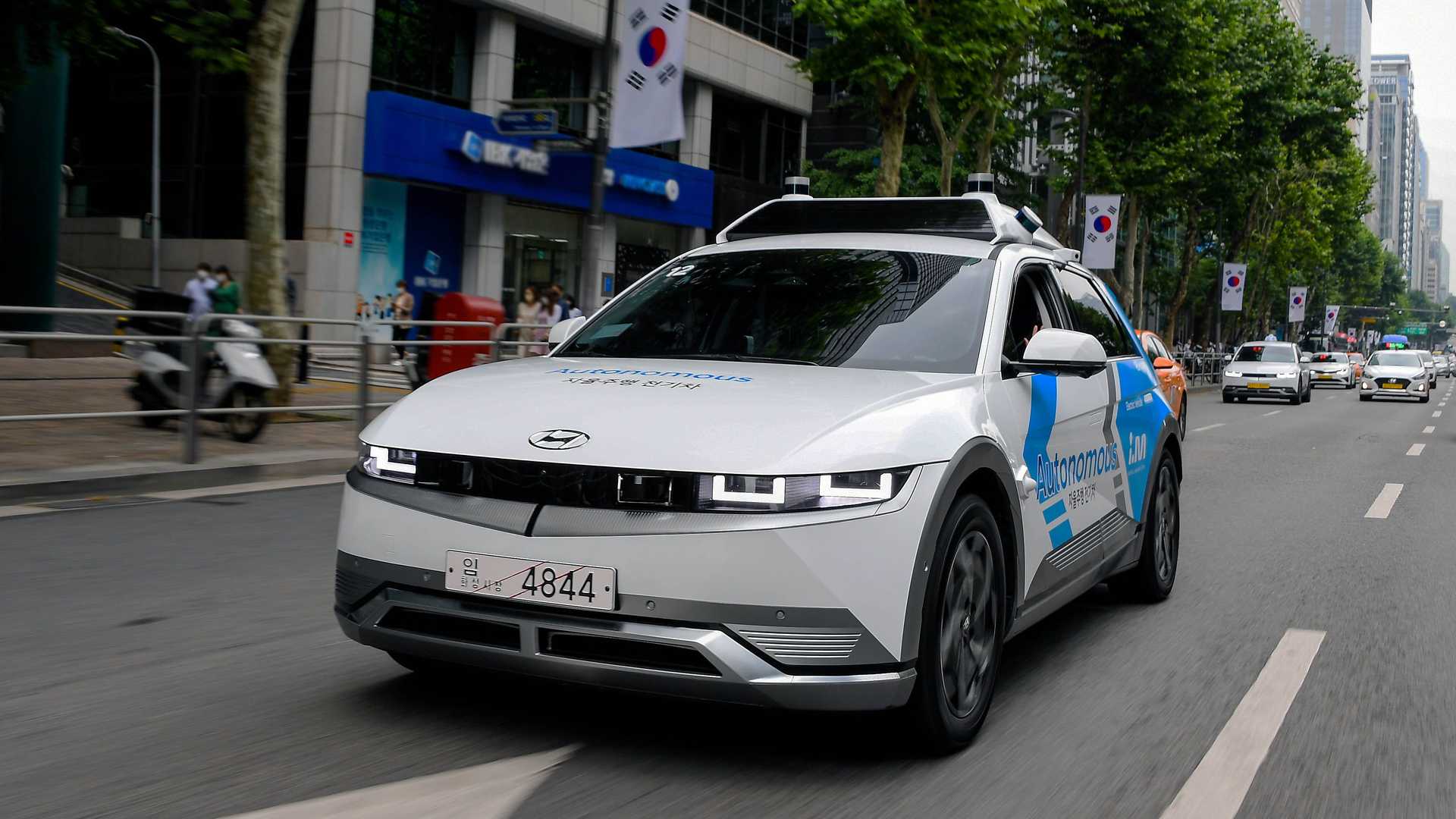
Seoul has constructed dedicated autonomous-driving districts designed to collect data, validate technology, and test commercial use cases. Unlike controlled proving grounds, these are live urban environments containing real traffic, pedestrians and unpredictable scenarios, but supported by smart infrastructure.
These AV districts typically include ultra-detailed digital maps, 5G connectivity, roadside sensors, connected traffic signals and cloud-based monitoring systems. The goal is to reduce uncertainty, enhance vehicle perception, and create a safer testing environment for early-stage robotaxi deployments.
Some districts operate self-driving shuttles on fixed routes, while others allow robotaxis to run alongside traditional vehicles. Seoul’s transportation agencies coordinate closely with private mobility providers, enabling a continuous feedback loop between real-world operation, regulatory guidance and technical refinement.
This environment allows AV technology developers to test not only vehicle behavior but also fleet management, user experience, infrastructure interaction and emergency protocols. It is a holistic ecosystem — something many Western markets are still working toward.
What Seoul Means for Hyundai: A Home-Field Advantage
Hyundai Motor Group, headquartered in Korea, is positioned to benefit most directly from Seoul’s smart-district initiative. Through its partnership with Motional, Hyundai has been developing robotaxi fleets that operate in structured AV zones, collecting real data from urban conditions that closely mirror the complexity found in major global cities.
The company gains strategic advantages from Seoul’s approach. It can refine its autonomous stack within a supportive regulatory framework, it gains early public exposure to autonomous transport, and it can accelerate development cycles by leveraging government-backed infrastructure.
Hyundai’s strength lies in its ability to test integrated systems — vehicles, sensors, maps, connectivity and fleet software — in one national environment. When deploying internationally, particularly in the US or Europe, Hyundai can point to this experience as proof of capability and scalability.
What Seoul Means for Tesla: A Model for Urban Integration
Tesla takes a different approach to autonomy. It relies primarily on vision-based AI rather than lidar or extensive infrastructure support. Although Tesla does not currently operate robotaxi services, its long-term ambition includes citywide autonomous mobility.
Seoul’s AV districts highlight an environment where infrastructure is used to complement, not replace, vehicle intelligence. For Tesla, this raises strategic considerations. As competing robotaxi platforms become more integrated with city systems, Tesla’s independent approach may need to adapt to varying levels of infrastructure support across global markets.
If global cities increasingly follow Seoul’s model — building connected intersections, digital mapping programs and AV-ready corridors — Tesla may have opportunities to enhance its operational domain without compromising its core philosophy. But it also faces competitive pressure from platforms designed from the start to exploit these smart-district features.
Lessons for the Global Robotaxi Race
Seoul demonstrates that autonomous vehicles thrive where cities actively participate in deployment. This lesson is essential for companies operating in more fragmented regulatory environments such as the US and Europe.
In the US, AV testing regulations vary widely by state. Some cities support pilot programs, while others impose strict limitations. Europe prioritizes safety frameworks and controlled trials but often faces longer approval cycles. By contrast, Seoul provides uniform infrastructure, centralized planning and proactive regulatory cooperation.
This gives Korean and Asia-based AV developers a significant real-world testing advantage. While US and European companies may rely heavily on simulations or localized pilots, firms working in Seoul benefit from consistent data, predictable regulatory pathways and a fully integrated smart-city environment.
In turn, this may accelerate commercial deployment timelines, influencing global competition. Companies able to scale early — either through disciplined city partnerships or successful deployments in Asia — will likely gain credibility when entering Western markets.
Infrastructure and Public Trust: Seoul’s Dual Strategy
Two factors set Seoul apart in the autonomy landscape: infrastructure investment and public acceptance.
The city’s transportation authority has invested heavily in connected intersections, real-time digital signage, vehicle-to-everything (V2X) networks and high-bandwidth communication. This creates a stable foundation for AV perception and decision-making.
Equally important, Seoul’s approach emphasizes gradual public exposure. Autonomous buses, campus shuttles and limited-route robotaxis introduce residents to the technology in controlled, predictable environments. Over time, this builds familiarity and reduces skepticism — a crucial advantage when transitioning toward widespread robotaxi use.
For markets like the US and EU, where public trust issues have delayed or limited robotaxi adoption, Seoul’s combination of infrastructure and education may offer a valuable model.
The Global Implications
Seoul’s smart-district experiment signals a shift in where autonomous driving expertise may emerge. While California has long been seen as the epicenter of AV development, cities like Seoul now represent the next stage — moving from testing to structured, semi-commercial deployment.
Hyundai gains a powerful test bed at scale. Tesla gains a real-world example of how urban collaborative systems can support autonomy. And the broader AV industry gains a roadmap for building trusted, city-integrated robotaxi ecosystems.
As US and European markets move cautiously, Seoul demonstrates that the path to autonomy may be led by cities willing to build infrastructure alongside innovation. The global robotaxi race is not only about software and hardware — it is about policy, planning, and how cities choose to shape the future of mobility.