Electric vehicles (EVs) are rapidly transforming mobility across the United States and Europe. With this growth comes a shift in the way service centers operate. Unlike traditional internal combustion engines, EVs rely heavily on large, complex battery systems that require specialised knowledge for maintenance and diagnostics. These battery packs are not only expensive but also critical to vehicle performance, making accurate diagnostics essential. Service centers must now equip themselves with advanced tools, effective workflows, and a strong focus on trust to meet customer expectations while ensuring safety and reliability.
Battery diagnostics play a central role in ensuring the longevity and performance of EVs. A battery pack is often the most costly component in an EV, representing up to 40 percent of the vehicle’s total value. Over time, battery capacity naturally declines due to chemical and thermal factors, as well as driving and charging habits. Understanding the exact condition of a battery helps service centers determine whether performance issues are due to normal wear or a more serious fault. Accurate diagnostics protect both the customer and the service provider by avoiding unnecessary repairs and ensuring warranties are applied appropriately.
Beyond technical performance, battery diagnostics affect resale value and fleet management decisions. Fleet operators in the US and EU rely on battery health assessments to plan maintenance, minimise downtime, and predict replacement schedules. For individual owners, verified battery diagnostics boost confidence and transparency, especially when considering resale or warranty claims. As EV adoption grows, these insights become indispensable, making diagnostic tools and workflows a critical part of modern service centers.
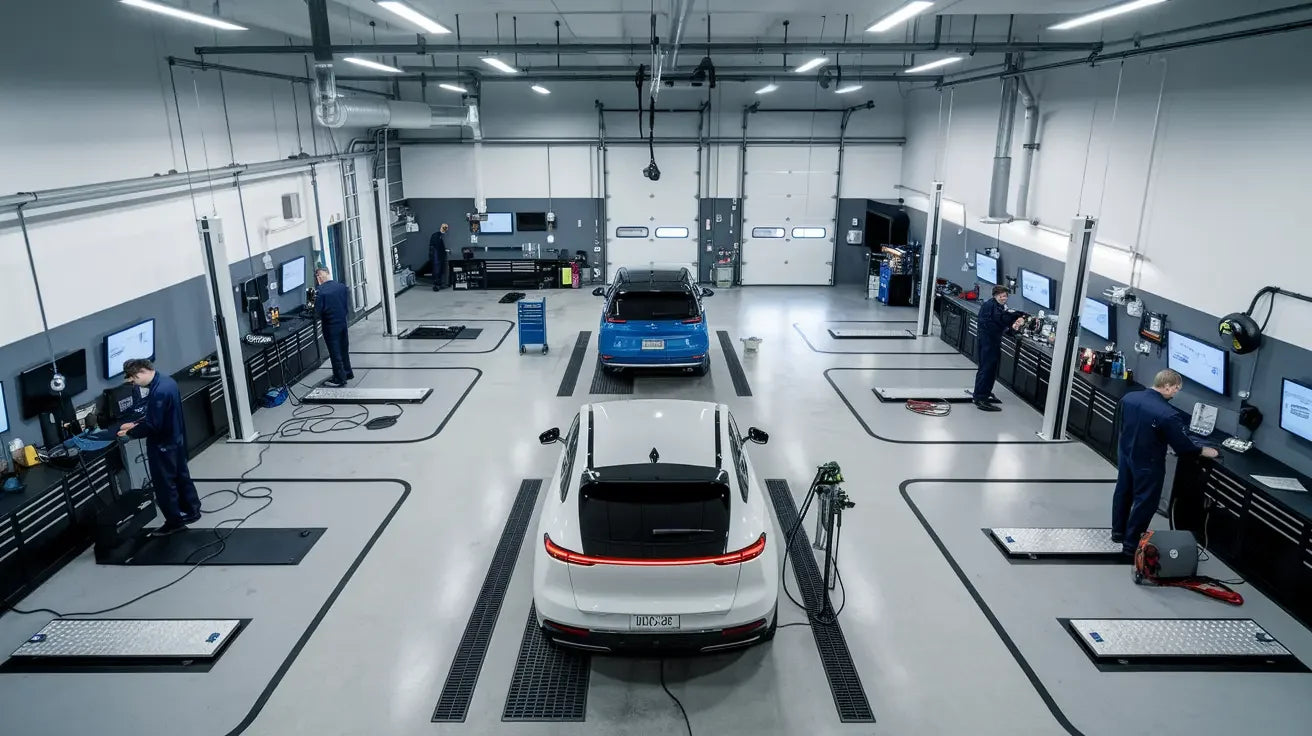
Advanced Tools for Battery Diagnostics
Modern battery diagnostics rely on a combination of hardware interfaces and intelligent software. Diagnostic modules connect to a vehicle’s battery management system (BMS) to read data such as cell voltages, temperature distribution, state of charge, and error codes. OEM-provided tools are often brand-specific, but third-party solutions are gaining traction for multi-brand service centers. These tools allow technicians to gain a detailed view of battery performance and identify potential issues with speed and accuracy.
One of the key metrics technicians monitor is the battery’s state of health (SoH). SoH measures the battery’s current capacity relative to its original rating, taking into account cell imbalances, voltage dispersion, and historical charge/discharge cycles. Advanced diagnostic tools can also conduct controlled capacity tests, gently cycling the battery under specific conditions to measure usable energy. This hands-on testing gives technicians a realistic assessment of the battery’s ability to support vehicle performance over time.
Software complements these hardware tools by translating complex data into intuitive dashboards. Some platforms incorporate artificial intelligence to compare a battery’s data against large datasets of similar vehicles, helping technicians distinguish between expected aging and abnormal degradation. For multi-brand service centers or fleet operators, software standardizes diagnostics, reduces human error, and speeds up decision-making, ultimately enhancing both service quality and efficiency.
Streamlined Workflows for Accurate Assessment
Effective battery diagnostics require more than tools; they depend on well-defined workflows. The process typically begins with a pre-check, which involves reviewing the customer’s history, vehicle alerts, and preliminary BMS data. This initial assessment establishes context, helping technicians identify whether an issue is a recent development or part of gradual degradation. It sets the stage for precise diagnostics and informed recommendations.
After the pre-check, the technician connects the diagnostic tool to the vehicle’s communication port to access real-time and historical battery data. Reports generated by the tool show key metrics, including voltage balance, temperature profiles, and historical charge cycles. This data is used to create a health profile of the battery, helping determine the most appropriate course of action, whether it’s continued monitoring, maintenance, or more advanced repair procedures.
Interpreting the data effectively is critical to a successful workflow. Modern software visualizes complex metrics, highlights trends, and flags anomalies in a clear, actionable format. By presenting battery health in an easy-to-understand manner, technicians can communicate findings to customers, making it clear why certain recommendations are necessary. Comprehensive documentation of results and follow-up steps also ensures a complete battery history, which benefits both service centers and vehicle owners over the long term.
Building Trust Through Transparency
Trust is a cornerstone of effective EV service. Many drivers are still unfamiliar with battery chemistry and long-term performance expectations. Transparent communication backed by precise diagnostics helps alleviate concerns and establishes confidence. When customers understand the battery’s current condition and the rationale for service recommendations, they feel informed and reassured about the maintenance process.
Service centers also build trust by clearly explaining the diagnostic process and associated costs. Battery diagnostics can be more complex than conventional maintenance, so transparency in pricing and expectations ensures customers feel they are getting value. Additionally, integrating data-driven insights into customer interactions demonstrates professionalism and expertise, reinforcing the center’s credibility.
Certification and training further strengthen trust. Technicians with OEM certifications or industry-recognized credentials signal competence and commitment to high-quality service. In both the US and EU markets, where EV adoption is expanding rapidly, customers prioritize service centers that combine technical expertise with transparent, data-backed communication.
The Future of Battery Diagnostics
The future of battery diagnostics is closely tied to technology. Cloud-connected diagnostic tools, AI-driven predictive analytics, and integrated software platforms will become standard in service centers across the US and Europe. These advancements will enable faster, more accurate assessments, helping technicians identify issues before they escalate into costly failures.
As EV fleets grow, predictive diagnostics will play an essential role in proactive maintenance strategies. Service centers will be able to anticipate battery degradation trends, schedule maintenance more effectively, and reduce unexpected downtime for both individual owners and fleet operators. This proactive approach strengthens customer satisfaction and operational efficiency.
Ultimately, service centers that embrace advanced tools, structured workflows, and transparent communication will lead the way in EV maintenance. By combining cutting-edge diagnostics with trusted customer interactions, these centers ensure vehicles remain safe, efficient, and reliable, building long-term loyalty and supporting the broader growth of electric mobility.