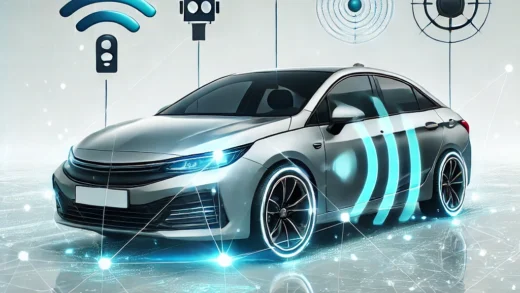
The automotive industry in the US and Europe is rapidly moving toward the software-defined vehicle model, where software capabilities matter as much as horsepower. Cars are now rolling data centers equipped with advanced sensors, connectivity modules, and high-performance processors. Every drive generates enormous volumes of data from cameras, radar, GPS systems, battery management units, and driver behavior monitoring systems. This transformation is forcing automakers to rethink where computing tasks should happen — inside the vehicle at the edge or remotely in the cloud.
Consumers across the US and EU expect their vehicles to behave like smartphones on wheels. They want over-the-air updates, personalized infotainment, predictive maintenance alerts, and seamless app integration. Meeting these expectations requires both local processing power and powerful cloud infrastructure. The key question facing OEMs and technology partners is how to divide responsibilities efficiently between the two environments without compromising safety, cost, or performance.
The answer is no longer fixed. Five years ago, most intelligence lived either fully in the vehicle or heavily in backend systems. In 2026, the model is hybrid and dynamic. Advances in 5G connectivity, artificial intelligence, cybersecurity regulations, and electric vehicle adoption are reshaping the edge versus cloud conversation. What belongs in the car today may move to the cloud tomorrow, and vice versa, depending on technology maturity and market needs.

What Belongs in the Vehicle: Speed, Safety, and Reliability
Certain functions must always remain inside the vehicle because they demand ultra-low latency and guaranteed reliability. Safety-critical systems such as automatic emergency braking, lane-keeping assistance, and adaptive cruise control rely on split-second decisions. If a pedestrian steps into the road, the vehicle cannot wait for a round trip to a remote server. Edge computing ensures that sensor data from cameras and radar is processed instantly within the car’s onboard systems.
Reliability is another major reason why key functions stay at the edge. Even in developed markets like the US and Western Europe, network coverage is not perfect. Vehicles traveling through tunnels, rural highways, or cross-border regions may temporarily lose connectivity. Critical driving functions must continue operating regardless of network status. By keeping essential processing local, automakers guarantee consistent performance under all driving conditions.
Data efficiency also supports edge computing. Modern vehicles generate terabytes of raw sensor data daily, especially those equipped with advanced driver-assistance and semi-autonomous features. Transmitting all of this raw data to the cloud would be costly and unnecessary. Instead, vehicles filter, compress, and analyze data locally, sending only relevant insights to backend systems. This reduces bandwidth usage and lowers operational costs for manufacturers and fleet operators.
What Belongs in the Cloud: Scale, Intelligence, and Services
While edge computing ensures speed and safety, the cloud provides scale and intelligence that individual vehicles cannot match alone. Cloud platforms in the US and EU handle millions of vehicles simultaneously, aggregating data to identify patterns and trends. This large-scale analysis enables predictive maintenance systems that detect potential failures across fleets before they happen. A single vehicle may not see a pattern, but the cloud can analyze data across thousands of similar models.
The cloud is also the engine behind over-the-air updates and digital services. When automakers release new software features, security patches, or performance enhancements, cloud infrastructure manages secure distribution to vehicles worldwide. This capability extends vehicle lifecycles and reduces dealership visits. For drivers, it means their car improves over time rather than becoming outdated.
Connected services and user personalization depend heavily on cloud computing as well. Driver profiles, navigation history, charging preferences for electric vehicles, and infotainment subscriptions are stored and managed centrally. Fleet operators across Europe and North America rely on cloud dashboards to track vehicle usage, optimize routes, and monitor efficiency. These scalable services would be impossible to manage purely from within individual vehicles.
Why the Balance Is Changing in 2026
The balance between edge and cloud is shifting because technology itself is evolving. High-speed 5G networks in urban US and EU regions are reducing latency and enabling faster data exchange. This makes it feasible to move certain computational workloads to the cloud that previously had to remain inside the vehicle. At the same time, onboard processors are becoming more powerful, allowing vehicles to handle more advanced AI models locally.
Artificial intelligence plays a major role in this shift. AI models are typically trained in the cloud using massive datasets collected from entire fleets. Once trained, these models are deployed to vehicles for real-time inference. However, as AI becomes more complex, some advanced analytics may move back to the cloud when network conditions allow. This creates a dynamic system where tasks are allocated based on context, cost, and performance needs.
Regulatory factors in the EU and data privacy considerations across both markets also influence this balance. Strict data protection rules require manufacturers to manage how and where personal data is processed. In many cases, sensitive information is anonymized or filtered at the vehicle level before being transmitted. Cybersecurity regulations are pushing OEMs to design architectures that are secure by default, whether processing happens locally or remotely.
The Future: A Hybrid and Adaptive Architecture
The future of automotive computing is not about choosing between edge and cloud but about designing systems that intelligently combine both. Vehicles will continue to handle safety-critical and time-sensitive operations locally. Meanwhile, the cloud will expand its role in analytics, ecosystem integration, and feature innovation. This hybrid model allows manufacturers to deliver the best of both worlds.
In the US and EU markets, collaboration between automakers, telecom providers, and cloud companies is accelerating this evolution. Vehicles are becoming nodes in a broader mobility ecosystem that includes smart cities, charging networks, insurance platforms, and digital service providers. Flexible architectures that can dynamically shift workloads between edge and cloud will become the industry standard.
Ultimately, what belongs in the vehicle versus the cloud will keep evolving as technology advances. The winners in this space will be those who design adaptable systems capable of shifting with network improvements, AI development, and regulatory changes. For drivers, this means safer cars, smarter features, and better digital experiences. For the industry, it means embracing a future where edge and cloud work together seamlessly to power the next generation of mobility.