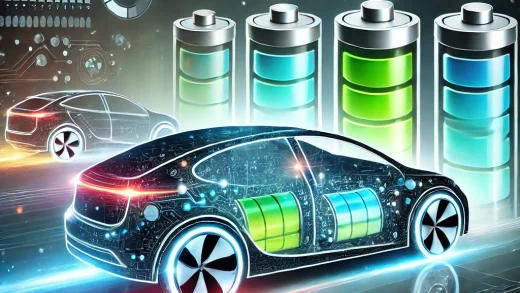
The shift toward electric mobility in the US and Europe is accelerating, and charging infrastructure has become one of the most powerful factors influencing how automakers are valued. As investors look beyond vehicle sales to long-term ecosystem strength, the debate between proprietary fast-charging networks and open multi-energy hubs is shaping competitive dynamics across the EV industry. Tesla’s Supercharger network set the benchmark, but new multi-brand alliances and energy-integrated charging hubs are creating a new playbook. Understanding these strategies helps explain where the market is heading and who is positioned to win.

The Power of Proprietary Networks: Why Superchargers Still Matter
Tesla introduced its Supercharger network early in the EV revolution, and this move quickly transformed into a strategic differentiator. Superchargers are placed along major travel corridors, near amenities, and in urban centers where EV ownership is growing fastest. Their strong uptime and high charging speeds have made the Supercharger experience an industry benchmark.
Beyond convenience, Tesla’s control over the entire charging journey enhances customer satisfaction. From plug-and-charge simplicity to consistent performance, the vertically integrated ecosystem reinforces loyalty. This consistent experience strengthens Tesla’s brand value, which plays a significant role in investor confidence. For years, having exclusive access to the world’s most reliable fast-charging network helped justify Tesla’s high valuation compared to legacy automakers.
Tesla’s recent decision to open parts of the Supercharger network to other brands marks a strategic shift. By allowing more vehicles to charge on its network, Tesla increases utilization and broadens potential revenue. This evolution shows that even proprietary networks must adapt as EV adoption scales, grid demand grows, and regulators encourage open access. Still, the Supercharger network remains one of Tesla’s most tangible competitive assets.
Why Multi-Energy Hubs Are Gaining Momentum
While Tesla built a vertically controlled network, much of the rest of the industry has focused on building multi-energy charging hubs. These hubs combine fast DC charging with AC charging, renewable energy integration, battery storage, and sometimes even hydrogen fueling. Instead of relying on a single energy source or a single charging standard, they serve the entire EV market with flexible options.
The appeal of multi-energy hubs lies in their inclusivity and scalability. They are designed for all EVs, not just one brand, helping reduce fragmentation in the charging ecosystem. As EV sales diversify across brands, universal charging access becomes increasingly important. These hubs also help stabilize the grid by using energy storage to avoid high-demand peaks and by pairing solar or wind energy with charging stations to reduce operational costs.
Many charging-network operators and automaker alliances in both the US and EU are now investing heavily into multi-energy hubs. Their ability to serve a wider customer base and generate multiple revenue streams makes them attractive to investors. Instead of relying solely on charging fees, they can also earn from energy services, partnerships, and ancillary offerings such as retail integration.
The Valuation Impact: Why Charging Strategy Matters
Charging infrastructure has emerged as one of the most influential factors in determining how investors view an automaker’s long-term prospects. For Tesla, the Supercharger network has long been a cornerstone of its valuation, reinforcing customer loyalty and reducing barriers to EV adoption. A fast, reliable charging network makes owning a Tesla more attractive, which supports sales volume and brand power.
For Tesla’s rivals, the opportunity lies in the scalability of open networks. A multi-energy hub can attract drivers of all EV brands, making the potential market much larger than that of a proprietary system. As EV adoption continues to rise, networks that serve every EV rather than one brand can generate higher utilization rates and stronger revenue growth.
Investors increasingly evaluate companies based on their infrastructure strategy, not just their vehicles. A strong network provides recurring revenue, unlike one-time vehicle sales. It also deepens a company’s ecosystem, which helps increase customer retention and boost valuation.
Competitive Landscape: Tesla vs The Field
The competitive pressure is intensifying. Major automakers have formed alliances to develop joint charging networks across North America and Europe. Their aim is to match Tesla’s charging convenience while offering an open, brand-neutral system. Many energy companies, utilities, and fuel retailers are also entering the EV charging space, further accelerating the expansion of multi-energy hubs.
These players benefit from established real estate, energy expertise, and partnerships that allow them to scale quickly. They also face challenges, though. Grid access, permitting delays, and the high cost of installing high-power charging stations can slow deployment. Reliability is another hurdle, as public charging networks have often lagged behind Tesla in uptime and user experience.
To stand out, many new networks are focusing on convenience features like lounge-style waiting areas, renewable-energy-powered chargers, and advanced charging-management software. These innovations are helping close the gap and create compelling alternatives to the Supercharger ecosystem.
What It Means for Drivers and the Market
For drivers, the growth of both Superchargers and multi-energy hubs is good news. The charging experience is becoming more convenient, faster, and more widely accessible. Tesla drivers now have more options, while drivers of other brands increasingly gain access to reliable high-speed charging.
From a market perspective, the expansion of charging infrastructure eases one of the biggest barriers to EV adoption: the fear of running out of charge. As infrastructure improves, consumer confidence rises, boosting EV sales and strengthening the entire industry.
A Future Defined by Both Models
The future won’t be dominated by one charging strategy. Proprietary networks like Tesla’s will continue to deliver premium experiences and support brand loyalty. Multi-energy hubs will expand accessibility, promote interoperability, and strengthen the wider EV ecosystem.
The companies that combine reliability, scale, renewable integration, and user-friendly design will shape the next decade of electric mobility. Ultimately, the real winners will be those who make charging as seamless as filling up a tank — and those companies will see the biggest valuation gains as EV adoption accelerates.