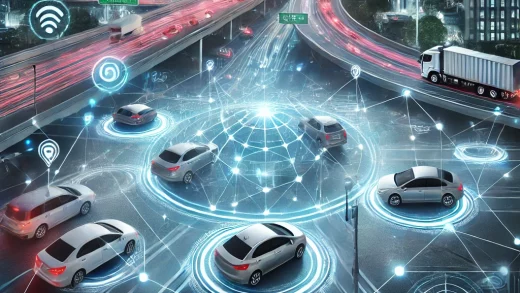
Connected vehicles are rapidly transforming the automotive landscape. What once was simply a mode of transportation has now become a rolling generator of valuable information. As cars in the US and Europe become increasingly connected through telematics, sensors, and real-time communication technologies, they produce a steady stream of anonymized data. This data is emerging as one of the most promising new revenue sources for automakers, mobility platforms, insurers, and smart-city planners.
While the monetary potential is enormous, the real story is how anonymized vehicle data is being used to create better, safer, and more sustainable mobility systems. Cities and insurers, in particular, are at the forefront of turning this data into practical insights and economic value.

Understanding the Value of Vehicle Data
Today’s connected cars collect information on everything from speed and braking habits to engine performance, location history, cabin conditions, and even environmental surroundings. When stripped of personal identifiers, this anonymized vehicle data becomes a powerful tool for analyzing mobility trends without compromising driver privacy.
The real value lies in how this data can help organizations make faster, more accurate decisions. Insurers can assess driving patterns in real time. Cities can adjust infrastructure based on traffic flows. Automakers can predict maintenance needs before breakdowns occur. Fleet managers can improve routing and fuel efficiency. For stakeholders across the mobility ecosystem, the opportunity to monetize anonymized data is both strategic and future-proof.
Why Insurers Are Turning to Anonymized Data
The insurance industry has been one of the earliest adopters of connected-vehicle insights. Traditional insurance pricing models have relied on age, location, and vehicle type. But anonymized telematics data paints a far clearer picture.
Usage-based insurance has grown rapidly because it uses real behavior to set fairer, more personalized premiums. Instead of being judged by broad demographic categories, drivers are evaluated by how, when, and where they actually drive. Anonymized data allows insurers to understand patterns such as hard braking, cornering, acceleration, nighttime driving, or weather-related risks — all without identifying the individual.
Beyond pricing, anonymized data helps insurers reduce claims. If a vehicle consistently reports engine alerts or tire-pressure issues, insurers can encourage preventative maintenance, lowering the odds of accidents or breakdowns. In higher-risk regions, aggregated data can reveal dangerous intersections or accident-prone routes. This not only lowers payouts but improves overall road safety, benefiting drivers and insurers alike.
Ultimately, insurers are monetizing anonymized data not only through better underwriting but through cost savings, predictive analytics, and new customer-facing services based on real-world vehicle insights.
How Cities Use Vehicle Data to Build Smarter Infrastructure
Urban centers across the US and Europe are facing growing pressure to reduce congestion, lower emissions, and plan intelligently for future transportation needs. Anonymized vehicle data has become one of the most powerful tools available to city planners.
Instead of relying on periodic traffic studies or outdated road sensors, cities can now access real-time mobility data drawn from thousands of connected vehicles. This enables deeper insights into rush-hour patterns, bottlenecks, average travel speeds, freight movement, and pedestrian-vehicle interactions.
With this information, cities can redesign intersections, adjust traffic-light timing, plan public transit routes, and improve emergency response times. Anonymized vehicle data also supports sustainability goals by helping cities measure emissions hotspots and evaluate the effectiveness of low-emission zones.
Infrastructure investment becomes more targeted and cost-efficient when decisions are based on accurate, timely information. For example, cities can determine when and where road maintenance is truly needed by analyzing aggregated vehicle-suspension data that detects potholes or rough surfaces. They can also optimize parking availability through real-time occupancy data.
This creates new monetization paths. Cities may partner with automakers or data platforms on subscription-based access models or bidirectional data-exchange initiatives. In return, municipalities gain invaluable insights that drastically reduce planning costs and improve public satisfaction.
Data Platforms and New Business Models
As the market matures, data marketplaces are emerging across the mobility ecosystem. These platforms act as bridges between data providers (such as OEMs, fleets, and connected-vehicle systems) and data consumers (cities, insurers, logistics firms, and mobility services).
Anonymized data streams are packaged as products — sold through licensing agreements, subscriptions, or pay-per-use models. The revenue generated is shared among stakeholders, creating an ecosystem where data becomes a recurring service offering rather than a one-time asset.
Automakers are moving toward software-defined vehicle strategies to support this shift. They are embedding higher-quality sensors, improving connectivity, and developing analytics layers that turn raw data into monetizable insights. This helps diversify revenue sources beyond traditional vehicle sales and positions OEMs as digital-service providers.
Addressing the Privacy Challenge
Privacy is the most important factor in monetizing vehicle data responsibly. The mobility sector must comply with strong regulatory frameworks in both the US and Europe, where consumer trust is paramount.
Advanced anonymization techniques — including differential privacy, cryptographic pseudonymization, and on-device data processing — are becoming the norm. These methods ensure that personal identifiers are removed at the source, and that aggregated data cannot be reverse-engineered. Transparent consent models and strong data governance practices help reinforce trust and maintain long-term viability in the market.
The Road Ahead: A More Intelligent Mobility Economy
As connected-vehicle adoption grows and data-sharing platforms mature, monetizing anonymized vehicle data will continue to accelerate. Cities gain smarter infrastructure. Insurers gain more accurate risk models. Automakers unlock new revenue streams. Drivers enjoy safer, more efficient mobility.
The key to future growth lies in balancing innovation with responsibility. Organizations that prioritize transparency, privacy safeguards, and customer trust will lead the next wave of mobility transformation. Anonymized vehicle data is more than an economic opportunity; it is the backbone of the intelligent, efficient, and sustainable transportation systems now emerging across the US and Europe.
With thoughtful implementation and collaboration, this data will continue to shape a smarter and more connected automotive future.