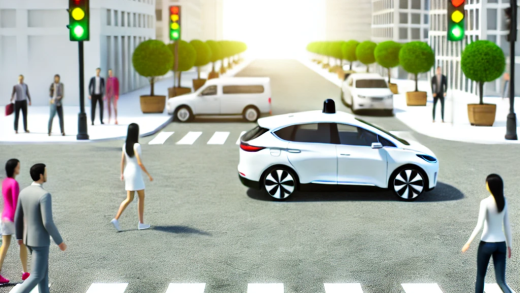
The race to build reliable self-driving cars has created one of the most important debates in automotive technology: should vehicles rely on high-definition maps, or should they navigate the world using real-time perception through a mapless strategy? As autonomous driving accelerates in the United States and Europe, the industry is split between these two philosophies. Each has strengths, limitations and different implications for regulation, safety, scalability and cost. Understanding this divide is essential for anyone following the future of mobility, especially as automotive tech stocks, OEM strategies and AI investments increasingly revolve around autonomy.

Understanding the Two Approaches
HD maps are extremely detailed digital replicas of real-world roads. They capture lane boundaries, elevation changes, curbs, traffic signs and other micro-level details with remarkable precision. Autonomous vehicles using HD maps rely on them for localisation and planning, often combining map data with sensors such as lidar, radar and cameras.
Mapless autonomy takes a different path. Instead of depending on a pre-built map, the car uses real-time perception to interpret its surroundings. With advanced AI, neural networks and powerful onboard computing, a mapless system identifies roads, lanes, signs and obstacles as it drives, much like a human does. It focuses on understanding the world dynamically rather than consulting a pre-stored environment.
Both systems aim to create safe and scalable autonomous driving, but they take fundamentally different routes to get there.
Why HD Maps Have Been the Traditional Backbone of Autonomy?
HD maps became a leading approach early in the autonomous-vehicle movement because they offer stability and predictability. By giving a self-driving car an accurate representation of the road ahead, engineers can reduce uncertainty in the decision-making process. In the United States, where early autonomous programs focused on predictable suburban routes or well-mapped city corridors, HD maps provided a controlled environment that was essential for safety.
In Europe, where road networks are more complex and historic city centres often have narrow, inconsistent layouts, HD maps allowed developers to prepare for the environment in advance. They help vehicles manage tricky lane merges, roundabouts and signage styles that vary between countries.
However, despite their reliability, HD maps come with significant challenges. They require continuous updates. Construction zones, new lane markings, temporary closures and weather-related changes can all make map data outdated. Maintaining accurate HD maps across both the US and the intricately varied European road systems is extremely costly. This can slow down deployment and limit autonomous driving to only those regions where maps are available and fully updated.
Mapless Autonomy: The New Wave of Scalable AI-Driven Driving
Mapless autonomy represents a dramatic shift in strategy. With rapid advancements in AI perception and camera-based learning models, vehicles can now interpret their environment with increasing sophistication. This makes it possible for a self-driving car to operate without relying on pre-mapped data.
This approach offers several advantages for both US and European markets. It scales more easily, because the vehicle does not need a custom HD map for every location. It adapts to new environments instantly, even those with poor road markings or recent layout changes. It also lowers operational costs since there is no need for extensive mapping fleets.
For Europe, where roads can vary dramatically from one country to the next, a mapless system may eventually prove more flexible. For the US, where vast rural regions remain unmapped at high precision, the mapless model could dramatically expand the operational domain of autonomous vehicles.
Still, this strategy comes with its own hurdles. Without the safety net of HD maps, the neural networks powering these vehicles must be extremely reliable and robust, capable of handling rare and complex road scenarios. Regulators in both regions also need strong evidence that mapless autonomy can meet safety standards consistently, especially in unpredictable environments.
How Automakers and Tech Firms Are Navigating the Divide?
Most major automotive companies and AI developers in the US and Europe are no longer choosing one strategy exclusively. Instead, they are pursuing hybrid approaches that blend the strengths of both. Some rely on HD maps in well-known corridors—like highways or urban test zones—while using real-time perception to handle variations or unexpected conditions. Others begin with a mapless foundation and layer in minimal mapping for localisation support.
This hybridisation reflects a larger truth: the future of autonomy likely won’t be purely map-based or purely mapless. Instead, it will be shaped by a combination of real-time AI intelligence, sensor fusion and selective mapping where it adds value.
Which Strategy Will Shape the Future?
In the US, where innovation tends to prioritise fast deployment and broad accessibility, mapless systems may gain momentum as AI models mature and vehicle compute platforms grow more powerful. In Europe, where regulatory caution and infrastructure complexity shape rollout strategies, HD-map-supported autonomy may continue to lead in premium vehicles and structured driving environments.
The long-term winner may be determined not by a single philosophy but by which technologies deliver the best mix of safety, affordability and scalability. For now, both strategies continue to evolve rapidly.
Conclusion
The debate between HD maps and mapless autonomy is far from settled, and both approaches are bringing new breakthroughs to the automotive world. HD maps offer predictable structure, while mapless AI brings unmatched flexibility. As the US and Europe push toward safer and smarter mobility, the most successful autonomous systems will likely merge the strengths of both strategies. For automakers, investors and tech enthusiasts, understanding this balance will be key to navigating the ever-accelerating future of self-driving technology.