

The race toward autonomous vehicles isn’t just transforming the way we travel—it’s also reshaping how we invest. With tech giants, automakers, and innovative startups pushing the limits of self-driving technology, autonomous vehicle stocks have become one of the most closely watched segments in both the automotive and technology markets.
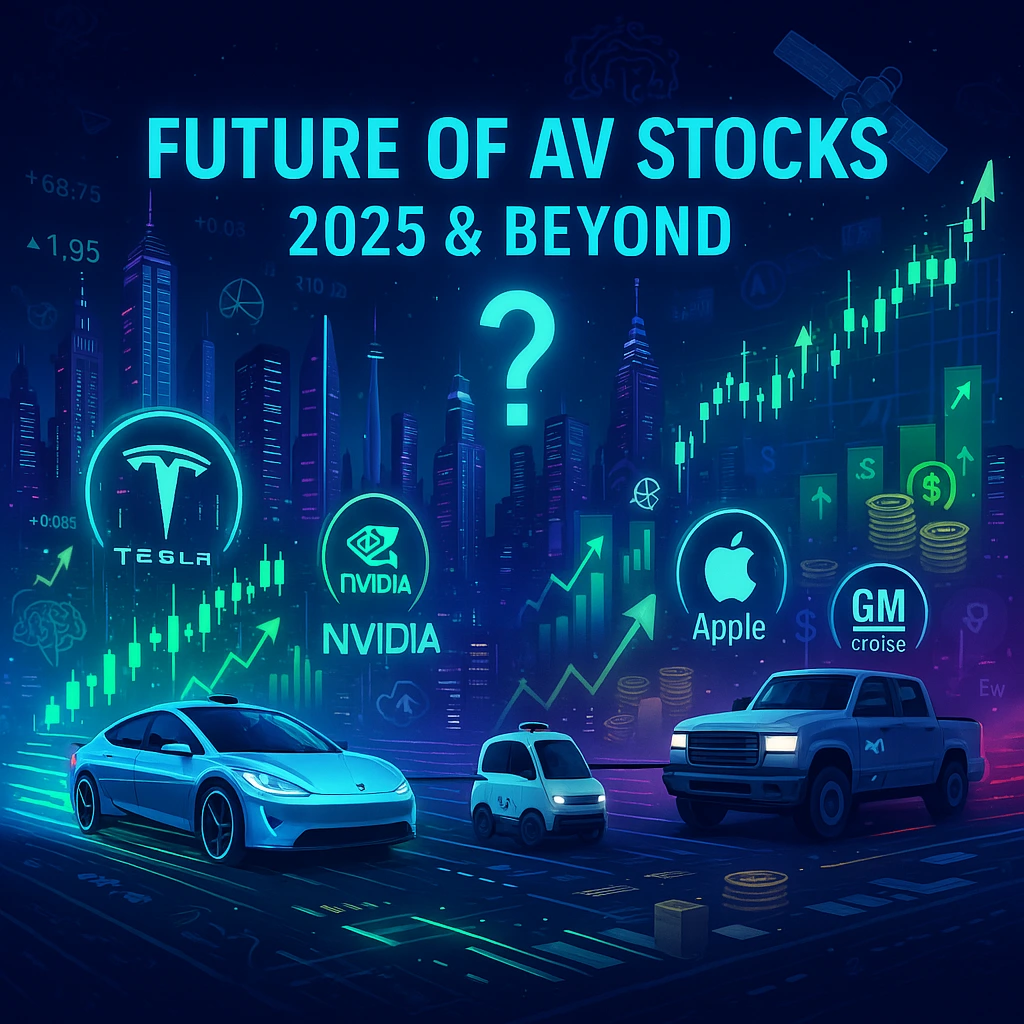
For investors in the U.S. and Europe, the landscape is full of potential. Companies are deploying advanced AI systems, next-gen sensors, and connected software platforms to bring full autonomy closer to reality. But with so many players in the game, who’s truly leading the way in autonomous driving—and which stocks are best positioned for long-term growth?
Let’s take a closer look at the future of autonomous vehicle stocks and the key players steering the industry forward.
Why Autonomous Vehicles Are the Next Big Investment Trend
Autonomous vehicles, or AVs, represent one of the most ambitious technological revolutions of our time. The promise of safer roads, fewer traffic accidents, and smarter transportation systems is driving massive investment across both Silicon Valley and the automotive heartlands of Detroit and Europe.
Beyond personal mobility, AVs are expected to transform logistics, public transport, and even urban planning. The global autonomous vehicle market is forecasted to grow exponentially as governments, cities, and consumers embrace automation. For investors, this means a window of opportunity to capitalize on what could be a generational shift in how people and goods move.
Tesla: Leading with Real-World Data
Tesla remains the most recognized name in the autonomous driving space, not just for its electric vehicles but for its ambitious Full Self-Driving (FSD) software. What sets Tesla apart is its real-world data advantage. With millions of vehicles on the road collecting driver and traffic data daily, Tesla has built a massive neural network to train its autonomous systems.
The company’s approach is focused on camera-based vision and end-to-end AI models, differing from the lidar-heavy strategies used by other developers. While Tesla’s FSD is not yet fully autonomous under regulatory definitions, the company is continually updating and expanding its capabilities through over-the-air updates.
Tesla’s stock remains a high-growth option for investors looking to tap into both EV and AV futures. Its continued dominance in data, infrastructure, and software development places it firmly among the leaders in the space.
Waymo: Tech-First Precision from Alphabet
Waymo, a subsidiary of Alphabet (Google’s parent company), has quietly become one of the most advanced autonomous vehicle developers in the world. With a strong focus on lidar and sensor fusion, Waymo has logged millions of self-driven miles in both controlled and real-world environments.
The company currently operates a commercial autonomous taxi service in select U.S. cities and is expanding partnerships with logistics firms to bring AVs into delivery networks. While Waymo isn’t publicly traded as a standalone company, investing in Alphabet gives exposure to its long-term AV potential.
Waymo’s methodical and safety-focused development process appeals to institutional investors, and its technological depth puts it ahead of most AV startups. If autonomous taxis and delivery services scale as expected, Waymo’s role in the future of mobility could be massive.
Mobileye: The European-Backed Vision Leader
Headquartered in Israel but strongly linked to the European automotive ecosystem through partnerships with brands like BMW and Volkswagen, Mobileye is a major force in autonomous driving. After being acquired by Intel and later spun off again in a public listing, Mobileye continues to lead in computer vision and driver-assist technologies.
The company’s EyeQ chips and software platforms are widely used in Level 2 and Level 3 autonomous systems globally. Mobileye is not chasing full autonomy overnight but rather taking a gradual, scalable approach—rolling out features like hands-free highway driving before tackling complex urban environments.
For European and U.S. investors looking for exposure to a practical, safety-first AV stock, Mobileye offers a blend of cutting-edge tech and automotive industry trust. Its consistent contracts with major automakers position it well for long-term adoption.
Nvidia: Powering the Brains Behind Autonomy
While not an automaker, Nvidia is a foundational player in the autonomous vehicle ecosystem. Its Drive platform provides the computing power needed for real-time perception, decision-making, and AI learning in AV systems. From startups to established OEMs, many of the top autonomous projects rely on Nvidia’s technology to process sensor data and power intelligent decision-making.
The company’s revenue from automotive partnerships continues to grow, and as more vehicles become software-defined, Nvidia’s role will only deepen. With its AI dominance and ecosystem of partners, Nvidia gives investors a broad exposure to the future of intelligent mobility.
Its strong performance in both tech and automotive sectors makes it one of the most attractive AV-related stocks currently outperforming market benchmarks.
European Automakers Are Catching Up
In Europe, traditional automakers are accelerating their AV plans. BMW and Mercedes-Benz have launched Level 3 systems that allow hands-off driving in certain conditions. Volkswagen is partnering with software firms and investing in autonomous ride-hailing platforms.
Although these companies are not yet leading the AV charge like Tesla or Waymo, they offer valuable exposure to autonomy through existing infrastructure and trusted brand equity. Investors who prefer the stability of legacy automakers with the upside of new tech adoption may find these European stocks especially appealing.
Investing in the Road Ahead
Autonomous vehicle stocks present a unique opportunity to invest in a future that is no longer science fiction. While full self-driving is still facing technical and regulatory hurdles, the progress made by Tesla, Waymo, Mobileye, Nvidia, and others is undeniable.
Whether you’re drawn to data-driven disruptors or well-established hardware suppliers, the AV sector is rich with potential. The key for investors is to find companies with real-world applications, strategic partnerships, and scalable technology.
The future of mobility is autonomous, and the leaders of today are laying the foundation for tomorrow’s transportation revolution. For smart investors, the road ahead looks more promising than ever.


