

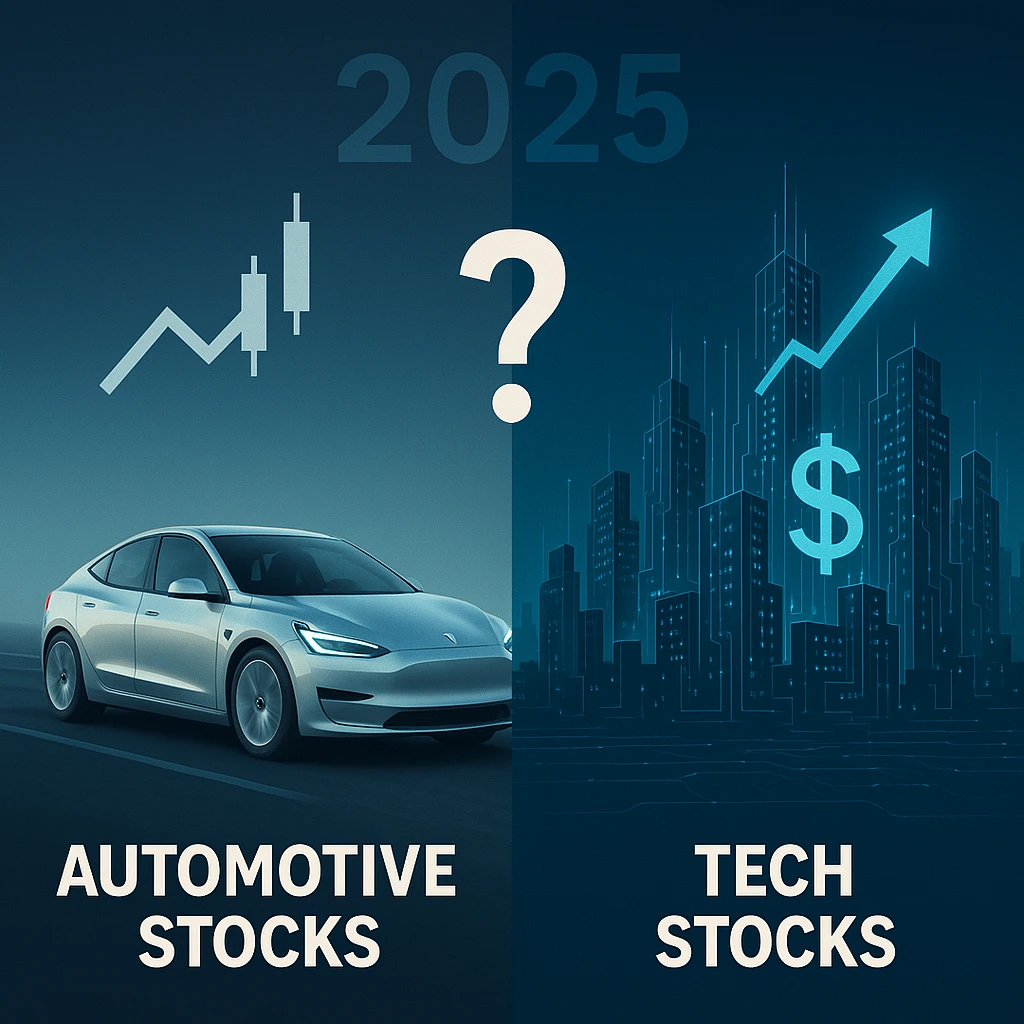
In the ever-evolving world of investing, two sectors continue to dominate the spotlight—automotive stocks and tech stocks. Both represent innovation, future growth, and the potential for strong returns. But in today’s dynamic market environment, investors are asking the big question: which one performs better?
With the rapid electrification of vehicles, rise of autonomous driving, and deeper tech integration across the automotive industry, the lines between these two sectors are beginning to blur. That said, each still offers distinct characteristics that shape their performance. Let’s explore how automotive and tech stocks compare in today’s market and which may hold the edge for investors in the months ahead.
Automotive Stocks Are Evolving Fast
Gone are the days when automotive stocks were seen as slow-moving industrial plays. Today, car manufacturers are at the forefront of technological transformation, pushing into electric mobility, connected vehicles, and software-defined cars. Companies like Tesla, Volkswagen, Ford, and BMW are no longer just producing vehicles—they’re innovating like tech firms.
In the U.S., the push for electric vehicle adoption continues, fueled by government incentives, improving charging infrastructure, and consumer demand for cleaner, smarter transportation. Ford’s growing EV division, Tesla’s continued dominance, and General Motors’ push into battery technology have made automotive stocks a hot topic among growth investors.
Over in Europe, the focus is on regulatory compliance and sustainability. Automakers are racing to meet strict emissions standards, phasing out combustion engines, and rolling out electric lineups at scale. Volkswagen and Stellantis are doubling down on battery production and software development, while luxury players like BMW and Mercedes-Benz are finding new life through tech-focused strategies.
From a market performance perspective, automotive stocks have become more volatile but also more rewarding for long-term investors willing to bet on transformation. Those that have shown clear EV roadmaps, tech partnerships, and adaptability to supply chain disruptions are outperforming legacy peers.
Tech Stocks Continue to Drive Market Optimism
Tech stocks, on the other hand, have long been market leaders. The sector includes giants like Apple, Microsoft, Nvidia, Alphabet, and Amazon—companies that have consistently delivered innovation, global scale, and impressive earnings.
Recently, the rise of artificial intelligence and cloud computing has given tech stocks another surge. Nvidia’s GPU dominance, for instance, has made it one of the most talked-about stocks on the market. Microsoft’s investment in AI platforms and Alphabet’s advancements in autonomous technology show how tech firms are shaping the future across industries.
Even within the mobility space, tech firms are flexing their influence. Alphabet’s Waymo, Apple’s rumored car project, and Amazon’s logistics and EV investments are examples of how tech is encroaching into automotive territory. These companies bring software expertise, massive R&D budgets, and data-driven business models that traditional automakers are now trying to replicate.
In terms of performance, tech stocks have historically shown higher returns, driven by faster revenue growth, higher margins, and global digital adoption. However, they’re also more sensitive to interest rate changes and regulatory scrutiny, particularly in the U.S. and Europe, where governments are tightening rules on data privacy and AI usage.
The Convergence of Auto and Tech
One of the most interesting dynamics in today’s market is the convergence between automotive and tech. Modern vehicles are now rolling computers—equipped with sensors, over-the-air updates, smart dashboards, and advanced driver-assist features.
Companies like Tesla have blurred the line, positioning themselves as tech-first automakers. Traditional carmakers are also investing heavily in software, building in-house platforms, and acquiring tech startups to gain an edge. For instance, Volkswagen’s CARIAD software unit and Ford’s investment in AI systems show how essential tech integration has become to vehicle development.
Meanwhile, tech companies are forming partnerships with automakers to power everything from infotainment to autonomous navigation. This intersection creates hybrid investment opportunities—stocks that represent both auto and tech potential. These hybrid plays can offer better risk-adjusted returns for investors who want exposure to mobility innovation without choosing between sectors.
Volatility vs Stability: What Investors Should Know
Both automotive and tech stocks come with their own risk-reward profiles. Automotive stocks are generally more cyclical, meaning they’re tied closely to consumer confidence, raw material costs, and interest rates. That said, the shift to EVs has injected fresh long-term growth potential into the sector.
Tech stocks, while often less cyclical, are not immune to macroeconomic pressures. They are sensitive to central bank policies, inflation data, and global regulation—especially in areas like data protection, AI ethics, and antitrust concerns.
In terms of valuation, automotive stocks tend to trade at lower price-to-earnings (P/E) ratios compared to tech, offering a potential discount for investors who believe in the sector’s transformation. Tech stocks, meanwhile, often carry premium valuations, which can be a double-edged sword in volatile market conditions.
So, Which Performs Better in 2025?
The answer depends on what type of investor you are. If you’re looking for innovation, fast growth, and disruption, tech stocks still deliver strong momentum. AI, cloud services, and digital infrastructure are booming, and big tech continues to generate massive cash flow.
However, if you’re a long-term investor seeking undervalued opportunities with transformation potential, automotive stocks are hard to ignore. The electrification wave, rising global demand, and the growing role of software in vehicles make the auto sector a compelling story for future gains.
The best-performing portfolios in today’s market often include a mix of both—balancing the high-growth edge of tech with the reimagined, innovation-led potential of automotive leaders. As the lines between these sectors continue to fade, the smartest investments may come from companies operating right where auto meets tech.


