Autonomous vehicles have been a hot topic worldwide, but their potential in India’s diverse and complex transportation landscape is particularly exciting. Among these innovations, autonomous buses stand out as a transformative solution for both urban and rural mobility. As India marches into 2025, the expansion of autonomous buses is becoming more than just a futuristic idea—it’s a practical step toward smarter, more efficient transportation systems.
The Need for Smarter Public Transport in India
India’s public transportation systems play a critical role in moving millions of people every day. In cities, buses are an essential alternative to congested roads filled with private vehicles, while in rural areas, they often provide the only viable means of travel. However, existing systems face challenges such as overcrowding, irregular schedules, and limited reach in less accessible regions. Autonomous buses offer a promising solution to these issues by providing safer, more efficient, and environmentally friendly mobility options.
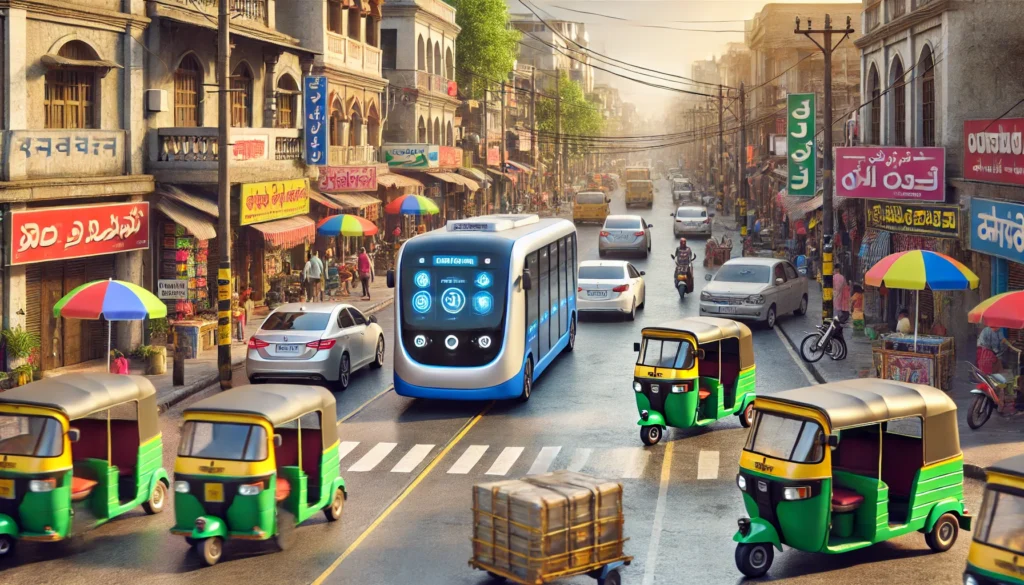
With India’s growing urbanization, the demand for reliable public transport has soared. Cities like Mumbai, Delhi, and Bengaluru experience severe traffic congestion daily, making the adoption of autonomous buses an opportunity to reduce the number of private vehicles on the roads. At the same time, rural areas struggle with inadequate transport networks. Autonomous buses, equipped with advanced navigation systems and connectivity, could bridge the gap between remote villages and urban centers, ensuring greater accessibility for all.
Technology Powering Autonomous Buses
The backbone of autonomous buses lies in advanced technologies such as artificial intelligence, LiDAR sensors, GPS navigation, and vehicle-to-everything (V2X) communication. These systems enable buses to operate without human intervention, avoiding obstacles, adhering to traffic rules, and optimizing routes in real time. This technology is particularly advantageous in India, where road conditions and driving habits can be unpredictable.
Companies and governments are actively collaborating to develop and test autonomous buses tailored to India’s unique conditions. Startups and tech giants alike are working on refining algorithms that can handle crowded streets, diverse weather conditions, and varying road infrastructure. By leveraging this technology, India has the opportunity to leapfrog traditional transport solutions and embrace a future-ready approach.
Urban Benefits of Autonomous Buses
In urban India, autonomous buses can address critical issues such as traffic congestion, pollution, and safety. These buses operate with precision, ensuring smoother traffic flow and reducing delays caused by human error. They can also be programmed to run on electric power, contributing to India’s efforts to lower carbon emissions and combat air pollution.
Autonomous buses in cities can also improve accessibility for commuters. They can provide more frequent services during peak hours and optimize routes based on real-time demand, ensuring that passengers reach their destinations faster. Moreover, the integration of smart ticketing and scheduling systems can enhance the overall experience for urban commuters, making public transport a more appealing option.
Transforming Rural Mobility
While urban areas stand to benefit from efficiency, the impact of autonomous buses in rural India could be life-changing. In many villages, lack of reliable transportation limits access to education, healthcare, and economic opportunities. Autonomous buses can address these challenges by providing consistent, affordable, and safe transport options.
By connecting rural areas to nearby towns and cities, these buses can facilitate better access to essential services and open new avenues for employment and trade. Furthermore, the cost-efficiency of autonomous systems, which eliminates the need for human drivers, makes it easier to expand transportation networks to under-served regions.
Challenges and the Path Forward
The expansion of autonomous buses in India is not without challenges. Infrastructure improvements, such as the creation of dedicated lanes and better road maintenance, are essential to ensure the smooth operation of these buses. Additionally, public acceptance and trust in autonomous technology will play a crucial role in its adoption.
Government policies and regulatory frameworks will also need to keep pace with technological advancements. Collaborative efforts between public and private sectors are essential to address these challenges and scale the deployment of autonomous buses across the country.
Looking Ahead
The expansion of autonomous buses in India is a step toward a smarter, more inclusive transportation future. By addressing the unique needs of both urban and rural populations, these buses have the potential to revolutionize mobility, reduce carbon emissions, and improve quality of life for millions of people.
As we move deeper into 2025, the success of autonomous buses will depend on innovation, infrastructure development, and public support. With the right investments and partnerships, India can lead the way in integrating autonomous technology into its transportation systems, setting an example for the world to follow. The road ahead is promising, and autonomous buses are ready to drive the change.