The global automotive industry is undergoing a seismic shift, and Asia is firmly at the center of this transformation. From leading advancements in electric vehicles to dominating the supply chain for key components, Asia’s influence on the automotive industry is growing rapidly. For the US and Europe, this presents both opportunities and challenges as they navigate a market increasingly shaped by Asian innovation and production.
The Rise of Asian Automakers
Asian automakers, particularly those from Japan, South Korea, and China, have established themselves as global powerhouses. Japan’s automotive giants, such as Toyota, Honda, and Nissan, have long been synonymous with reliability, efficiency, and innovation. Toyota’s leadership in hybrid technology and its focus on hydrogen fuel cells continue to set benchmarks in sustainability and engineering.
South Korea has also risen to prominence with brands like Hyundai and Kia. These companies have redefined their global image by producing vehicles that combine cutting-edge design, advanced technology, and competitive pricing. Their focus on electric and hydrogen-powered cars has solidified their position as leaders in the shift toward cleaner mobility.
China, however, is the industry’s most significant disruptor. Once known for low-cost manufacturing, Chinese automakers like BYD, NIO, and Geely are now at the forefront of electric vehicle (EV) innovation. With strong government support and a vast domestic market, China has become the largest EV market in the world, influencing trends and driving down costs for electric mobility globally.
Dominance in Electric Vehicle Technology
Asia’s leadership in EVs is reshaping the global automotive landscape. Chinese companies, in particular, are driving the rapid adoption of EVs by producing affordable, high-quality electric cars that appeal to a broad range of consumers. In addition to cars, China leads the world in battery production, with companies like CATL and BYD dominating the supply chain for lithium-ion batteries.
South Korea is also a key player in EV technology. Battery manufacturers such as LG Chem and Samsung SDI supply some of the most advanced batteries to automakers worldwide, including those in the US and Europe. This dominance in battery production is critical as the automotive industry shifts away from internal combustion engines to electric powertrains.
Japan, with its deep focus on hydrogen fuel cell technology, is pushing the boundaries of zero-emission vehicles. Toyota’s hydrogen-powered Mirai and its development of fuel cell systems for commercial vehicles highlight the country’s dedication to alternative energy solutions.
Asia’s Impact on the Supply Chain
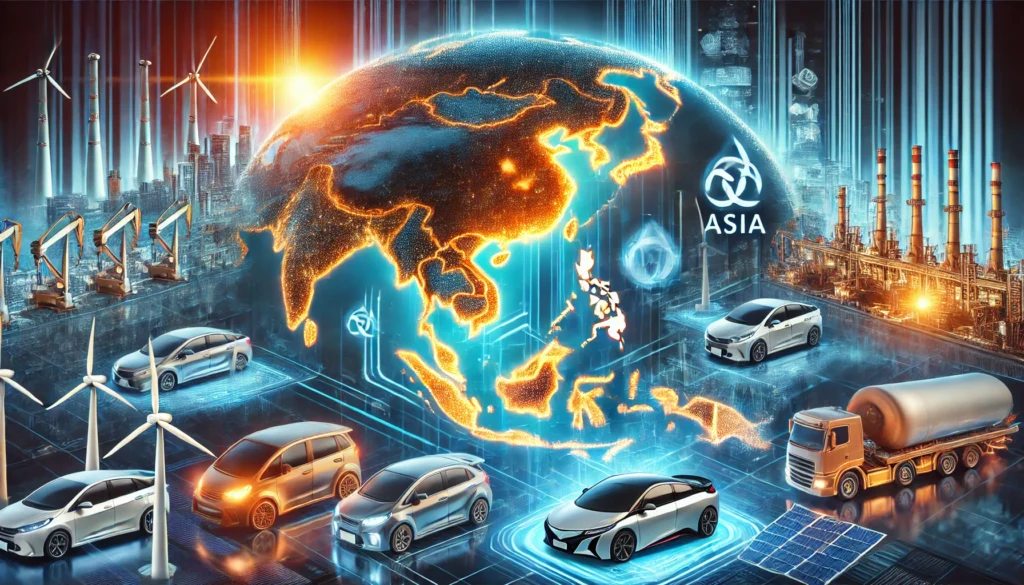
Asia’s influence extends far beyond vehicle production to the supply chains that power the global automotive industry. From semiconductors to rare earth materials, Asian countries play a pivotal role in supplying essential components. The recent semiconductor shortages highlighted the world’s dependency on Asian manufacturers, with Taiwan and South Korea being the leading producers of these critical chips.
China is also a dominant force in the mining and processing of materials like lithium, cobalt, and nickel, which are crucial for EV batteries. This control over raw materials has placed Asia at the center of the supply chain for the next generation of vehicles. For automakers in the US and Europe, ensuring stable access to these resources is becoming a top priority.
The Challenge for US and European Automakers
For automakers in the US and Europe, Asia’s growing influence is both a challenge and an opportunity. On one hand, partnerships with Asian companies can provide access to advanced technologies, cost efficiencies, and sustainable solutions. On the other hand, increased competition from Asian automakers requires Western companies to innovate faster and adopt new strategies to remain competitive.
European automakers, such as Volkswagen and BMW, are responding by ramping up their EV production and investing heavily in battery technology. In the US, companies like Tesla, General Motors, and Ford are also expanding their EV offerings and exploring domestic battery production to reduce reliance on Asian supply chains.
Collaboration and Competition
Collaboration between Western and Asian companies is already shaping the future of the automotive industry. Joint ventures, technology sharing, and supply agreements are helping automakers meet the demands of a rapidly changing market. At the same time, competition remains fierce, with Asian automakers setting high standards for affordability, efficiency, and sustainability.
This dynamic is pushing the entire industry forward, driving innovation and accelerating the transition to greener and smarter vehicles. Consumers in the US and Europe benefit from the competition, as it leads to better vehicles at more competitive prices.
A New Era for the Automotive Industry
Asia’s growing influence on the automotive industry is undeniable. From dominating EV production to shaping global supply chains, the region is setting the pace for innovation and sustainability. For the US and Europe, this marks a new era of collaboration and competition, with lessons to be learned and opportunities to be seized.
As automakers across the globe adapt to this new reality, consumers can look forward to a future filled with exciting innovations, cleaner technologies, and a diverse range of vehicles inspired by global collaboration. Asia’s impact is not just reshaping the automotive industry—it’s driving it into the future.