Electric vehicles (EVs) are at the heart of the global push for a greener, more sustainable future. In the United States, the Inflation Reduction Act (IRA), signed into law in 2022, is shaping the way EVs are manufactured, marketed, and adopted. As we enter 2025, this legislation is having profound effects on the EV industry, turning the spotlight on domestic manufacturing and reshaping supply chains. Let’s take a closer look at how the IRA is transforming the EV landscape in the United States.
Boosting Domestic EV Production
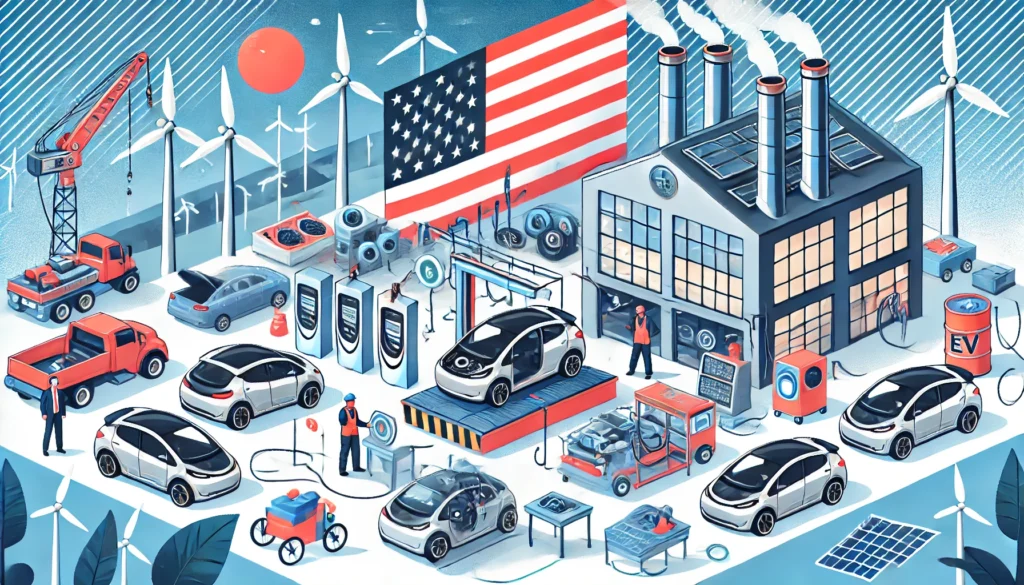
One of the most significant provisions of the Inflation Reduction Act is its focus on bolstering domestic manufacturing. To qualify for consumer tax credits of up to $7,500, EV manufacturers must ensure that a significant portion of the vehicle’s components, particularly its battery materials, are sourced from within North America. This shift has driven automakers to rethink their supply chains and invest heavily in U.S.-based production facilities.
In 2025, this push for domestic production has led to a surge in new manufacturing plants across the country. Automakers like Ford, GM, and Tesla have ramped up their efforts to localize battery and vehicle assembly. Emerging players like Rivian and Lucid Motors are also benefiting from these incentives, using the IRA’s support to scale their operations and compete on a global stage. By prioritizing domestic production, the IRA is not just creating jobs but also fostering innovation in the EV sector.
Reinventing Supply Chains
The IRA has brought supply chain localization to the forefront of EV manufacturing. Traditionally, the U.S. has depended heavily on imports for critical minerals like lithium, cobalt, and nickel, which are essential for EV batteries. The IRA’s requirements for sourcing materials from North America or countries with free trade agreements have sparked a race to secure domestic resources.
Mining and refining operations within the U.S. are receiving renewed attention, with companies exploring partnerships and new extraction technologies. The legislation has also incentivized recycling initiatives to recover valuable materials from old batteries. By 2025, these efforts are beginning to bear fruit, reducing reliance on foreign suppliers and making EV production more sustainable.
Lower Costs for Consumers
One of the primary goals of the Inflation Reduction Act is to make EVs more affordable for American consumers. The tax credits provided under the IRA have significantly lowered the entry cost for many EV buyers. These credits, however, come with strict eligibility criteria that prioritize vehicles assembled in North America with locally sourced components.
This consumer-focused approach is paying off. In 2025, EV adoption is on the rise, thanks to lower upfront costs and growing awareness about the benefits of electric vehicles. While some models have faced challenges meeting the eligibility criteria, automakers are adapting quickly to ensure their vehicles qualify, further accelerating the transition to electric mobility.
Driving Competition and Innovation
The IRA has ignited fierce competition among automakers to produce EVs that meet the legislation’s stringent requirements. This race is fostering innovation in areas like battery technology, lightweight materials, and energy efficiency. Companies are pouring resources into research and development, aiming to create vehicles that not only comply with the IRA but also set new standards in performance and sustainability.
By emphasizing local manufacturing and material sourcing, the IRA is encouraging automakers to explore cutting-edge technologies, such as solid-state batteries and modular vehicle platforms. These advancements are not only improving EVs but also strengthening the U.S.’s position in the global EV market.
Challenges and Opportunities Ahead
While the Inflation Reduction Act has provided a significant boost to the EV industry, it has also brought challenges. Meeting the domestic sourcing requirements has proven difficult for some manufacturers, leading to concerns about supply chain bottlenecks and rising production costs. Smaller automakers, in particular, face hurdles in competing with larger players who have greater resources to adapt to the new rules.
However, these challenges are driving collaboration across the industry. Automakers, suppliers, and policymakers are working together to address these obstacles, ensuring the IRA’s long-term success. In 2024, the U.S. is steadily building a more resilient and sustainable EV manufacturing ecosystem.
A Brighter Future for EVs
The Inflation Reduction Act is reshaping the U.S. EV industry, driving investments in domestic manufacturing, encouraging innovation, and making electric vehicles more accessible to consumers. By fostering a robust local supply chain and incentivizing sustainable practices, the IRA is not just transforming how EVs are made but also helping the U.S. lead the charge toward a cleaner, greener future.
As we move further into 2025, it’s clear that the Inflation Reduction Act is more than just a policy; it’s a catalyst for change, pushing the boundaries of what’s possible in EV manufacturing. The journey to a fully electric future is well underway, and the U.S. is positioned to be a driving force in the global EV revolution.