As electric vehicles (EVs) continue to gain popularity in the U.S., many drivers are exploring the best ways to charge their cars. One of the most significant decisions you’ll face as an EV owner is whether to use fast charging or regular charging. Each option has its own advantages and disadvantages, and understanding them can enhance your electric vehicle experience. In this blog, we’ll break down the differences between fast charging and regular charging to help you make informed choices.
The Basics of Charging Your EV
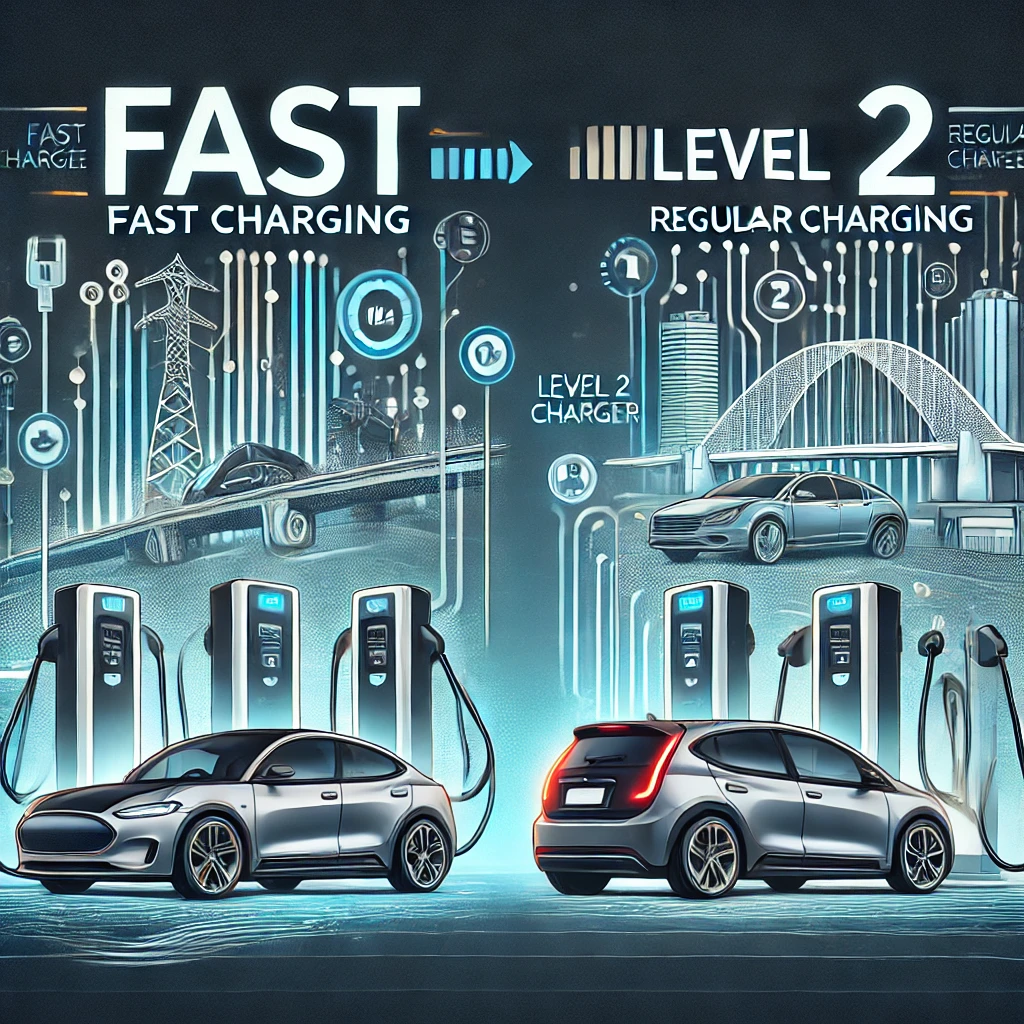
Charging your electric vehicle can generally be broken down into two main categories: regular charging and fast charging. Regular charging, often referred to as Level 2 charging, typically uses a 240-volt outlet, which is commonly found in homes and public charging stations. This method provides a reliable and convenient way to charge your vehicle overnight or while you’re at work. Fast charging, on the other hand, includes both DC fast chargers and Level 3 chargers that deliver higher power levels, allowing you to replenish your battery much more quickly.
Both charging methods are essential for EV drivers, but the best option depends on your lifestyle, driving habits, and specific charging needs.
Understanding Regular Charging
Regular charging is the most common method for EV owners. Using a Level 2 charger, you can expect to add about 10 to 60 miles of range per hour, depending on your vehicle’s battery capacity and the charger’s output. This is ideal for overnight charging or during extended periods where your car is parked. If you typically drive short distances for work or errands, a regular charging station can easily keep your battery topped up without any rush.
Regular charging stations are often found in residential areas, workplaces, and public parking lots. The convenience of plugging in your car and walking away is one of the key benefits of this method. Plus, with the increasing availability of home charging stations, many EV owners can charge their vehicles overnight without any hassle.
However, the trade-off for this convenience is time. Regular charging takes longer than fast charging, which can be a concern for drivers who need to hit the road quickly.
Fast Charging: A Game Changer for Long Trips
Fast charging is designed for those who need a quick battery boost while on the go. DC fast chargers can deliver up to 80% charge in as little as 30 minutes, making them a valuable resource for long-distance travel. These charging stations are often located along major highways and in busy urban areas, allowing you to recharge quickly during road trips or while running errands.
One of the most significant advantages of fast charging EVs is the reduced wait time. With the growing infrastructure of fast charging stations across the U.S., drivers can confidently plan long journeys without the fear of running out of battery. Many fast charging stations are equipped with multiple chargers, ensuring that you can find an available spot even during peak travel times.
However, it’s essential to consider that fast charging isn’t meant for everyday use. Frequent fast charging can impact battery health over time, and some EV manufacturers recommend limiting the use of DC fast chargers to preserve battery longevity.
Making the Right Choice for You
So, which charging method is right for you? If you primarily drive short distances and have access to regular charging stations at home or work, then regular charging may be the best option. It’s convenient, cost-effective, and better for your battery’s health in the long run.
On the other hand, if you often find yourself on the road or taking long trips, fast charging becomes indispensable. Knowing where to locate DC fast chargers along your route can save you time and keep your adventures going smoothly.
Ultimately, many EV drivers find that a combination of both charging methods works best for their needs. Incorporating regular charging for daily use while utilizing fast charging for long trips offers the most flexibility and convenience.
Conclusion: Powering Your EV Journey
As electric vehicles continue to reshape the automotive landscape in 2024, understanding the differences between fast charging and regular charging is essential. Each method has its own set of advantages that cater to various lifestyles and driving patterns. By choosing the right charging strategy, you can enhance your electric vehicle experience and enjoy the many benefits that come with driving an EV.
Whether you prefer the convenience of regular charging at home or the speed of fast charging during your travels, the key is to find what works best for you. With the right approach, charging your electric vehicle can be a seamless and enjoyable part of your driving experience.