

The future of transportation is rapidly evolving, and one of the most important pieces of the puzzle is the rise of 5G technology. As autonomous driving continues to advance, 5G is expected to play a pivotal role in enhancing the capabilities of self-driving cars. In the United States, where connected car networks are expanding, the marriage of 5G and self-driving cars is bringing us closer to a future where vehicles can communicate seamlessly, react in real time, and drive autonomously with greater safety and efficiency. In this blog, we will explore how 5G in automotive technology is transforming autonomous driving in 2024 and beyond.
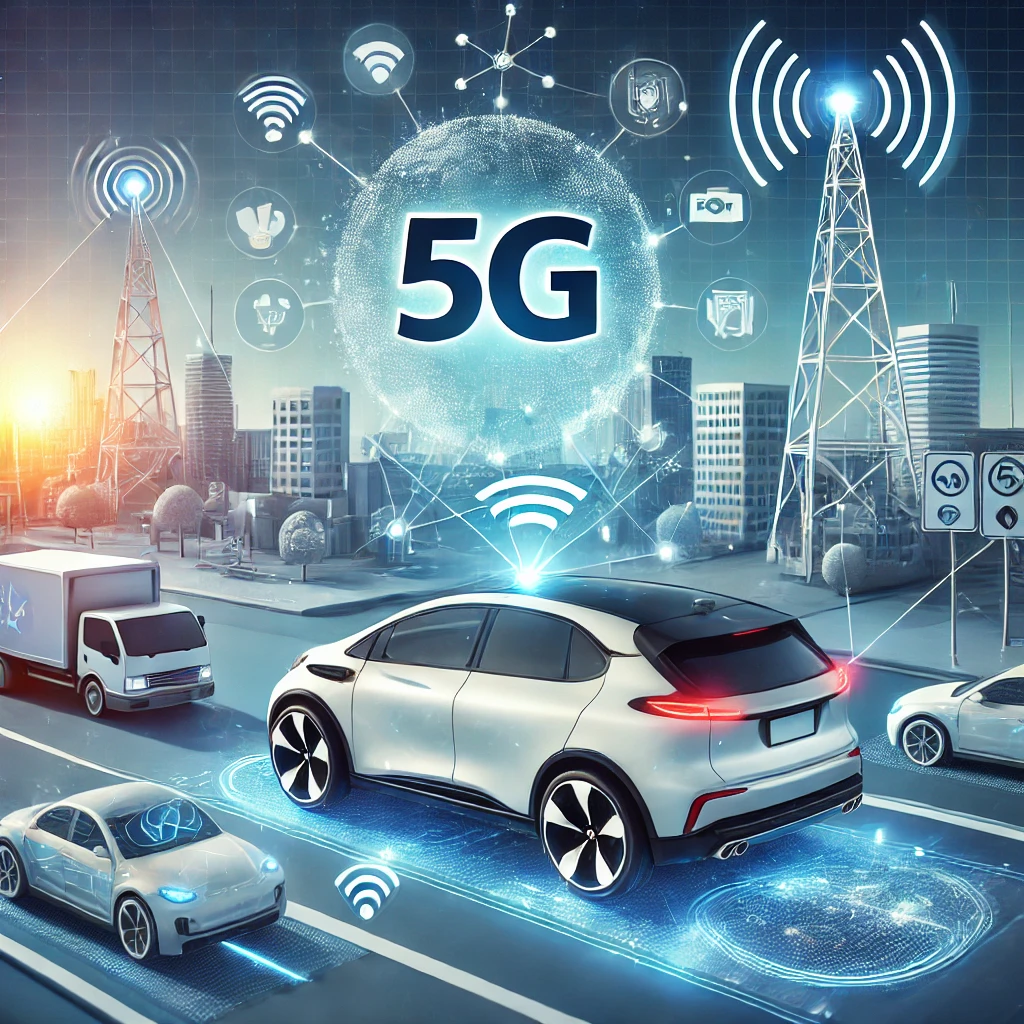
What is 5G, and Why Does it Matter for Autonomous Cars?
5G, or fifth-generation cellular network technology, is the latest upgrade in wireless communication that promises to deliver faster speeds, lower latency, and the ability to connect more devices at once. While it has broad applications across industries, the impact of 5G on self-driving cars is particularly revolutionary. Autonomous vehicles (AVs) rely on a vast amount of data to make decisions and navigate complex environments. With 5G, AVs can process and share that data much faster than was previously possible, leading to more efficient and safer driving experiences.
In previous generations of wireless technology, such as 4G, network speeds and response times were not fast enough to support the real-time data exchange required by autonomous cars. For instance, a self-driving car might struggle to react to unexpected events in time, like a pedestrian stepping into the street. 5G solves this problem by drastically reducing latency—the delay between data being sent and received. This real-time communication allows vehicles to “think” faster, making them more responsive and reliable in unpredictable road conditions.
The Benefits of 5G in Autonomous Driving
One of the main advantages of 5G in automotive networks is the ability to create Vehicle-to-Everything (V2X) communication systems. V2X enables cars to connect not only with other vehicles but also with traffic signals, road infrastructure, and even pedestrians’ smartphones. This level of connectivity offers several benefits that are crucial to the future of autonomous driving.
First, improved safety is one of the most significant outcomes of 5G technology. With 5G, self-driving cars can communicate with each other to share information about road conditions, traffic patterns, and potential hazards. For example, if a vehicle ahead detects an obstacle or sudden braking, it can immediately transmit that information to nearby vehicles, allowing them to react in advance. This reduces the risk of accidents caused by delayed human reactions or blind spots, enhancing overall road safety.
Second, 5G enables higher levels of automation by supporting the data needs of more advanced autonomous driving systems. For example, Level 4 and Level 5 autonomous vehicles (which require little to no human input) depend on fast, reliable connections to function properly. 5G ensures that these AVs can access the data needed to make real-time decisions, like navigating crowded urban streets or highway driving at high speeds.
Lastly, 5G contributes to a smoother, more efficient driving experience. Through connected car networks, autonomous vehicles can receive real-time updates about traffic conditions and adjust their routes accordingly. This can help reduce congestion on busy roads, improve fuel efficiency, and decrease travel times for passengers. For commercial vehicles and ride-hailing services, this increased efficiency can also translate into cost savings.
Challenges in Implementing 5G for Self-Driving Cars
Despite the many benefits, there are still challenges to overcome before 5G and self-driving cars can reach their full potential. In the United States, 5G infrastructure is still being rolled out, particularly in rural areas where network coverage can be spotty. While urban centers are seeing faster deployment of 5G networks, it will take time before this technology is available nationwide.
Another challenge lies in ensuring the cybersecurity of connected vehicles. As 5G allows for more devices and systems to be connected simultaneously, it also opens up new vulnerabilities for cyberattacks. Hackers could potentially exploit weaknesses in the communication network, taking control of vehicles or disrupting critical systems. Automakers and technology companies are working on developing robust security measures to protect AVs and their connected networks from these threats, but it remains an area of concern.
Finally, while 5G will make self-driving cars more responsive and efficient, there is still a need for strong collaboration between automakers, tech companies, and government agencies to develop the legal and regulatory framework that governs 5G-enabled AVs. As of 2024, the US government is working with stakeholders to establish clear guidelines for data sharing, cybersecurity, and liability in the event of an accident.
The Future of 5G and Self-Driving Cars
As 5G becomes more widely available across the US, the potential for autonomous vehicles to transform transportation is becoming more tangible. By 2024, we are already seeing the integration of 5G in connected car networks and pilot programs for AVs in cities like San Francisco, Phoenix, and Detroit. These initiatives showcase the benefits of 5G in automotive technology, from enhanced safety to more seamless driving experiences.
Looking forward, the continued development of 5G infrastructure and improvements in self-driving car technology will likely bring us closer to fully autonomous transportation systems. Whether it’s on highways, city streets, or in rural areas, the combination of 5G and self-driving cars has the potential to revolutionize how we travel, making it safer, faster, and more efficient.
Conclusion
The impact of 5G on autonomous driving is undeniable. With faster data speeds, lower latency, and the ability to support advanced V2X communication systems, 5G is poised to unlock the full potential of self-driving cars in the US. While challenges remain in terms of infrastructure, security, and regulations, the future of 5G and self-driving cars is bright. As we move into 2024 and beyond, we can expect to see more 5G-enabled AVs on the roads, bringing us one step closer to a fully autonomous future.


