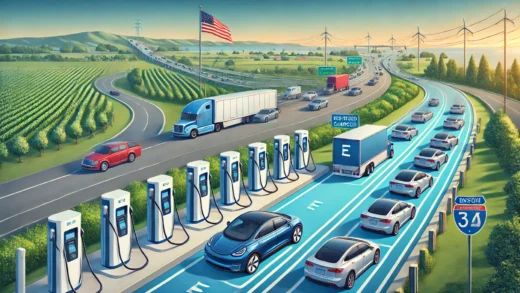
Electric vehicle fleets are expanding rapidly across the US and EU, driven by sustainability mandates, corporate ESG goals, and rising fuel costs. From last-mile delivery vans to regional logistics trucks, electrification is no longer experimental. However, running an EV fleet is very different from managing traditional diesel vehicles. Operators must constantly monitor battery range, charging availability, and strict delivery schedules. A simple routing mistake can result in delayed shipments, emergency charging stops, or even stranded vehicles. This added complexity has made AI-powered routing optimization one of the most critical technologies in modern fleet management.
Unlike combustion vehicles, EVs operate within tighter operational constraints. Battery levels fluctuate based on traffic, temperature, load weight, and terrain conditions. Cold winters in Northern Europe or hot summers in Southern US states can significantly impact range performance. This means fleet managers cannot rely on static routing models. They need dynamic systems that can continuously analyze variables and adjust routes in real time. AI routing platforms are designed to handle exactly this level of complexity.
Why Traditional Routing Tools No Longer Work
Conventional route planning systems were built around distance, speed limits, and estimated traffic delays. While those factors still matter, EV fleets introduce additional layers that traditional systems simply cannot handle efficiently. Charging times vary depending on station type, battery state of charge, and grid conditions. Some public chargers may be occupied, out of service, or slower than expected. Relying on outdated routing tools often leads to missed time windows and unnecessary downtime.
In the US, charging infrastructure is expanding but still uneven across regions. Urban centers have better coverage, while rural routes can present challenges. Across the EU, cross-border logistics adds another level of planning complexity due to different charging networks and pricing models. AI routing systems integrate live charging data, predictive energy consumption models, and traffic analytics to create routes that are not only efficient but realistic. This shift from static planning to intelligent optimization is transforming how fleets operate daily.
How AI Predicts Range and Energy Consumption
AI routing platforms use machine learning algorithms trained on real-world fleet data. These systems analyze historical driving behavior, vehicle specifications, payload weights, and environmental factors to predict how much energy a vehicle will consume on a specific route. Instead of relying on generic range estimates, AI calculates customized projections for each trip. This level of precision dramatically reduces the risk of unexpected battery depletion during operations.
For example, an AI system might detect that a vehicle consumes more energy on highways due to sustained high speeds. It may then suggest an alternative urban route with slightly lower speeds but better overall energy efficiency. It can also anticipate how traffic congestion affects regenerative braking performance. By combining real-time telemetry with predictive modeling, AI routing turns range management into a proactive strategy rather than a reactive problem. This directly improves uptime and operational reliability.
Smart Charging Integration and Cost Optimization
Charging strategy is just as important as route planning. AI routing systems do not simply add charging stops when the battery runs low. Instead, they optimize when, where, and how long a vehicle should charge based on electricity pricing, station reliability, and upcoming delivery commitments. This is particularly important in markets where electricity tariffs fluctuate throughout the day. Charging during peak hours can significantly increase operating costs if not managed properly.
In both the US and EU, fleets are increasingly adopting depot charging combined with public fast-charging networks. AI systems evaluate whether it is more efficient to top up at a depot overnight or use a high-speed public charger mid-route. They also predict waiting times at popular charging hubs, helping drivers avoid unnecessary delays. By aligning charging schedules with delivery time windows, fleets can maintain punctuality while keeping energy costs under control. Over time, this intelligent charging coordination leads to measurable savings.
Meeting Tight Time Windows Without Compromise
Customer expectations have never been higher. Same-day deliveries, scheduled service appointments, and precise arrival notifications are standard requirements in today’s logistics environment. EV fleets must meet these demands while managing battery constraints. AI routing integrates time windows directly into its optimization engine, ensuring that delivery commitments are never treated as secondary considerations. Every route is calculated with both energy and time performance in mind.
If traffic conditions suddenly change or a charging station becomes unavailable, AI systems automatically recalculate the route. This dynamic adjustment prevents delays from cascading across multiple deliveries. Drivers receive updated instructions in real time, keeping operations smooth and predictable. For businesses competing in e-commerce or temperature-sensitive transport, this reliability strengthens customer trust. AI routing ensures that electrification does not compromise service quality.
Sustainability, Compliance, and Data Transparency
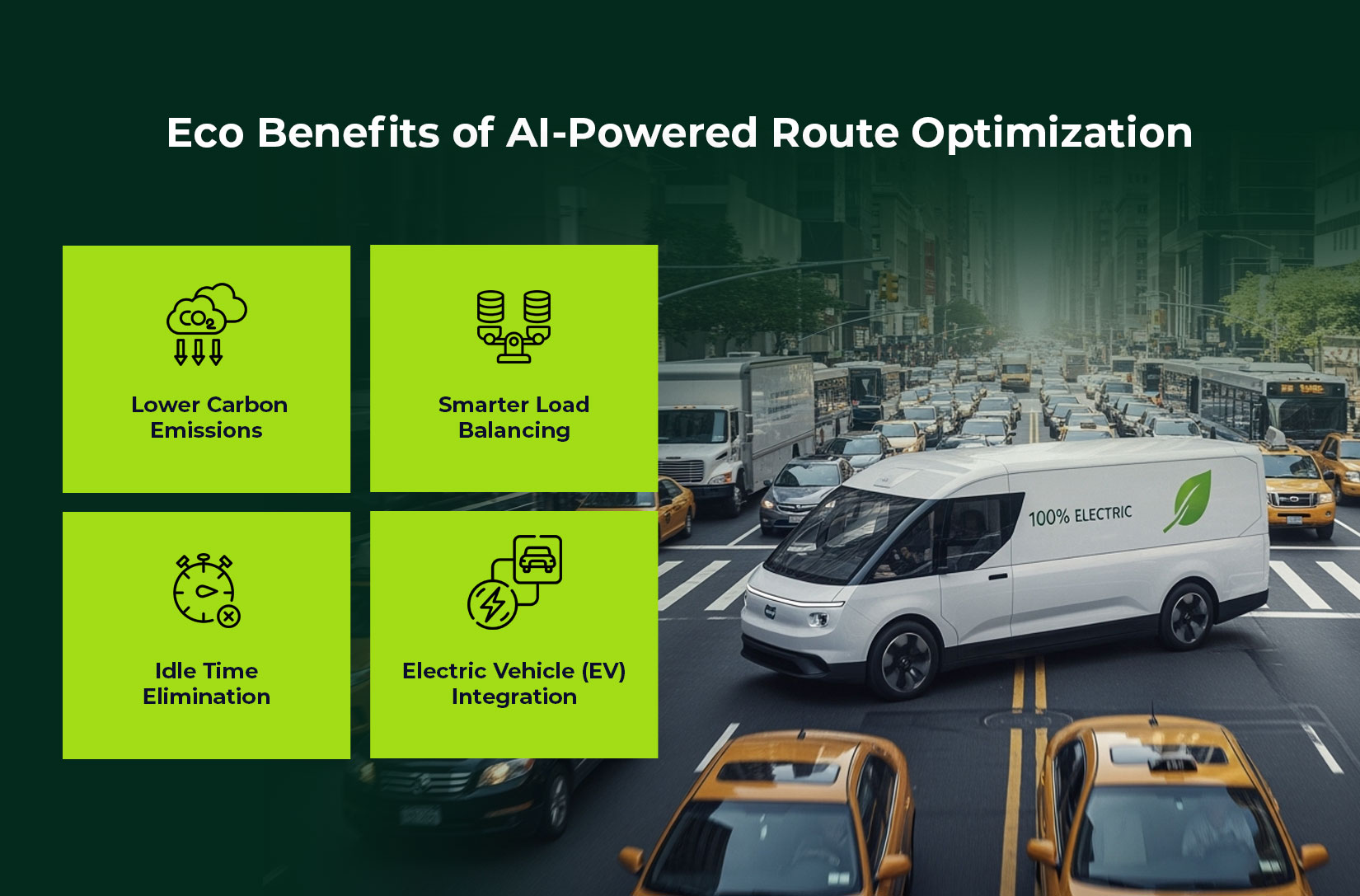
Sustainability targets are driving major investments in EV fleets across the US and EU. Governments are enforcing stricter emissions standards, and corporations are publishing detailed environmental impact reports. AI routing contributes directly to these goals by minimizing unnecessary mileage and optimizing energy use. Efficient routing reduces overall electricity consumption and maximizes vehicle utilization rates. This strengthens the environmental business case for fleet electrification.
In the EU especially, regulatory compliance requires accurate reporting on fleet emissions and energy performance. AI routing platforms generate detailed data analytics that support transparency and audit readiness. Companies can demonstrate measurable reductions in carbon output while maintaining service efficiency. Investors and customers increasingly favor businesses that combine sustainability with operational excellence. AI routing helps fleets achieve both objectives simultaneously.
The Competitive Advantage of Intelligent Optimization
Adopting AI routing is no longer just about innovation; it is about staying competitive. Fleets that rely on manual planning or outdated systems risk higher costs, operational disruptions, and customer dissatisfaction. In contrast, companies using AI-driven optimization gain better visibility, improved reliability, and stronger financial performance. The combination of predictive energy modeling, real-time traffic intelligence, and smart charging coordination creates a powerful operational advantage.
As EV adoption accelerates through 2026 and beyond, routing complexity will only increase. Infrastructure will expand, battery technologies will evolve, and customer expectations will continue to rise. Fleets that embrace AI routing today position themselves for long-term success in this rapidly changing landscape. By intelligently balancing range, charging, and time windows, AI transforms EV fleet management from a challenge into a strategic opportunity.