As vehicles become more intelligent and software-driven, safety engineering is entering a new era. Advanced driver assistance systems, centralized compute platforms, and AI-based perception stacks are transforming the driving experience across the US and European markets. But with this added intelligence comes added responsibility. When software controls steering, braking, and acceleration decisions, systems must be designed to survive failures without putting occupants at risk.
This is where compute redundancy becomes essential. Redundancy ensures that if one part of the system fails, another can take over instantly. It is not simply about adding extra hardware. It is about building architectures that anticipate faults and continue operating safely under real-world conditions.
Why Redundancy Is No Longer Optional
In traditional vehicles, mechanical systems often had inherent fail-safes. In today’s vehicles, software and electronic control units perform many of the critical tasks once handled mechanically. As autonomy levels increase, the importance of fault tolerance grows dramatically.
Safety regulations in both the US and Europe, including ISO 26262 functional safety standards, require manufacturers to design systems that manage hardware and software faults predictably. A single point of failure in a compute platform is unacceptable when that platform is responsible for real-time perception and decision-making.
Redundancy provides the foundation for resilience. It ensures that even if a processor, memory unit, or communication path experiences a fault, the vehicle can continue operating safely or transition to a controlled safe state.
Redundant Compute Domains in Modern Vehicles
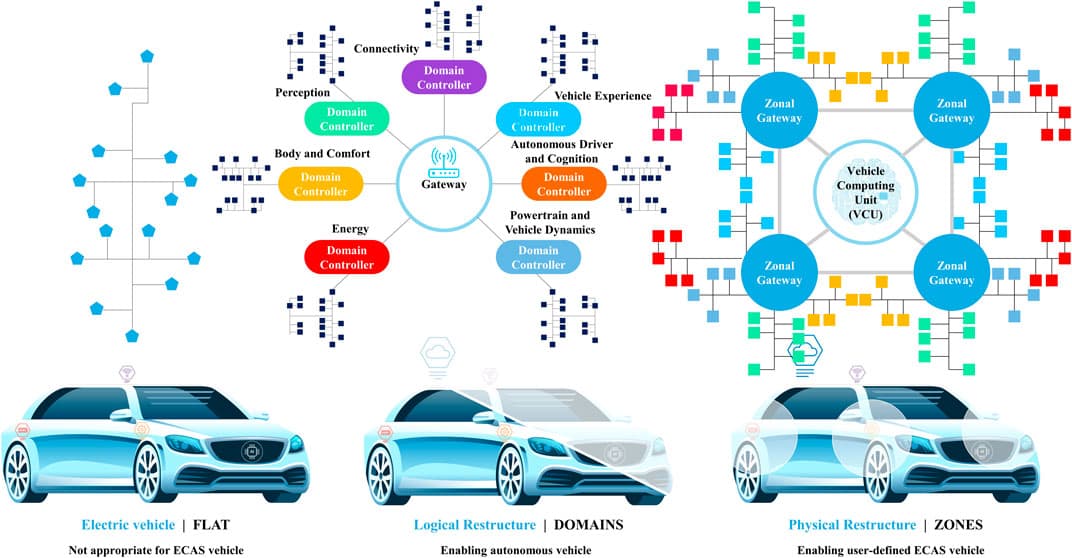
Modern centralized architectures often include dual compute domains. These domains may run in parallel, each capable of performing critical perception and control tasks. In high-level autonomous systems, this dual-domain design ensures that if one compute path fails, the other can maintain vehicle control.
In some implementations, both domains operate simultaneously and cross-check each other’s outputs. This approach, often referred to as active redundancy, enables rapid fault detection and seamless failover. In other cases, a secondary domain remains in standby, ready to activate if the primary domain encounters an issue.
The choice between active and standby redundancy depends on the vehicle’s autonomy level and safety goals. Higher levels of automation demand faster failover and more robust parallel operation.
Sensor and Perception Redundancy
Compute redundancy cannot exist in isolation. It must be paired with sensor redundancy. Cameras, radar, and lidar systems provide overlapping environmental data so that if one sensor becomes impaired, others can compensate.
For example, radar can detect objects in poor visibility conditions where cameras struggle. Multiple camera angles provide backup views if one lens is obstructed. This layered sensing strategy ensures consistent perception even under adverse conditions.
The compute platform must be able to process this redundant sensor input intelligently. Sensor fusion algorithms dynamically adjust weighting and inputs depending on sensor health and availability. This adaptability strengthens overall system resilience.
Software Monitoring and Fault Management
Redundancy extends beyond hardware into the software layer. Modern automotive systems include health monitoring modules that continuously evaluate processor status, memory integrity, and communication reliability. If irregularities are detected, the system can isolate the fault and reassign tasks.
Software redundancy may involve running duplicate algorithms on separate cores and comparing outputs. If results diverge, the system identifies a potential fault and initiates corrective action. This method improves reliability and helps detect silent failures that might otherwise go unnoticed.
Graceful degradation is another important strategy. Instead of shutting down completely, a redundant system can reduce functionality while maintaining safety. For example, advanced autonomy features may deactivate, but basic driver assistance remains operational.
Power and Communication Redundancy
A robust compute architecture also requires redundancy in power and communication networks. Dual power supplies or independent voltage rails prevent a single electrical fault from disabling the system. Communication buses may have backup channels to ensure data continues flowing even if one pathway fails.
In distributed vehicle networks, redundant communication protocols enable messages to be rerouted automatically. This ensures that braking commands, steering inputs, and sensor data reach their intended destinations without interruption.
Such redundancy becomes especially critical in electric vehicles and high-voltage architectures. Coordinated power management across subsystems ensures that compute redundancy does not introduce excessive energy consumption.
Balancing Cost, Complexity, and Safety
While redundancy enhances safety, it also increases system cost and design complexity. Additional processors, memory modules, and communication paths add hardware expense and integration effort. Automakers must carefully evaluate where full redundancy is required and where partial redundancy is sufficient.
Scalable redundancy strategies are becoming common. Entry-level vehicles may implement redundancy for essential safety functions only, while premium models or higher autonomy programs include fully redundant compute domains. Modular architectures help manage this scalability efficiently.
By standardizing interfaces and leveraging common safety-certified components, manufacturers can control costs while maintaining robust safety performance.
The Road Ahead for Resilient Architectures
As vehicles continue moving toward higher levels of automation, compute redundancy will play an even greater role. Public trust in AI-driven mobility depends on the industry’s ability to design systems that anticipate and survive failures.
In the US and European markets, regulatory frameworks and consumer expectations both emphasize reliability and safety. Vehicles that demonstrate resilient architecture not only meet compliance standards but also strengthen brand reputation.
Compute redundancy is not about overengineering. It is about ensuring that vehicles remain safe partners on the road, even when unexpected faults occur. By integrating hardware, software, sensor, power, and communication redundancy into cohesive architectures, automakers can build platforms that stand up to real-world challenges.
In the era of intelligent mobility, resilience defines credibility. Architectures that survive failures will ultimately define the next generation of safe, trustworthy vehicles.