

The modern vehicle in the US and European markets is built around connectivity. Real-time navigation, voice assistants, remote diagnostics, and personalized services all rely heavily on cloud infrastructure. Automakers promote seamless digital ecosystems that follow drivers wherever they go. But the reality on the road is different. Cellular coverage drops in rural highways, tunnels interrupt signals, and cross-border travel can create roaming limitations. When the cloud disappears, the vehicle still needs to perform flawlessly.
Drivers do not think about servers or connectivity layers while navigating traffic. They expect their car to respond instantly and reliably at all times. If a voice assistant stops working or navigation loses intelligence, frustration quickly builds. In safety-critical environments, interruptions are more than inconvenient. They can distract drivers and undermine trust in advanced systems. This is why offline AI is no longer optional; it is a strategic necessity.
Why Cloud Dependency Is a Risk
Cloud-based AI offers enormous advantages. It provides access to powerful computing resources, large language models, live traffic feeds, and constantly updated data. However, relying entirely on remote servers creates a fragile dependency. Vehicles operate in motion across unpredictable environments, and connectivity is never guaranteed 100 percent of the time.
In the United States, long stretches of highway still have inconsistent coverage. In Europe, mountainous terrain and rural regions create similar gaps. Even in urban areas, underground parking garages and tunnels can disrupt service. If critical vehicle intelligence depends solely on remote processing, performance can degrade exactly when drivers need it most. That gap between expectation and reality is what offline AI must close.
What Offline AI Really Means
Offline AI does not mean removing connectivity or abandoning cloud innovation. It means designing vehicles with intelligent local processing that can operate independently when needed. Essential systems such as navigation guidance, voice command recognition, and vehicle health monitoring should continue functioning even without a data connection. The goal is continuity, not duplication of every cloud feature.
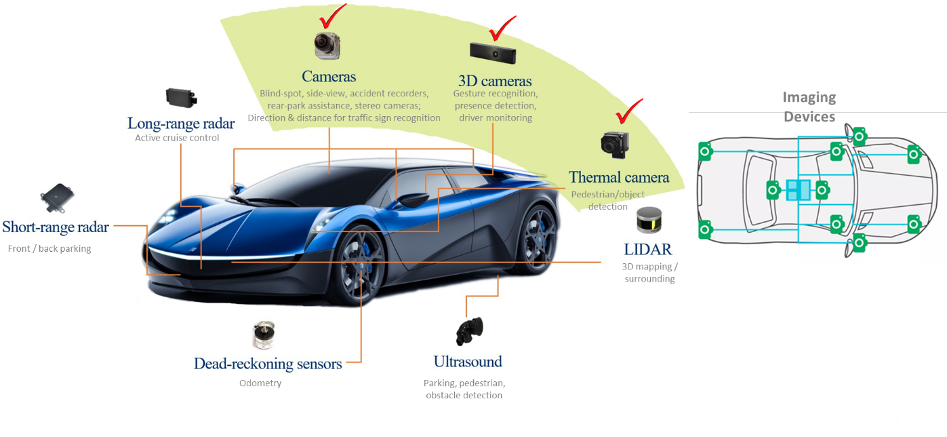
For example, a driver asking for directions should still receive reliable routing based on locally stored maps. A voice command to adjust climate settings should respond instantly without needing server validation. Safety features such as adaptive cruise control, lane-keeping support, and collision warnings must always run on local systems. Offline AI ensures that intelligence stays inside the vehicle when connectivity fades.
The Technology Behind Local Intelligence
Delivering effective offline AI requires careful engineering. Cloud systems can process enormous datasets with virtually unlimited computing power. In-vehicle hardware operates under tighter constraints related to energy consumption, processing capability, and cost. To overcome this, automakers are deploying optimized, smaller AI models designed specifically for embedded systems.
These models focus on high-priority functions such as natural language understanding for driving-related commands and contextual interpretation of vehicle data. They are paired with rule-based engines and sensor integration to ensure accuracy. Data caching also plays a major role. Frequently used routes, map updates, and local points of interest are stored in advance so they remain accessible offline. This hybrid architecture blends flexibility with resilience.
Seamless Transitions for the Driver
A successful offline strategy must feel invisible to the driver. Users should not need to know whether the system is connected or operating locally. The transition between online and offline modes should happen automatically and without interruption. Navigation should continue smoothly, and voice assistants should respond naturally.
Clear communication helps maintain trust. If live traffic data is temporarily unavailable, the system can explain that it is using stored route information instead. Honest and simple messaging avoids confusion. Drivers appreciate transparency as long as the vehicle continues to function confidently. The goal is reassurance, not technical explanation.
Safety First, Connectivity Second
Safety systems must never rely exclusively on cloud processing. Advanced driver-assistance features require real-time response measured in milliseconds. Waiting for remote servers is not acceptable in critical moments. This is why core safety logic must always run locally, independent of network status.
Regulatory expectations in both the US and EU emphasize redundancy and fail-safe design. Offline AI supports these standards by ensuring continuous performance. Whether navigating heavy traffic in Los Angeles or crossing rural highways in Spain, drivers need systems that remain stable under all conditions. Offline capability reinforces reliability, which in turn strengthens consumer confidence.
Competitive Advantage in a Software-Defined Era
As vehicles become increasingly software-defined, digital performance becomes a key differentiator. Consumers compare infotainment speed, voice accuracy, and navigation reliability just as they once compared horsepower. Brands that invest in robust offline AI gain a significant competitive advantage. They offer resilience in addition to innovation.
In both American and European markets, where expectations for premium digital experiences are high, reliability often matters more than novelty. A system that works consistently without interruption builds long-term loyalty. Offline AI is not about limiting ambition; it is about delivering dependable intelligence everywhere.
The Road Ahead
Connectivity will continue to improve with expanding 5G infrastructure and future network technologies. Yet no network is flawless. Vehicles must be designed with the understanding that disconnections will occur. Offline AI ensures that when the cloud disappears, intelligence remains.
The future of automotive technology depends on balance. Cloud services provide richness and continuous learning, while embedded intelligence guarantees resilience and safety. Together, they create a vehicle that feels smart, confident, and trustworthy in every environment. In the evolving mobility landscape of the US and Europe, offline AI is not a backup plan. It is the foundation of reliable, always-ready vehicle intelligence.


