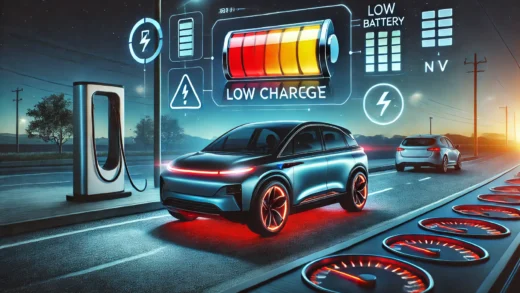
The race to improve electric vehicle battery performance is more competitive than ever, especially in the United States and Europe, where automakers are pushing hard to deliver longer-range, lighter and more efficient EVs. One of the biggest breakthroughs gaining momentum is the rise of silicon-anode battery startups. These young companies are tackling one of the most challenging problems in battery science—how to significantly increase energy density without compromising safety, durability or cost.
Silicon-anode technology has been around as a scientific concept for years, but only recently has it begun making its way toward commercial-scale EV applications. Today, these startups are attracting major investments, forming partnerships with automakers and emerging as key players in the global shift toward cleaner transportation.

Why Silicon Anodes Matter for EV Batteries?
The appeal of silicon lies in its incredible ability to store lithium ions. Compared to traditional graphite anodes, silicon can theoretically store up to ten times more energy. In simple terms, a silicon-rich anode allows a battery to hold more power in the same physical space. This directly translates to longer driving range, lighter battery packs or both.
For U.S. and European automakers eager to overcome range anxiety and differentiate in a crowded market, increasing energy density also means greater efficiency. Better batteries reduce the weight of the vehicle, improve performance and lower manufacturing and operational costs. Silicon-anode batteries also promise faster charging, a major selling point for EV adoption in regions where charging networks are still expanding.
These advantages explain why silicon has become the focal point of battery innovation, especially for startups looking to disrupt traditional graphite-based anode technologies.
The Startups Leading the Charge
Across North America and Europe, innovative battery startups are racing to develop silicon-anode materials that can withstand the harsh conditions of real-world EV use. Some are developing silicon-rich composites, while others focus on nano-structured materials or engineered silicon particles designed to behave more reliably.
In the U.S., several companies have advanced to pilot-scale production, supplying material samples to automakers for testing. Their goal is to demonstrate that silicon-anode technologies can be integrated into existing lithium-ion manufacturing lines with minimal changes. This compatibility is crucial because it allows electric vehicle manufacturers to adopt silicon improvements without rebuilding entire battery factories.
In Europe, a growing wave of battery material startups is focusing on sustainability, supply chain localization and scalable manufacturing. The region’s focus on clean transportation and carbon-neutral production has made silicon-anode innovation a strategic priority. European startups are also positioning themselves as key suppliers for the continent’s new gigafactories, many of which plan to incorporate next-generation anode tech into their future production cycles.
Together, these U.S. and European innovators are building a path toward higher-performing EVs powered by locally sourced, cutting-edge battery materials.
Overcoming the Challenges of Silicon-Based Anodes
Despite the excitement, silicon-anode batteries present formidable engineering challenges. The biggest issue is expansion. When silicon absorbs lithium, it expands dramatically—sometimes by more than 300%. This repeated swelling and contracting during charge cycles can cause the anode to crack, leading to performance degradation and reduced battery life.
Startups are tackling this challenge in a variety of clever ways. Some use silicon-carbon blends to reduce expansion stress. Others design nano-structured silicon particles that maintain their integrity even after hundreds of charge cycles. Advanced polymer binders and electrolyte formulations are also being developed to support silicon without compromising safety.
Another challenge is manufacturing scale. Producing silicon-anode materials consistently and economically requires precise engineering and quality control. Automakers need to be confident that these materials will perform the same way in millions of vehicles—not just in lab samples. This is why many startups are focusing on scalable, cost-effective processes that can fit into existing supply chains.
Energy density alone is not enough; silicon-anode batteries must match or exceed the reliability of graphite-based batteries before widespread adoption can occur.
Why Automakers Are Paying Close Attention?
For both U.S. and European automakers, silicon-anode technology offers a promising path to differentiate their next generation of EVs. Range improvements of even 10% to 20% can significantly influence consumer purchasing decisions. With battery packs being the most expensive component of an electric car, a higher energy density can also reduce material requirements and overall production cost.
Silicon-based anodes are especially attractive for high-performance EVs, where range and charging speeds are critical selling points. However, mass-market EVs stand to benefit just as much, particularly in regions with cold climates where battery efficiency typically drops. Silicon’s higher energy density could help offset range losses during winter driving in northern Europe and parts of North America.
Startups that successfully scale silicon-anode technologies are likely to secure major partnerships with automakers looking to future-proof their battery supply chains. This trend is already emerging as companies integrate silicon additives into their anode designs as a first step toward fully silicon-based systems.
What the Future Holds for Silicon-Anode Batteries?
If current progress continues, silicon-anode technology could become one of the most significant battery breakthroughs of the decade. Early applications may appear in premium EVs or smaller consumer electronics, but mass-market electric cars are expected to follow as manufacturing costs fall and material reliability improves.
As U.S. and European gigafactories ramp up production, silicon-anode startups will play a vital role in shaping energy-dense, longer-range EVs. The shift will not happen overnight, but the trajectory is clear: silicon-enhanced batteries will improve performance, make electric vehicles more appealing and support the broader push toward sustainable transportation.
Conclusion
Silicon-anode startups are injecting fresh energy into the EV battery race, offering solutions that promise better range, improved efficiency and faster charging. For automakers in the U.S. and Europe, the ability to adopt higher-energy-density batteries is a strategic opportunity. While challenges remain, the momentum behind silicon-anode innovation is undeniable.
As the technology matures, it has the potential to accelerate EV adoption, strengthen regional battery supply chains and help electric vehicles achieve new performance benchmarks—bringing us closer to a cleaner, more efficient automotive future.