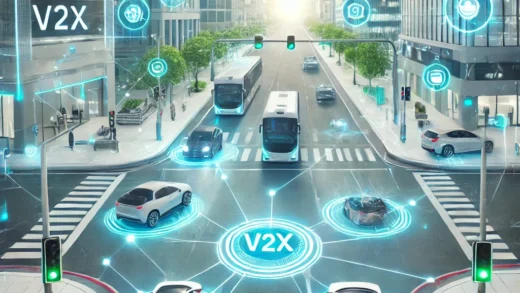
Autonomous mobility is entering a new phase in the US and Europe. Robotaxi services and autonomous delivery vehicles are no longer futuristic concepts; they are growing fleets that move people and goods every day. But beyond transportation, these autonomous fleets are quietly becoming one of the most powerful data-generating engines in the mobility ecosystem. As AV operations scale, so does the opportunity to turn their constant stream of data into meaningful revenue. This emerging model—fleet data monetization—is quickly becoming a core strategy for robotaxi and delivery AV companies.

The growing value of AV fleet data
Autonomous fleets are essentially mobile sensor networks. Every robotaxi or delivery AV continuously collects high-resolution information through cameras, radar, lidar, GPS and onboard computing systems. This includes road conditions, traffic behavior, pedestrian interactions, vehicle dynamics, weather patterns, mapping details, charging or fueling behavior and even patterns in consumer demand.
Because these vehicles operate for long hours and drive consistent routes, they generate more high-quality data than almost any other mobility asset. For companies that own large fleets, this data becomes a valuable digital resource. Instead of relying only on revenue from rides or deliveries, they can develop new business lines centered on insights and analytics.
In the US and Europe, where cities are pushing for smarter mobility and logistics companies require real-time intelligence, AV-generated data fits directly into market needs.
How robotaxi and delivery AV companies monetize their data?
Fleet data monetization usually starts with understanding what insights are valuable to outside stakeholders. Robotaxi operators, for example, can provide data on urban mobility patterns, congestion hotspots and curb usage. Delivery AV companies can supply information about last-mile efficiency, road wear, parking behavior and neighborhood-level logistics performance.
Cities may purchase aggregated, anonymized mobility data to improve traffic flow, pedestrian safety or infrastructure planning. Logistics companies may buy route optimization insights or predictive demand data based on delivery patterns. Mapping companies are another major customer segment, relying on up-to-date road and environmental data to improve their digital maps.
For robotaxi operators, another layer of monetization involves commercial partnerships. Retailers, entertainment providers or hospitality companies may use aggregated mobility data to identify peak customer movement, popular routes or location-based advertising opportunities. Delivery AV fleets can partner with retailers or food services to optimize store placement and market expansion strategies using demand and delivery pattern data.
Even insurance companies find value in AV fleet data. Real-world driving behavior, environmental conditions and system performance data help insurers price risk more accurately and design AV-specific insurance models.
Internally, AV fleets also monetize data indirectly by reducing operating costs. Predictive maintenance driven by sensor data minimizes breakdowns. Energy optimization analytics improve battery use for electric AVs. Route intelligence lowers empty miles and improves fleet efficiency. These savings improve profitability and make AV services more competitive.
Why monetization is accelerating in the US and Europe?
Both regions have a strong foundation for fleet data monetization, but for different reasons. In the US, robotaxi deployments are expanding in major urban areas, creating large data sets quickly. There is also a mature technology ecosystem, making it easy for companies to partner with cloud providers, mapping platforms and analytics firms.
In Europe, strict regulations and smart-city initiatives drive a demand for accurate mobility data. Cities want detailed insights to reduce congestion, meet sustainability goals and design safer roadways. AV fleets can supply this information more consistently than human-driven vehicles. Europe’s strong emphasis on electrification also increases the need for energy and charging analytics—data areas where delivery AV fleets excel.
Both regions are embracing new mobility business models, and data is becoming the backbone of these new services. As robotaxis and delivery AVs spread into more cities, the commercial potential of fleet data rises.
Navigating challenges in monetizing AV data
While the opportunity is large, fleet data monetization requires careful handling. The biggest concern is privacy. European regulations are especially strict, and companies must anonymize data, manage consent responsibly and follow clear data governance models. AV companies invest heavily in data-protection tools to ensure compliance and maintain public trust.
Technical challenges also exist. High-volume sensor data requires powerful cloud infrastructure, edge computing and advanced analytics pipelines. Not every AV operator is equipped to handle this on its own, leading many to partner with hyperscalers and software specialists.
Another challenge is defining the right business model. Pricing data, determining what to sell, identifying the right customers and managing competitive sensitivity are all strategic decisions. AV companies must balance monetization with the need to protect proprietary insights that give them operational advantages.
Finally, AV companies must ensure monetization efforts do not interfere with core operations. Reliable autonomous performance always comes first; any data strategy must support, not distract from, safety and vehicle uptime.
The future of fleet data monetization
As robotaxi and delivery AV fleets grow, data monetization will become a major pillar of the autonomous mobility economy. Instead of relying solely on transport revenue, companies will diversify into analytics services, smart-city tools, mapping partnerships and operational optimization offerings.
In the future, we may see AV companies launch full data marketplaces where cities, insurers, logistics partners and other stakeholders can subscribe to curated data streams. Fleets may also enable dynamic pricing, AI-driven demand forecasting and highly personalized mobility experiences powered by real-time analytics.
The shift from vehicle operators to data-platform companies is already underway. Those who build strong data governance, analytics capability and commercial partnerships early will dominate the next phase of mobility.
Final thoughts
Robotaxi and delivery AV companies operating in the US and Europe are discovering that their fleets generate more than transportation—they generate intelligence. By capturing and monetizing this data, these companies unlock new revenue streams, support smarter cities, improve their own operations and shape the future of mobility. As autonomous fleets scale, data will become one of their most valuable assets, turning every mile driven into a new source of insight and growth.