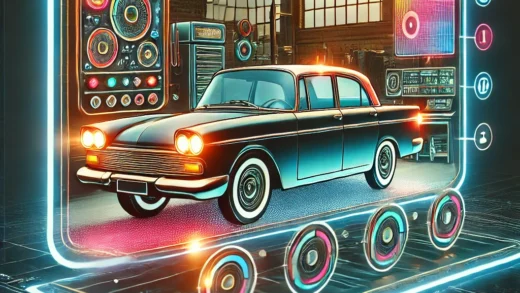
Buying a new car used to mean buying a finished product. Once you drove it home, the features, performance and driving experience stayed mostly the same until you traded it in years later. But that world is rapidly disappearing in the US and Europe. Today’s cars—especially electric and software-defined vehicles—are built to evolve. Over-the-air updates, or OTA updates, are becoming just as important to cars as they are to smartphones.
This shift is changing how we think about value, ownership and innovation. Instead of waiting for the next model year, drivers now wake up to cars that deliver new features overnight. Automakers are releasing smoother infotainment systems, refined driver-assistance capabilities, efficiency improvements and security patches without any dealership visit. It’s a global transformation driven by software, connectivity and cloud computing—and it’s reshaping expectations for drivers everywhere.

What Exactly Is an OTA Update?
An over-the-air update is a remote software upgrade sent wirelessly to your vehicle. Cars equipped with connected operating systems can download these updates using built-in cellular data or Wi-Fi. In the past, only maps or basic multimedia features were updated this way. But now, entire vehicle domains—energy management, braking, infotainment, climate control and even steering calibration—can be refined and improved.
For automakers in the US and Europe, this is a game-changer. Vehicles no longer need dozens of dealership visits over their lifetime. Instead, they receive patches, fixes and upgrades automatically. This reduces recall costs, improves reliability and strengthens customer satisfaction. For drivers, it means their car becomes smarter, safer and more capable long after they’ve signed the purchase agreement.
Why OTA Updates Matter to US and European Drivers?
Car buyers in the US and Europe are especially benefiting from OTA advancements because the market is moving quickly toward digital-first, software-defined architecture. In these regions, drivers expect modern digital experiences, seamless connectivity and improving safety features. OTA updates deliver exactly that.
Imagine buying an EV with 260 miles of range and waking up months later with 10 more miles thanks to a software optimization. Or having your driver-assist system receive refined lane-keeping behavior without stepping foot in a workshop. OTA updates turn static vehicles into evolving mobility platforms.
This shift aligns perfectly with the growing demand for smarter vehicles that age gracefully. A software-supported car feels modern longer, holds value better and adapts to new regulations and services across its life.
Real Improvements Without a New Model
One of the biggest benefits of OTA updates is how they decouple innovation from hardware cycles. Carmakers no longer need to wait for a new model year to launch improvements. Instead, they can roll out enhancements whenever they’re ready.
Drivers across Europe and the US have already seen examples:
The infotainment system becomes faster and easier to use.
A new parking or camera function appears in the menu.
Energy efficiency improves after a battery-management update.
Charging speed or predictive charging routes get better.
New voice-assistant skills roll out with cloud integration.
Premium brands and technology-forward carmakers are now using OTAs to deliver everything from digital services to performance updates. Some have added advanced driver monitoring, updated navigation interfaces or new AI-powered cabin functionalities simply through software.
For drivers, this means no more feeling left behind just because a newer model arrived months after purchase. Your vehicle keeps up—because it keeps updating.
OTA Updates Are Good for Automakers, Too
Behind the scenes, OTA updates fundamentally improve the business of building cars. Automakers in the US and Europe face increasing pressure—from regulations, new competitors and digital expectations—to deliver safer and smarter vehicles. OTA-enabled cars give them major advantages.
Manufacturers can fix software issues remotely, avoiding costly recalls and service campaigns. They can gather vehicle data (under strict privacy rules) to understand real-world performance and refine systems accordingly. They can offer post-purchase services such as enhanced safety features or entertainment subscriptions—creating revenue streams that weren’t possible in the purely mechanical era.
This shift turns the relationship with the customer into a long-term connection. Instead of a single sale, automakers maintain engagement for years through updates, service improvements and new digital offerings.
Challenges: The Road to OTA Isn’t Always Smooth
Like any major transformation, the rise of OTA updates comes with complexities. Vehicles are safety-critical machines, and updating them remotely must be done with extreme transparency and care. Automakers must ensure updates are secure, reliable and tested thoroughly.
Privacy is another concern in Europe and the US. Connected cars generate data, and regulators expect strict compliance with data-handling rules. Automakers need robust systems to protect driver information.
There is also the challenge of managing expectations. As OTA updates become more common, some drivers expect constant upgrades. When an update introduces a bug or fails to deliver promised features, frustration can grow quickly. Automakers must balance innovation with consistency.
The Future: A World Where Cars Age Like Good Software
The direction is clear: OTA updates are becoming a defining feature of modern automotive design. As the US and European markets shift further into the software-defined era, OTA capability will become non-negotiable. Soon, almost every new vehicle—electric or not—will rely on remote updates to stay secure, compliant and competitive.
For drivers, the future is bright. Your car will continue learning, improving and adapting long after you park it in your garage. New experiences, better efficiency and stronger safety will arrive seamlessly through the cloud.
In a world where cars behave more like connected devices, OTA updates transform vehicle ownership from a one-time purchase into an ongoing journey. And that makes every drive feel just a little more future-ready.