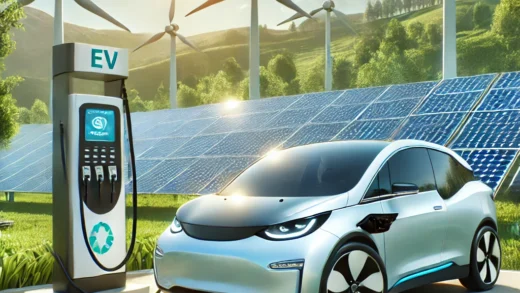
Electric vehicles and clean energy storage are no longer futuristic dreams—they are here, reshaping how we move, power our homes, and build industries. At the heart of this change lies the battery. And when it comes to battery production, China has emerged as the undisputed leader. Companies like CATL, BYD, and others are not only supplying their domestic market but also shaping the global energy supply chain in ways that Europe and the United States can no longer ignore.

China’s Grip on the Battery Value Chain
China’s influence is rooted in how much of the supply chain it controls. From mining and refining critical minerals like lithium, cobalt, and nickel, to producing cathodes, anodes, and the cells themselves, Chinese firms cover nearly every step. On top of that, they are leaders in recycling, which is becoming increasingly important as early EV batteries reach the end of their lives.
This vertical integration means Chinese companies can deliver batteries at prices other regions struggle to match. In 2024, average battery pack prices in China were reported to be more than 30 percent cheaper than in Europe and over 20 percent lower than in the U.S. For automakers trying to build affordable EVs, that price difference is a game-changer. It helps explain why Chinese batteries now dominate global markets and why many foreign automakers—from Tesla to BMW—rely on Chinese suppliers.
Why Europe Is Struggling to Keep Up?
Europe has ambitious plans for electric mobility. Governments want millions of EVs on the road, and automakers like Volkswagen, Mercedes-Benz, and Stellantis are investing billions to transition away from fossil fuels. Yet despite the ambition, Europe finds itself heavily dependent on Chinese technology.
Several European start-ups, such as Northvolt, have attempted to build large-scale “gigafactories.” While some progress has been made, others have stumbled under the weight of soaring costs, supply challenges, and competition from cheaper Chinese imports. Even when European firms do succeed in opening factories, they often rely on technology licensed from Chinese partners. That raises a critical question: will Europe end up as a hub for final assembly rather than a region capable of competing head-to-head on innovation?
There is a push toward “battery localization” and “nearshoring” across the continent, with factories planned in countries like Germany, France, and Hungary. Yet without competitive pricing and stronger government backing, Europe risks losing ground. Chinese companies are already building facilities in Europe, which gives them a local footprint while maintaining their technological and cost advantage.
The U.S. Strategy: Reduce Dependence, Boost Innovation
Across the Atlantic, the United States faces similar challenges but is taking a slightly different approach. Policymakers in Washington are increasingly concerned about over-reliance on Chinese supply chains for critical minerals and battery production. The Inflation Reduction Act has introduced major tax incentives for domestic manufacturing, aiming to kick-start a homegrown battery industry.
At the same time, U.S. companies are investing in next-generation technologies such as solid-state batteries, sodium-ion cells, and chemistries that reduce or eliminate cobalt and nickel. The idea is not just to catch up to China in today’s technologies but to leapfrog to what comes next.
Still, the U.S. faces steep hurdles. Building mines and refineries takes years, often decades, due to regulatory and environmental reviews. Labor and energy costs are higher than in China, and scaling new technologies from lab to factory floor is notoriously difficult. Until these challenges are overcome, many American EV makers remain reliant on Chinese imports or partnerships.
Global Ripples in Trade and Pricing
China’s dominance does not just affect Europe and the U.S.—it shapes the entire global energy transition. Battery prices worldwide are falling largely because of Chinese overcapacity and aggressive cost competition. For consumers, that’s good news: cheaper batteries mean cheaper EVs and faster adoption of clean technologies.
For manufacturers elsewhere, however, it creates intense pressure. Many companies operate on thin margins and struggle to compete. The risk of oversupply also looms. If China continues producing far more batteries than the market needs, global prices could crash, driving weaker competitors out of business while leaving China even more dominant.
Trade tensions are already rising. The European Union and the United States have both launched investigations into Chinese subsidies, with the possibility of tariffs or import restrictions. But striking the right balance is tricky: restricting Chinese batteries could slow EV adoption, while allowing them free rein could hollow out domestic industries.
Risks and the Road Ahead
The risks of heavy dependence on Chinese batteries go beyond economics. Supply chains that rely on a single country for critical components are vulnerable to disruption from political disputes, export bans, or even natural disasters. That vulnerability is driving governments in Europe and the U.S. to rethink industrial strategy in ways not seen for decades.
There are also environmental and ethical concerns. Mining for lithium, cobalt, and other minerals often raises questions about sustainability and labor practices. Pressure is mounting on Chinese firms to improve transparency and environmental standards, especially as Western markets demand greener, fairer supply chains.
The road ahead will likely involve a mix of strategies. Europe and the U.S. will try to build more local capacity, invest in alternative chemistries, and form partnerships with trusted allies. Recycling will play a bigger role as used batteries provide a secondary source of raw materials. Meanwhile, Chinese giants like CATL and BYD will keep pushing forward, expanding globally, and investing in technologies like sodium-ion and ultra-fast charging batteries.
Conclusion
China’s battery industry is no longer just a domestic powerhouse—it is the backbone of the global energy transition. By controlling supply chains, driving down costs, and expanding capacity, Chinese companies have reshaped how the world thinks about energy, cars, and trade.
For Europe and the U.S., the challenge is clear. Competing with China will require not just factories but entire ecosystems: raw material supply, skilled labor, strong policies, and relentless innovation. The stakes go beyond cars. Whoever controls the battery supply chain will play a central role in shaping the world’s clean energy future.